

Quick answer
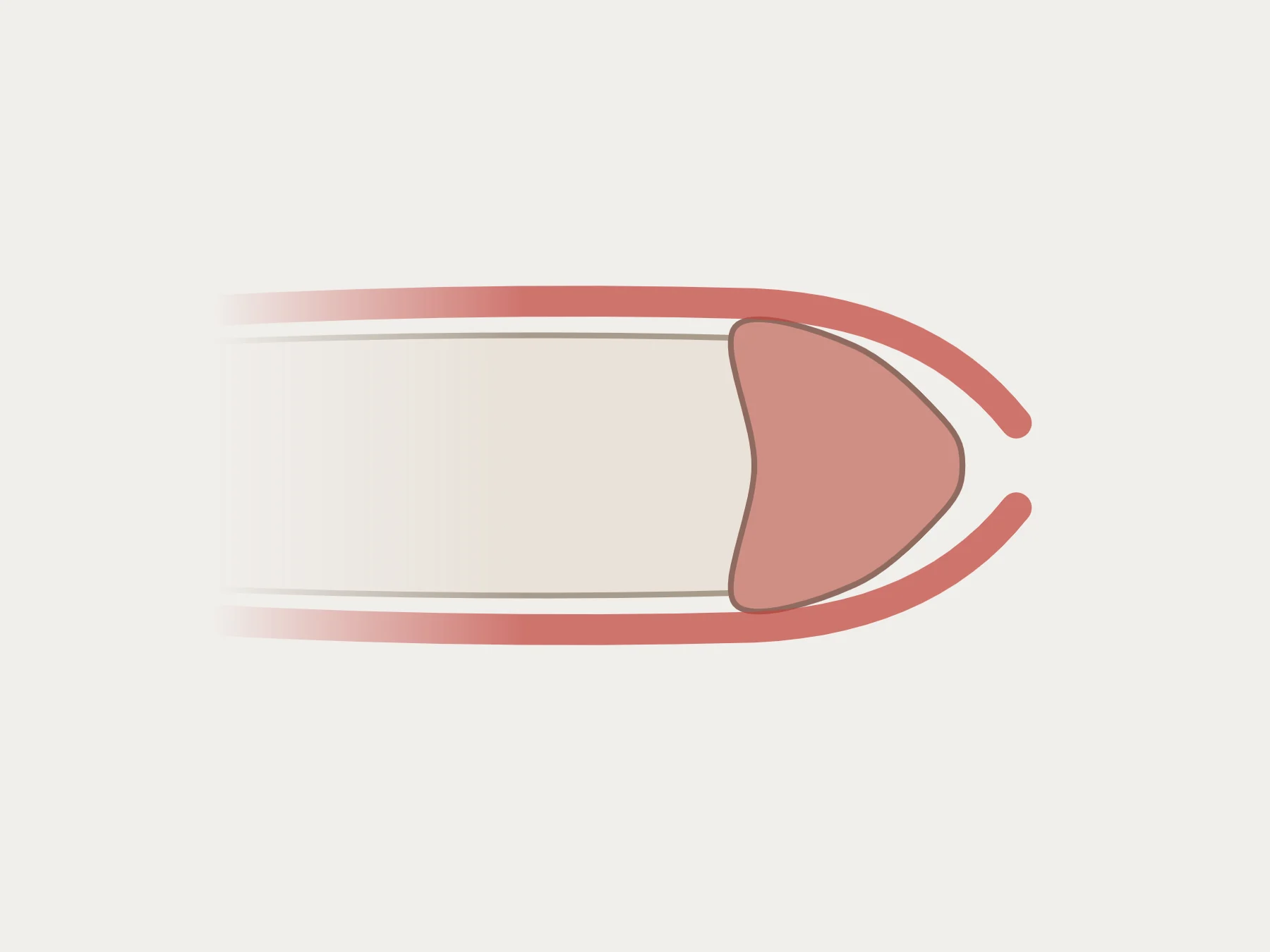
Balanitis is inflammation of the glans, and balanoposthitis is inflammation of the glans and the foreskin.1 It has many causes: irritation, too little or too much washing, yeast, bacteria, skin diseases and, more rarely, precancerous lesions.1,2 Many cases improve with simple care, and the choice of medicine depends on the cause.1 When it persists, it needs to be investigated.1
What it is
The names say where the inflammation is.1 They describe a presentation, not a single disease: very different conditions can look alike.1
Causes
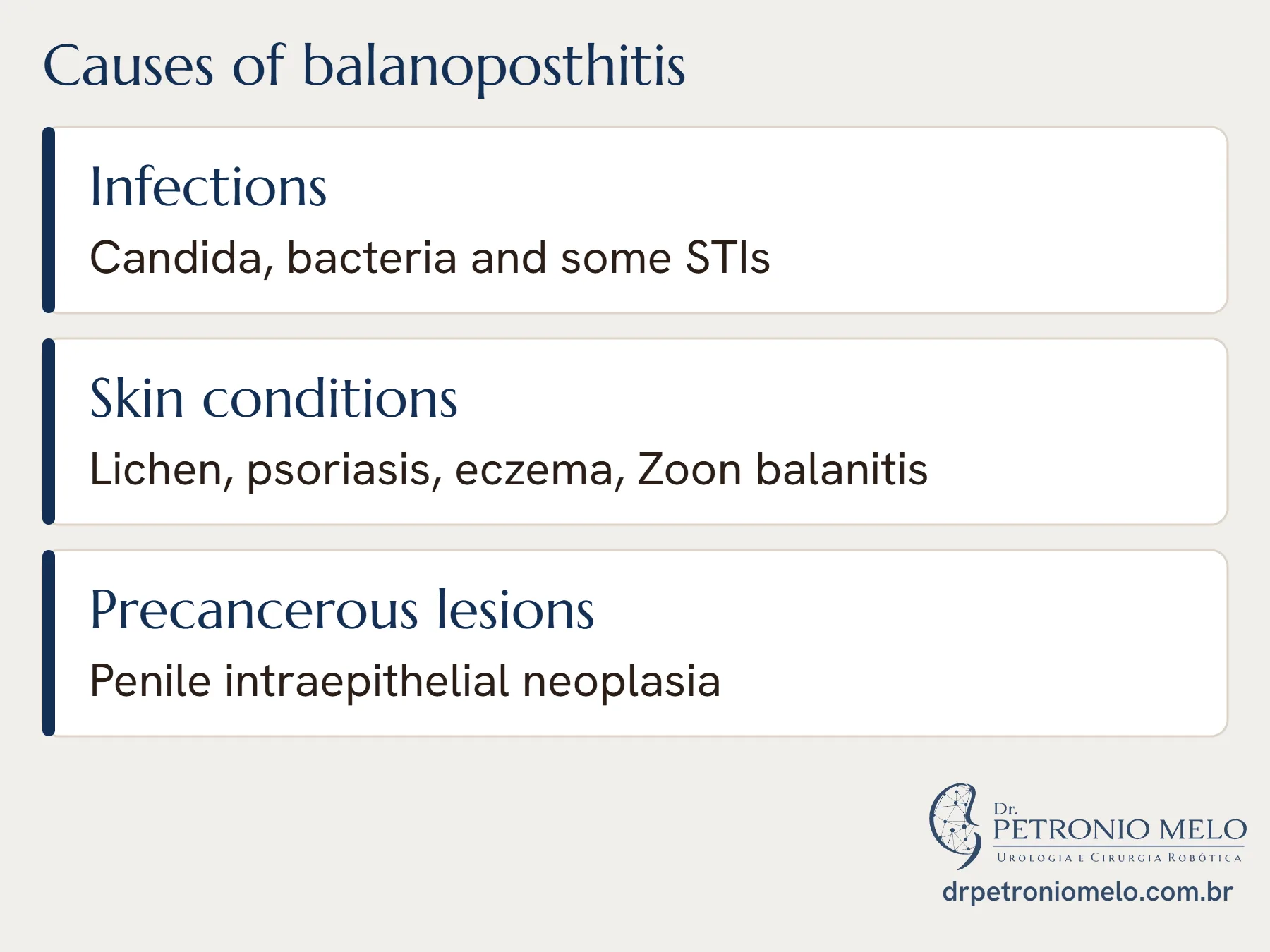
Many cases are simple irritation between two skin surfaces, with overgrowth of bacteria or yeast.1 Poor hygiene, washing too much, not pulling back the foreskin and conditions such as diabetes make it more likely.1 The problem is uncommon after circumcision.1
How each cause usually looks
| Cause | How it usually looks |
|---|---|
| Yeast (candida) | Redness with burning or itching, patches and small bumps1 |
| Anaerobic bacteria | Foul-smelling discharge under the foreskin, swelling and small sores1 |
| Irritation and allergy | Redness linked to soap, frequent washing or intimate hygiene products1 |
| Lichen sclerosus | White patches, itching, cracks, phimosis and narrowing of the meatus. It may cause no symptoms1 |
| Psoriasis | Red, shiny plaques, often with psoriasis elsewhere on the body1 |
| Zoon balanitis | Shiny orange-red areas, in uncircumcised men aged 40 or older1 |
The appearance suggests a cause but does not settle the diagnosis.1
How it is evaluated
The evaluation starts with a conversation and an examination. Depending on the case, it includes:1
- Sexual history and tests for sexually transmitted infections
- A swab from under the foreskin, for yeast and bacteria
- Glucose in the urine, especially if yeast is suspected
- A biopsy, if the diagnosis is uncertain and the condition persists
- Assessment by a dermatologist for skin diseases and suspected allergy
Treatment
Hygiene measures help in many cases, although sticking to them is not always easy.1
| Cause | Treatment in the European guideline |
|---|---|
| Yeast (candida) | 1% clotrimazole cream, twice a day, for 7 to 14 days. With strong symptoms, oral fluconazole 150 mg1 |
| Anaerobic bacteria | Hygiene and metronidazole for 1 week. Circumcision may be needed for repeated cases or with phimosis1 |
| Other bacteria | Ointment for mild cases and oral antibiotics for severe ones, guided by the culture1 |
| Lichen sclerosus | A very potent steroid ointment for one month, which resolves 50% to 60% of cases. Circumcision comes in if treatment fails or has to be daily1 |
| Psoriasis | A moderate-potency steroid until it resolves1 |
| Zoon balanitis | Hygiene and treatment of the underlying condition. Circumcision has been reported to clear the lesions1 |
Candida often appears on top of another skin disease, so using an antifungal on your own can delay the diagnosis.1 The 2026 British guideline stresses avoiding antibiotics and antifungals without an indication.2 People who use condoms should know that creams can raise the risk of condom failure.1
Lichen sclerosus
It is an inflammatory disease that leaves scarring, at any age.1 It deserves attention because it can cause phimosis and narrowing of the urethra, and the published risk of penile cancer ranges from 0 to 12.5%.1 After treatment, the person needs to stay alert to any change in the area.1
How I approach it
In my practice, I examine before recommending a medicine, because not every redness is yeast. I ask about hygiene, the products used, diabetes and sexual life, and order tests when the case calls for them. If the inflammation keeps coming back or persists, I investigate further and we talk about circumcision.
When to see a urologist
- If the redness does not improve with self-care
- If the inflammation keeps coming back
- If there is a sore, a white patch or a patch that does not go away
- If there is foul-smelling discharge or swelling
- If the foreskin becomes hard to pull back
- If you have diabetes and the inflammation appears often
Frequently asked questions
What is balanitis?+
It is inflammation of the glans. When the foreskin is also affected, it is called balanoposthitis.1
Is balanitis a sexually transmitted disease?+
Most of the time, no. Many cases are simple irritation between two skin surfaces, with overgrowth of bacteria or yeast. Some sexually transmitted infections, however, can cause it, which is why sexual history is part of the evaluation.1
Is yeast infection common in men?+
It accounts for under 20% of cases of balanoposthitis. Older age and diabetes raise the risk.1
How is a yeast infection of the penis treated?+
The European guideline recommends 1% clotrimazole cream, twice a day, for 7 to 14 days. For cases with strong symptoms, the option is a single oral dose of 150 mg fluconazole. Treatment needs a medical assessment, because not every redness is yeast.1
Does my partner need treatment?+
For a yeast infection, routine treatment is not needed.1 If a sexually transmitted infection is found, the plan follows its own guideline.1
Can I wash with soap?+
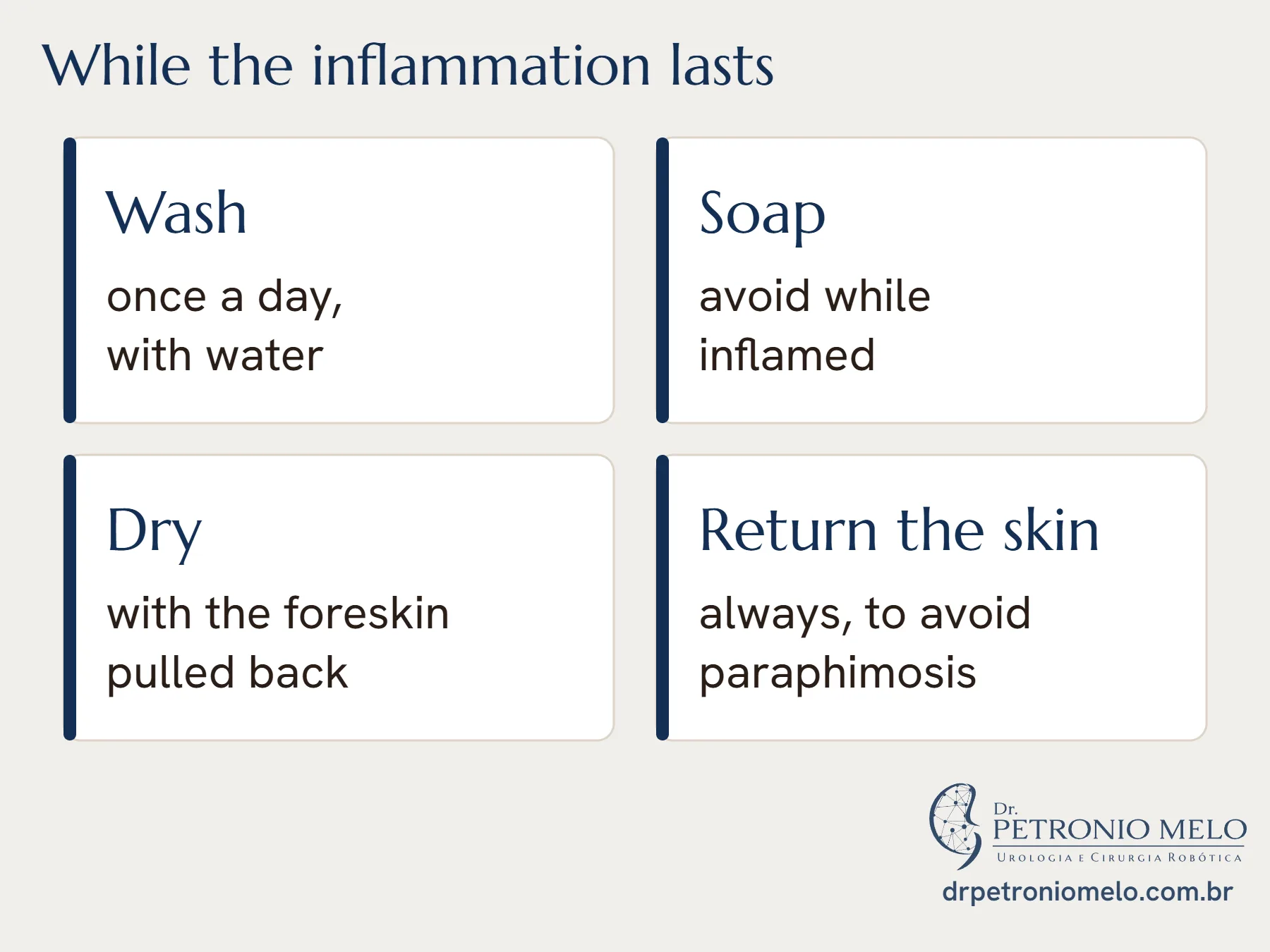
While there is inflammation, the advice is to avoid soaps. Washing too much is also harmful. The care is to wash once a day and dry well.1
When does balanitis need a biopsy?+
When the diagnosis is uncertain and the condition persists, because precancerous conditions can look like ordinary inflammation.1
References
- Edwards SK, Bunker CB, van der Snoek EM, van der Meijden WI. 2022 European guideline for the management of balanoposthitis. J Eur Acad Dermatol Venereol. 2023;37(6):1104-1117. PubMed
- Edwards SK, Shashidharan P, Fernando I, et al. BASHH national guideline on the management of balanoposthitis (and related penile skin conditions) 2026. Int J STD AIDS. 2026;37(9):969-983. PubMed
Would you like to talk about your case?
In the consultation, I go over your tests and your priorities.
Book a consultation