
Quick answer
An enlarged prostate, or benign prostatic hyperplasia (BPH), is a benign growth of the gland. It can make it harder for urine to pass and cause a weak stream, urgency and trips to the bathroom at night. Treatment may involve monitoring, medication or surgery. The choice depends on how much it bothers you, the size of the prostate and what matters most to you.2
Where to start
Choose the topic that matches where you are now.
Symptoms and treatment
- Urinary symptoms of the prostateWhat each symptom means and how to measure the bother.
- Medications for the prostateHow they work, how long they take and what the side effects are.
- When to have surgeryWhat makes surgery necessary and what changes the choice.
Operations
- HoLEPHow holmium laser surgery works and what to expect.
- GreenlightHow laser vaporization of the prostate works.
- RezumHow water vapor treatment works.
- EchoLaserHow ultrasound-guided laser treatment works.
- TURPHow resection through the urethra works.
- Robotic simple prostatectomyHow robotic surgery for large prostates works.
- Which technique for each sizeWhat prostate size changes in the choice.
- Ejaculation and erectionsWhat may change after each technique.
- Other techniquesUrolift, iTind, Optilume and Aquablation.
What it is
The prostate sits just below the bladder and surrounds the urethra, the channel urine flows through. With age, it can grow and narrow this passage.
Urinary symptoms are common. In a study of 5,184 Brazilians aged 40 or older, 21% of men had moderate or severe symptoms.3 Some of these symptoms have other causes, which is why evaluation comes before treatment.1
How it is evaluated
- Medical historyWe go over your symptoms, other health conditions and medications, with a symptom questionnaire.1
- Physical examIt includes a digital rectal exam, which assesses the prostate.1
- Laboratory testsUrine test, and PSA when the result may change the plan.1
- Flow test and ultrasoundThese measure your urine flow, the urine left in the bladder after urinating and the size of the prostate.1
Treatment options
| Situation | What the European guideline advises |
|---|---|
| Mild or moderate symptoms, with little bother | Monitoring and lifestyle advice2 |
| Moderate or severe symptoms | Medications, chosen by type of symptom2 |
| Higher risk of progression, such as a prostate larger than 40 g | A medication that shrinks the prostate, alone or in combination2 |
| Complications, or not enough relief from lifestyle changes and medication | Surgery2 |
In a study cited by the European guideline, 79% of men monitored without treatment remained stable at five years.2
The operations we can consider together include HoLEP, GreenLight, EchoLaser, Rezum, TURP and robotic simple prostatectomy, as well as techniques such as UroLift, iTind, Optilume and Aquablation. The 2026 American guideline stresses the balance between efficacy, durability and the side effects of each procedure, with the decision made together with the patient.4
How I approach it
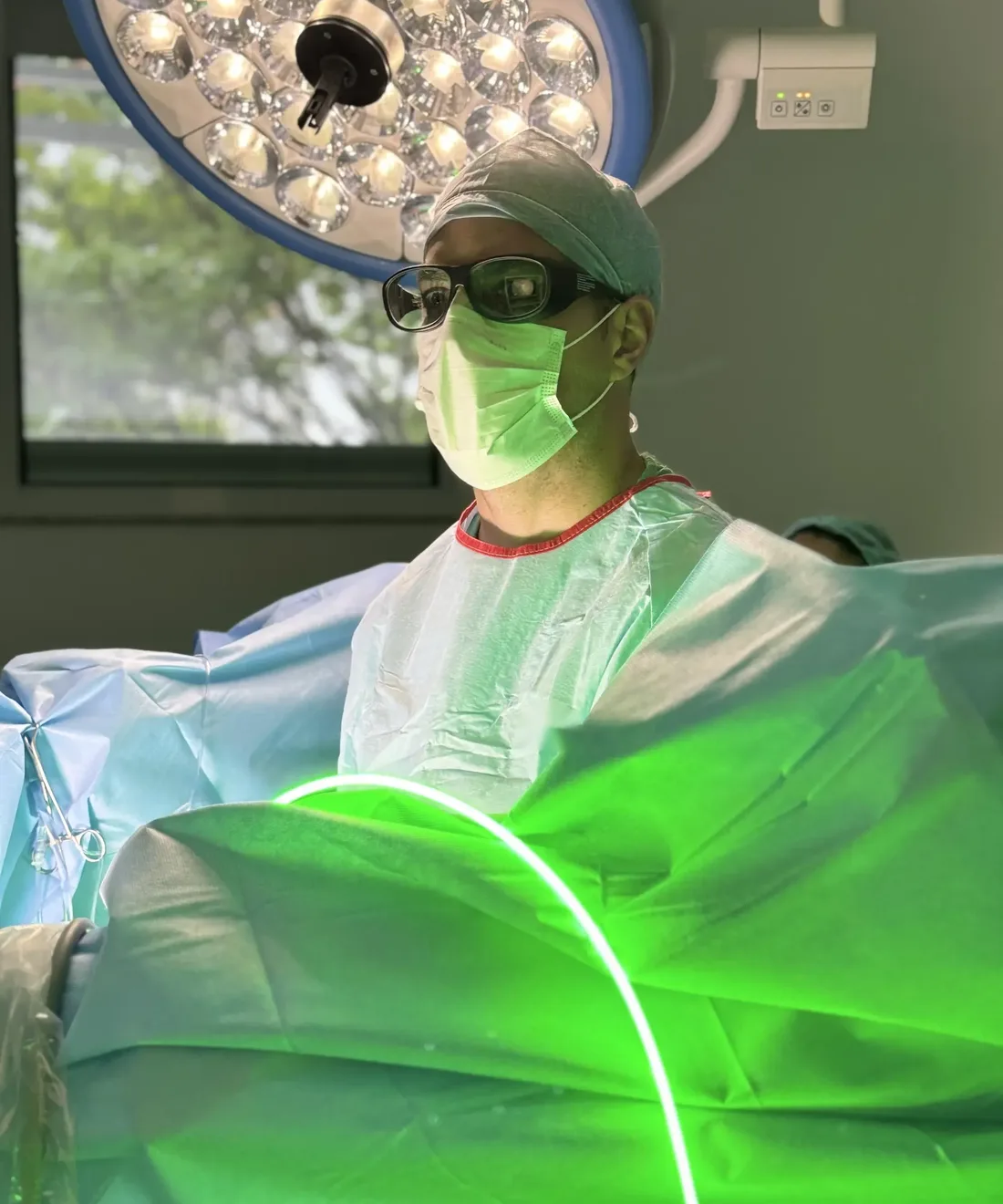
In my practice, I start with what bothers you most and what you want to preserve. I have experience with all current treatments for an enlarged prostate, with more than 500 GreenLight surgeries, more than 100 Rezum procedures and extensive experience with HoLEP. This allows me to recommend the option that best fits your prostate and your priorities.
When to see a urologist
- If your stream gets weaker or getting up at night to urinate starts to bother you
- If you see blood in your urine
- If you have repeated urinary infections
- If you cannot urinate, get in touch the same day
Frequently asked questions
Is an enlarged prostate cancer?+
No. Hyperplasia is a benign growth. The two conditions can exist at the same time, which is why evaluation may include the rectal exam and PSA.1
Does every enlarged prostate need treatment?+
No. Men with mild or moderate symptoms and little bother can be followed, with advice on habits.2
Will I need surgery?+
Not always. Surgery comes in when there are complications or when habits and medications do not bring enough relief.2
What is the best surgery for an enlarged prostate?+
It depends on your case. The size of the prostate, other conditions, anesthesia and what you want to preserve all change the choice.2
Does the size of the prostate change the treatment?+
Yes. Above 40 g, the European guideline considers the risk of progression higher and includes medications that shrink the prostate. Size also counts in the choice of surgery.2
References
- EAU Guidelines on the Management of Non-neurogenic Male LUTS. European Association of Urology; 2026. Diagnostic evaluation chapter. EAU
- EAU Guidelines on the Management of Non-neurogenic Male LUTS. European Association of Urology; 2026. Disease management chapter. EAU
- Soler R, Gomes CM, Averbeck MA, et al. The prevalence of lower urinary tract symptoms (LUTS) in Brazil: Results from the epidemiology of LUTS (Brazil LUTS) study. Neurourol Urodyn. 2018;37(4):1356-1364. PubMed
- Goueli R, Badlani GH, Welliver C, et al. Management of Lower Urinary Tract Symptoms Attributed to Benign Prostatic Hyperplasia: AUA Guideline (2026) Part III: Procedural/Surgical Management. J Urol. 2026;216(2):161-170. PubMed
Would you like to talk about your case?
In the consultation, I go over your tests and your priorities.
Book a consultation