

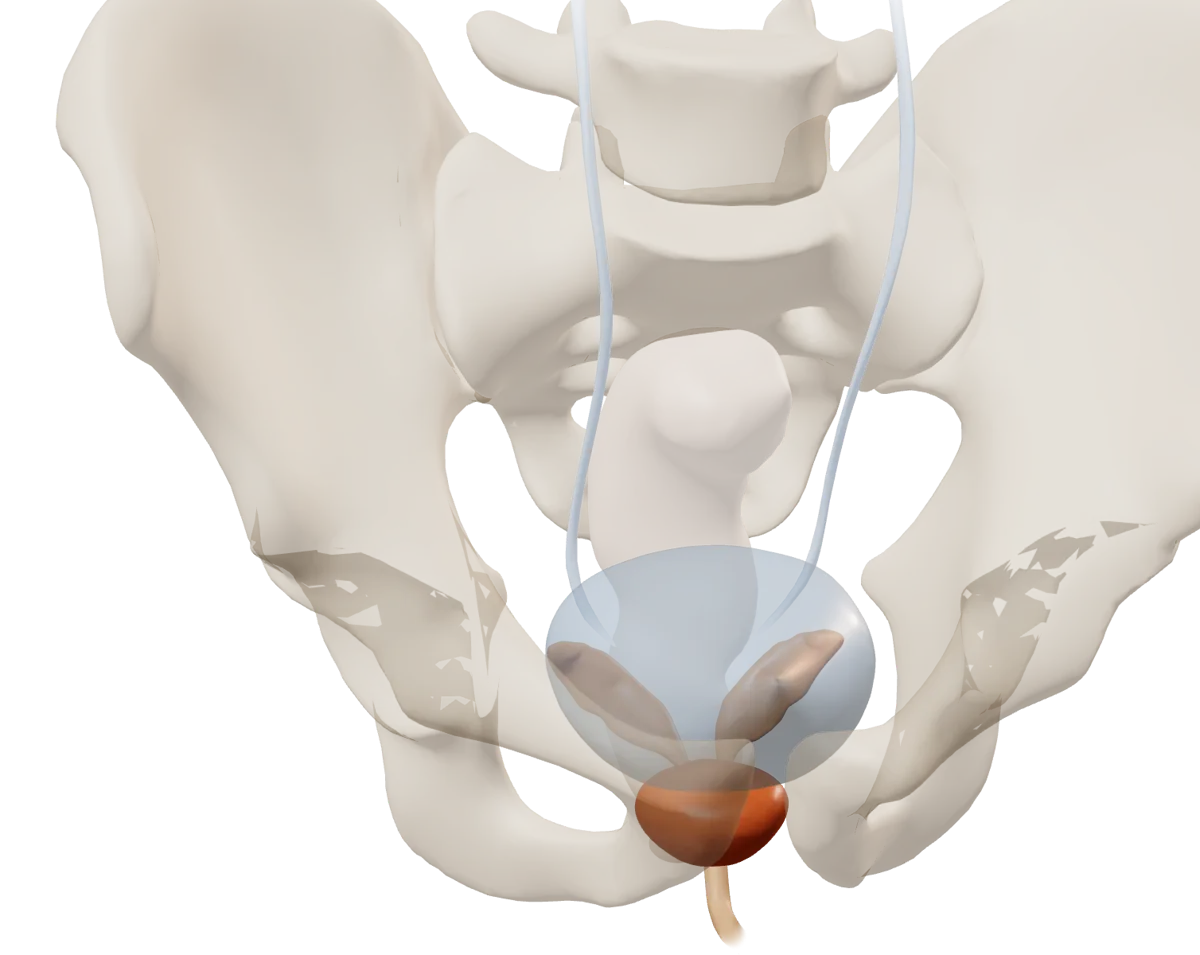
Quick answer
An enlarged prostate can cause a weak stream, straining to urinate, a feeling that the bladder is still full, urgency and trips to the bathroom at night. The bother is measured with a questionnaire, and tests show the stream and the urine left in the bladder.1 These symptoms also have other causes, which is why they are worth evaluating before treatment.1
What the symptoms are
| When | What you may notice |
|---|---|
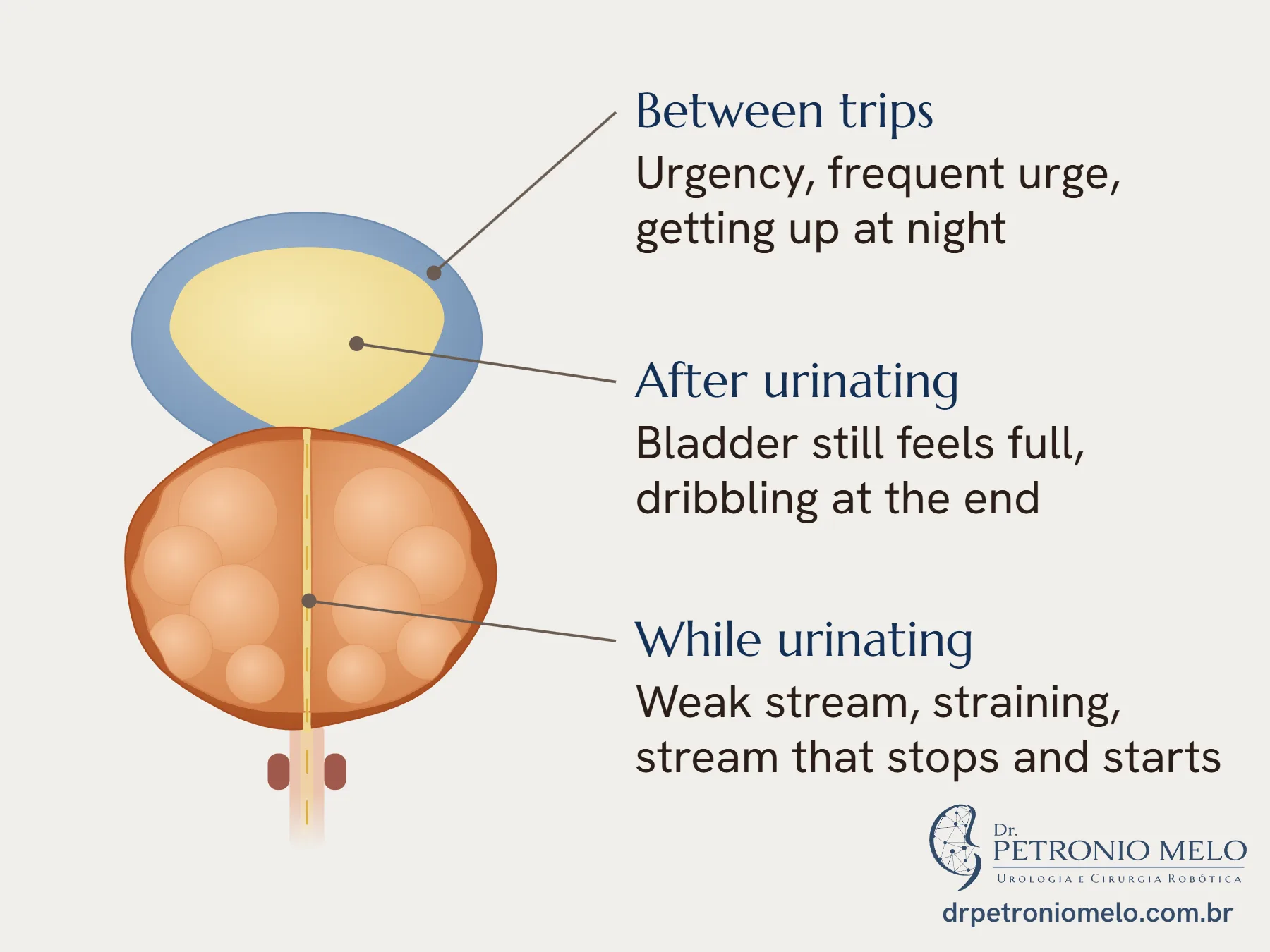
| While urinating | Weak stream, slow start, a stream that stops and starts, straining |
| Between trips | Frequent urge, urgency, getting up at night, leakage with urgency |
| After urinating | Feeling that the bladder did not empty, dribbling at the end |
In a study of 5,184 Brazilians aged 40 or older, 21% of men had moderate or severe symptoms. Among all participants, 39% said they would be unhappy to spend the rest of their lives with their current urinary condition.3
How to measure the bother
The most widely used questionnaire is the IPSS. It asks about incomplete emptying, frequency, a stream that stops and starts, urgency, weak stream, straining and trips to the bathroom at night. An eighth question measures how much this weighs on your life.1
| Points | Symptoms |
|---|---|
| 1 to 7 | Mild |
| 8 to 19 | Moderate |
| 20 to 35 | Severe |
The score helps track how things change, and treatment also takes into account how much the symptoms bother you.1,2
Getting up at night to urinate
The cause is not always the prostate. There may be too much urine produced at night, a problem with how the bladder stores urine, or a sleep disorder, and these causes can appear together.2
That is why I review fluids, sleep, medications and conditions such as diabetes, heart failure, kidney failure and sleep apnea.2 The European guideline makes a three-day diary mandatory in this evaluation.2
Which tests help
| Test | What it is for |
|---|---|
| Bladder diary | Records the times and volumes of urine over three days1 |
| Urine test | Looks for infection and other changes1 |
| PSA | Used when the result would change the plan1 |
| Uroflowmetry | Measures the strength of the stream1 |
| Post-void residual | Measures the urine left in the bladder1 |
| Ultrasound | Measures the prostate, which matters when surgery is being considered, and can check the kidneys1 |
Urodynamic testing is not for everyone. It is used in specific situations, before an invasive treatment.1
What helps day to day
- Cutting back on fluids at the times when urinating is most disruptive, such as at night
- Going easy on caffeine and alcohol
- Urinating calmly and trying again after a few moments
- Practicing holding the urge a little, to lengthen the time between trips
- Reviewing your medications and when you take them, especially diuretics
- Treating constipation
These measures are recommended by the European guideline.2 In a randomized study, three advice sessions reduced treatment failure at three months: 10% with advice and 42% with usual care.4
How I approach it
In my practice, I ask you to tell me what disrupts your day and your sleep the most. I use the IPSS and, when nighttime is the problem, the bladder diary. I only talk about treatment once I understand the cause and how much the symptoms bother you.
When to see a urologist
- If the symptoms bother you or disrupt your sleep
- If you see blood in your urine
- If you have fever or pain when urinating
- If you cannot urinate, contact me the same day
Frequently asked questions
Is a weak stream always a prostate problem?+
No. In men, the prostate is a common cause, but there are others, and the evaluation is there to tell them apart.1
Is getting up at night to urinate normal?+
It depends on how much it bothers you and on the cause. It can come from the bladder and prostate, from making too much urine at night, from sleep, or from conditions such as diabetes and heart failure.2
What is the IPSS?+
It is a questionnaire with seven questions about symptoms and one about quality of life. The total ranges from 0 to 35.1
Does changing habits help?+
It does. In a randomized study of 140 men, three advice sessions led to fewer treatment failures at one year.4
References
- EAU Guidelines on the Management of Non-neurogenic Male LUTS. European Association of Urology; 2026. Diagnostic evaluation chapter. EAU
- EAU Guidelines on the Management of Non-neurogenic Male LUTS. European Association of Urology; 2026. Disease management chapter. EAU
- Soler R, Gomes CM, Averbeck MA, et al. The prevalence of lower urinary tract symptoms (LUTS) in Brazil: Results from the epidemiology of LUTS (Brazil LUTS) study. Neurourol Urodyn. 2018;37(4):1356-1364. PubMed
- Brown CT, Yap T, Cromwell DA, et al. Self management for men with lower urinary tract symptoms: randomised controlled trial. BMJ. 2007;334(7583):25. PubMed
3D illustrations: BodyParts3D, © The Database Center for Life Science, licensed under CC Attribution-Share Alike 2.1 Japan.
Would you like to talk about your case?
In the consultation, I go over your tests and your priorities.
Book a consultation