

Quick answer
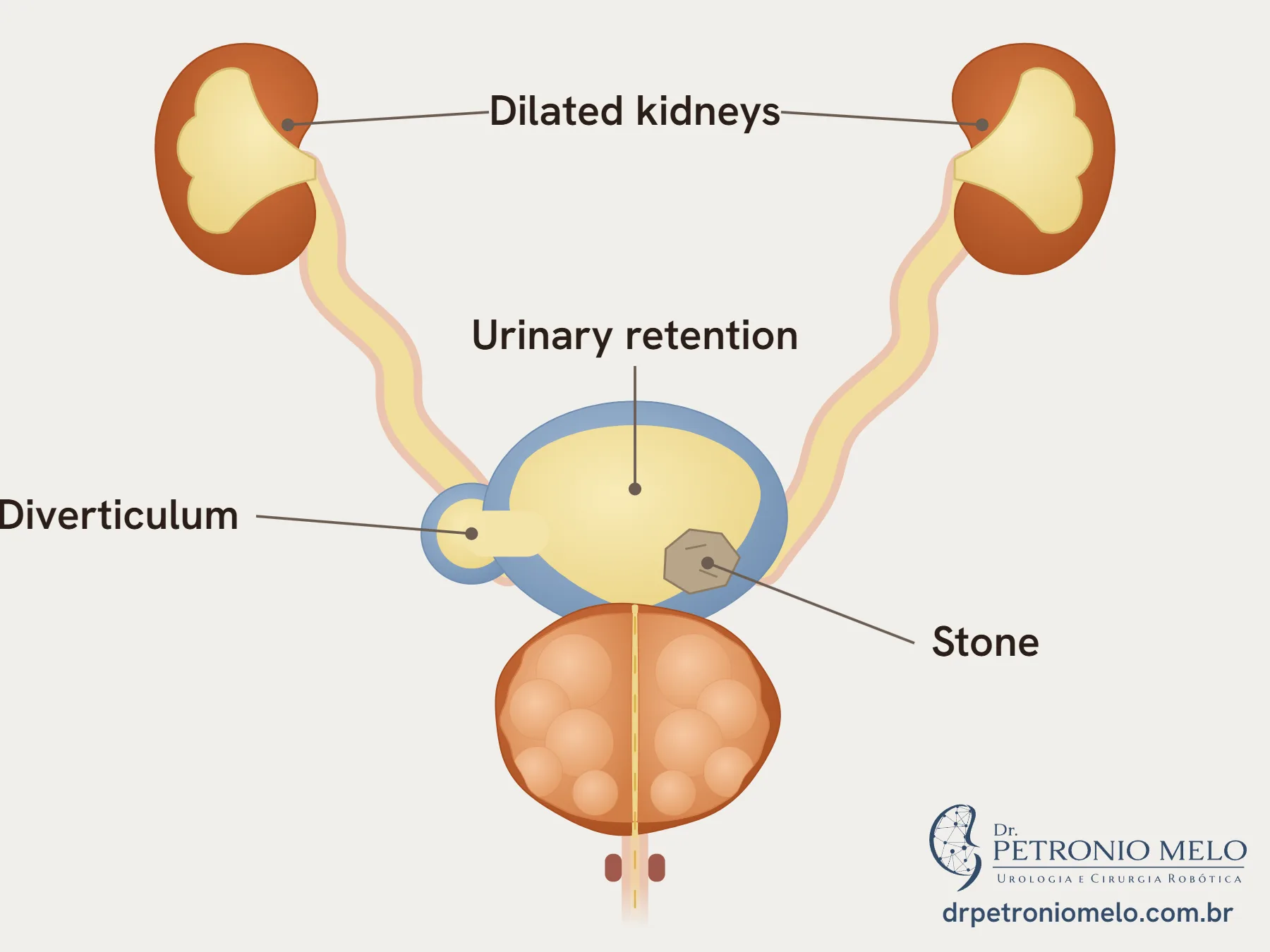
Surgery is necessary when the prostate causes complications, such as urinary retention that comes back, repeated infections, bladder stones, bleeding that does not stop or swelling of the kidneys. It is also an option when habits and medications do not bring enough relief.1 The technique depends on the size of the prostate, your other conditions and your priorities.1
What leads to surgery
| Situation | Surgery is usually needed | Surgery is an option |
|---|---|---|
| Urinary retention | Retention that comes back or does not improve1 | Urine left in the bladder, with no relief from medications1 |
| Symptoms | Overflow leakage1 | Bother that continues despite habits and medications1 |
| Complications | Repeated infections, bladder stones or diverticula, bleeding that does not stop, swelling of the kidneys1 | Without complications, the decision depends on how much it bothers you1 |
When it is fine to wait
Men with mild or moderate symptoms and little bother can be monitored.1 In a study comparing monitoring with surgery, 36% of the monitored men moved on to surgery within five years, and 64% did well without it. Worsening bother and more urine left in the bladder were the best predictors of the change.1
What surgery can change
The operation relieves the obstruction but does not improve the bladder's ability to contract.2
In exploratory analyses of the UPSTREAM study, surgery brought more benefit to men with higher symptom scores, age under 74 and a weak stream.2
What to check beforehand
- Prostate imagingIt shows the size and shape, which weigh on the choice of technique.2
- Kidney functionIt is checked before surgical treatment.2
- Flow and residualThey show the strength of the stream and the urine left in the bladder.2
- UrodynamicsUsed in specific cases, such as previous unsuccessful surgery, age over 80 or under 50.2
What changes the choice of technique
- The size of the prostate
- Your other conditions and whether you can have anesthesia
- The use of anticoagulants or antiplatelet drugs
- What you are willing to trade off, such as effects on ejaculation
- The surgeon's experience with each technique
These points come from the European guideline.1 Only a small share of randomized studies include prostates above 80 g, and the evidence for them is more limited.1 The 2026 American guideline also stresses shared decision-making, with attention to sexual function and the chance of needing another treatment.3
How I approach it
In my practice, I recommend surgery when there is a complication or when you are still bothered despite treatment. Before choosing the technique, I ask what you want to preserve. I explain what each option can offer, what may change and the chance of needing another treatment.
When to see a urologist
- If you have had urinary retention
- If urinary infections keep coming back
- If you see blood in your urine
- If medications do not bring enough relief
Frequently asked questions
When is prostate surgery necessary?+
When there is urinary retention that comes back or does not improve, repeated infections, bladder stones or diverticula, bleeding that does not stop, or swelling of the kidneys caused by the obstruction.1
Can I have surgery if medications did not work?+
Yes. Lack of relief with habits and medications is also a reason for surgery.1
Does the size of the prostate decide whether I need surgery?+
Not on its own. Size weighs on the choice of technique. Whether surgery is needed depends on the symptoms and the complications.1
Is it harmful to wait?+
It depends on the case. Without complications and with little bother, monitoring is a safe option for many men. What raises the risk of needing treatment is worsening bother and more urine left in the bladder.1
Will all the symptoms go away after surgery?+
That cannot be promised. Surgery treats the obstruction. If the bladder contracts weakly, the operation does not improve that strength.2
I take blood thinners. Can I have surgery?+
You can. HoLEP is possible even in men who take anticoagulants, and the European guideline includes laser options for these men.1
References
- EAU Guidelines on the Management of Non-neurogenic Male LUTS. European Association of Urology; 2026. Disease management chapter. EAU
- EAU Guidelines on the Management of Non-neurogenic Male LUTS. European Association of Urology; 2026. Diagnostic evaluation chapter. EAU
- Goueli R, Badlani GH, Welliver C, et al. Management of Lower Urinary Tract Symptoms Attributed to Benign Prostatic Hyperplasia: AUA Guideline (2026) Part III: Procedural/Surgical Management. J Urol. 2026;216(2):161-170. PubMed
Would you like to talk about your case?
In the consultation, I go over your tests and your priorities.
Book a consultation