

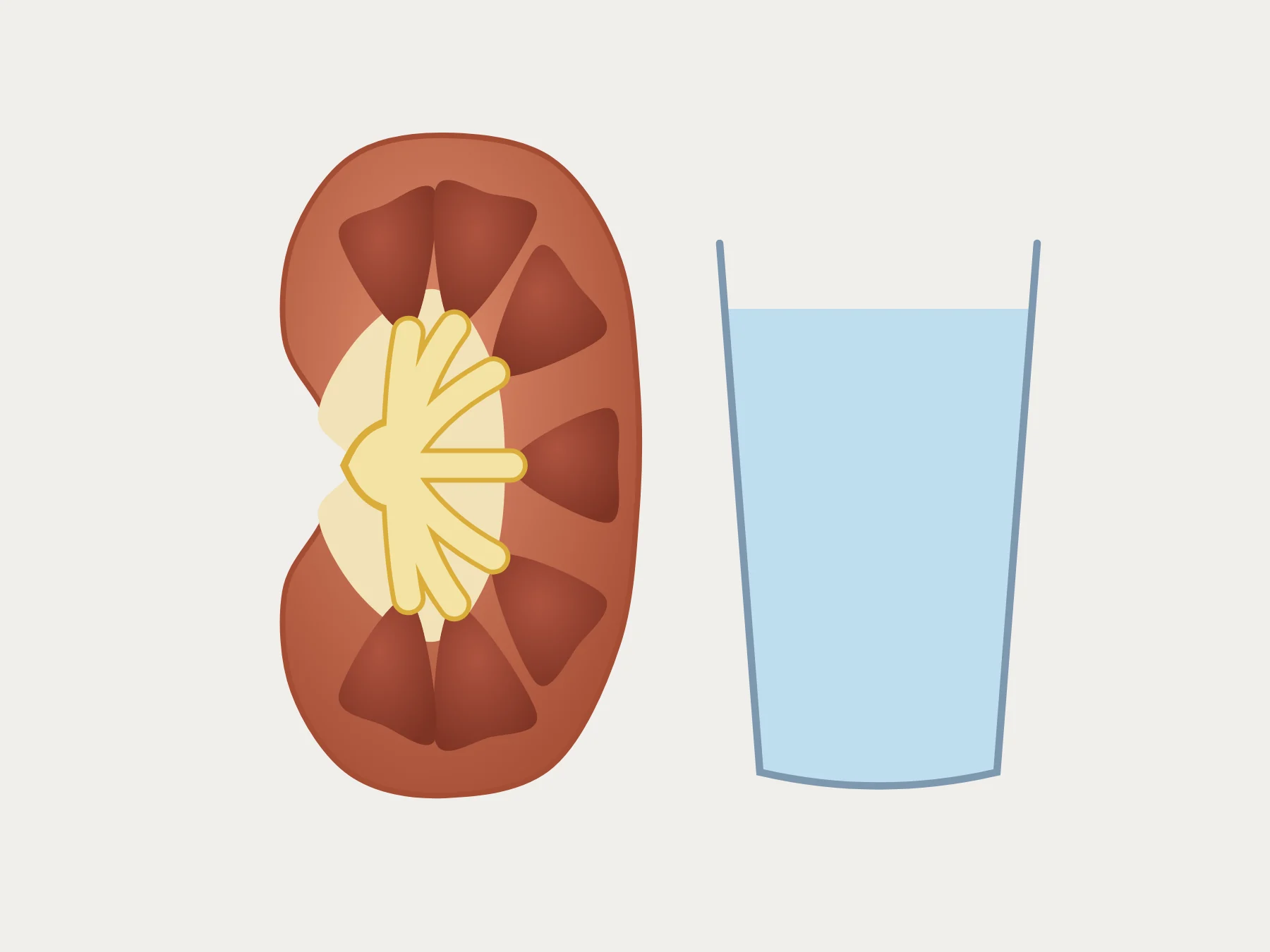
Quick answer
Preventing kidney stones starts with water: 2.5 to 3 liters of fluid a day, to pass more than 2.5 liters of urine in 24 hours.1 Cutting down on salt, not overdoing animal protein and keeping calcium in the diet also help.1 People at high risk of another stone need metabolic tests and sometimes medicine.1
Why prevent
After a first stone, one review estimated a 26% recurrence rate within five years.2 Drinking more water lowers the risk of a stone coming back.1
What applies to almost everyone
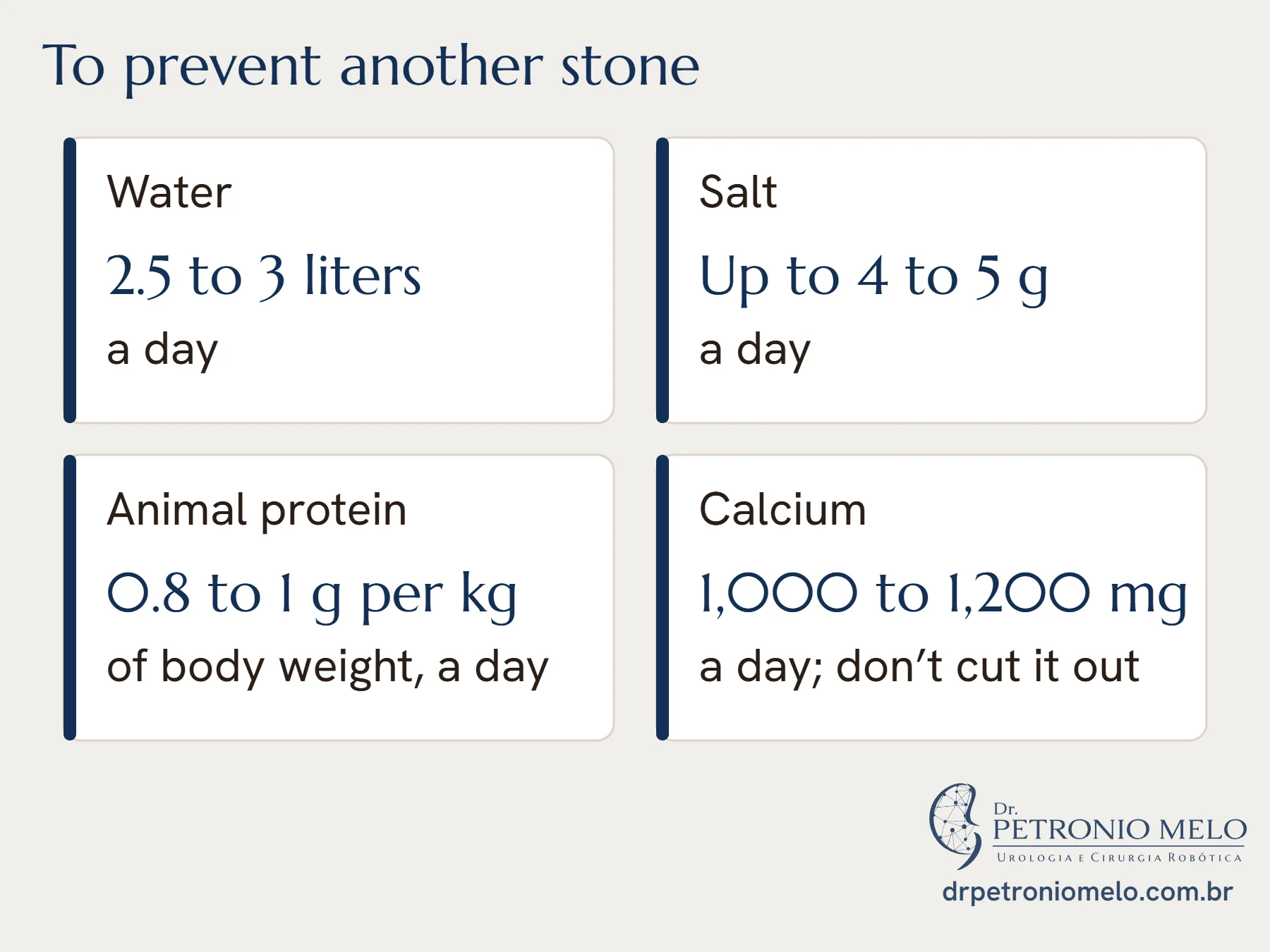
- Fluids: 2.5 to 3 liters a day, preferably water, to pass more than 2.5 liters of urine in 24 hours. People who lose a lot of fluid in the heat or during exercise need to replace it.1
- Salt: up to 4 to 5 g a day. Too much raises calcium in the urine and lowers citrate, which protects.1
- Animal protein: 0.8 to 1 g per kilogram of body weight a day. Too much favors stone formation in several ways.1
- Calcium: 1,000 to 1,200 mg a day from food, without cutting it. Eating little calcium is linked to more stones.1
- Fruit, vegetables and fiber: part of a balanced diet, and they also add fluid.1
- Weight and physical activity: keeping a healthy weight and staying active. Obesity, diabetes and metabolic syndrome influence the risk.1
- Drinks: cutting down on alcohol, soft drinks and sugary drinks.1
- Vitamins: avoiding excess. People who form calcium oxalate stones should avoid large doses of vitamin C.1
What studies say about water
The European guideline states that drinking more water lowers the risk of another stone.1 Keeping up the habit is harder than it seems. In a randomized study published in 2026, with 1,658 people, an intensive support program, with a fluid prescription, financial rewards and follow-up, increased urine output. Even so, over two years the return of symptoms was similar: 19% with the program and 20% in the comparison group.3
The study tested a support program. The advice to drink water remains in the guideline, and diet and tests are part of the plan.
Who needs metabolic tests
Everyone with stones follows the general measures. Specific tests are for people at high risk.1 This group includes:2
- People who had a stone very young, especially in childhood and adolescence
- People with a family history
- People with repeated stones or a short interval between them
- People with uric acid, brushite or infection stones
- People with a single kidney or chronic kidney disease
- People with hyperparathyroidism, metabolic syndrome or bowel disease, including after bariatric surgery
- People with genetic conditions linked to stones, such as cystinuria
The evaluation uses blood tests and two consecutive 24-hour urine collections. It is done at least 20 days after the attack, preferably around three months later, with the person free of infection and on their usual diet and fluid intake.1
Analysis of the stone also guides the plan, so it is worth keeping a stone that has passed.2
What changes with the type of stone
| Type | What usually changes |
|---|---|
| Calcium oxalate | Limiting oxalate-rich foods, when urine oxalate is high. Depending on the test, a thiazide or citrate1 |
| Uric acid | Cutting down on purines and using citrate to make the urine less acidic1 |
| Calcium phosphate | Investigating hyperparathyroidism and renal tubular acidosis, the most common causes1 |
| Cystine | Plenty of fluid and citrate to make the urine less acidic, with close follow-up1 |
Medicine is used only when indicated, because each one has side effects and needs follow-up.1
How I approach it
In my practice, the conversation about prevention starts after the attack, once the pain has passed. I look at the type of stone, how many times it has come back and what the person eats and drinks day to day. People at higher risk do the tests calmly. This conversation works well in an online consultation.
When to see a urologist
- If you have had more than one stone
- If you had your first stone very young
- If stones run in your family
- If you have a single kidney
- If you had bariatric surgery and started having stones
- If you want to know your stone type and what it means for you
Frequently asked questions
How much water should I drink to prevent stones?+
The European guideline advises 2.5 to 3 liters of fluid a day, preferably water, to pass more than 2.5 liters of urine in 24 hours.1
Should people with stones cut out calcium?+
Generally, no. Dietary calcium should not be restricted without a strong reason. The daily need is 1,000 to 1,200 mg. Calcium supplements are not recommended, except in specific situations.1
Do soft drinks increase the risk of stones?+
In observational studies, soft drinks and sugary punch were linked to a higher risk.1 In a randomized study of men who had already had more than one stone, cutting down on soft drinks reduced recurrence, and the certainty of this evidence is low.1
Does lemon help?+
Citrus juices seem to protect, because they raise citrate in the urine or make the urine less acidic.1
Who needs a 24-hour urine test?+
People at high risk of another stone. The test uses two consecutive 24-hour collections, preferably about three months after the attack.1
References
- EAU Guidelines on Urolithiasis. European Association of Urology; 2026. Metabolic evaluation and recurrence prevention chapter. EAU
- EAU Guidelines on Urolithiasis. European Association of Urology; 2026. Guidelines chapter. EAU
- Desai AC, Maalouf NM, Harper JD, et al. Prevention of urinary stones with hydration: a randomised clinical trial of an adherence intervention. Lancet. 2026;407(10534):1171-1181. PubMed
Would you like to talk about your case?
In the consultation, I go over your tests and your priorities.
Book a consultation