

Quick answer
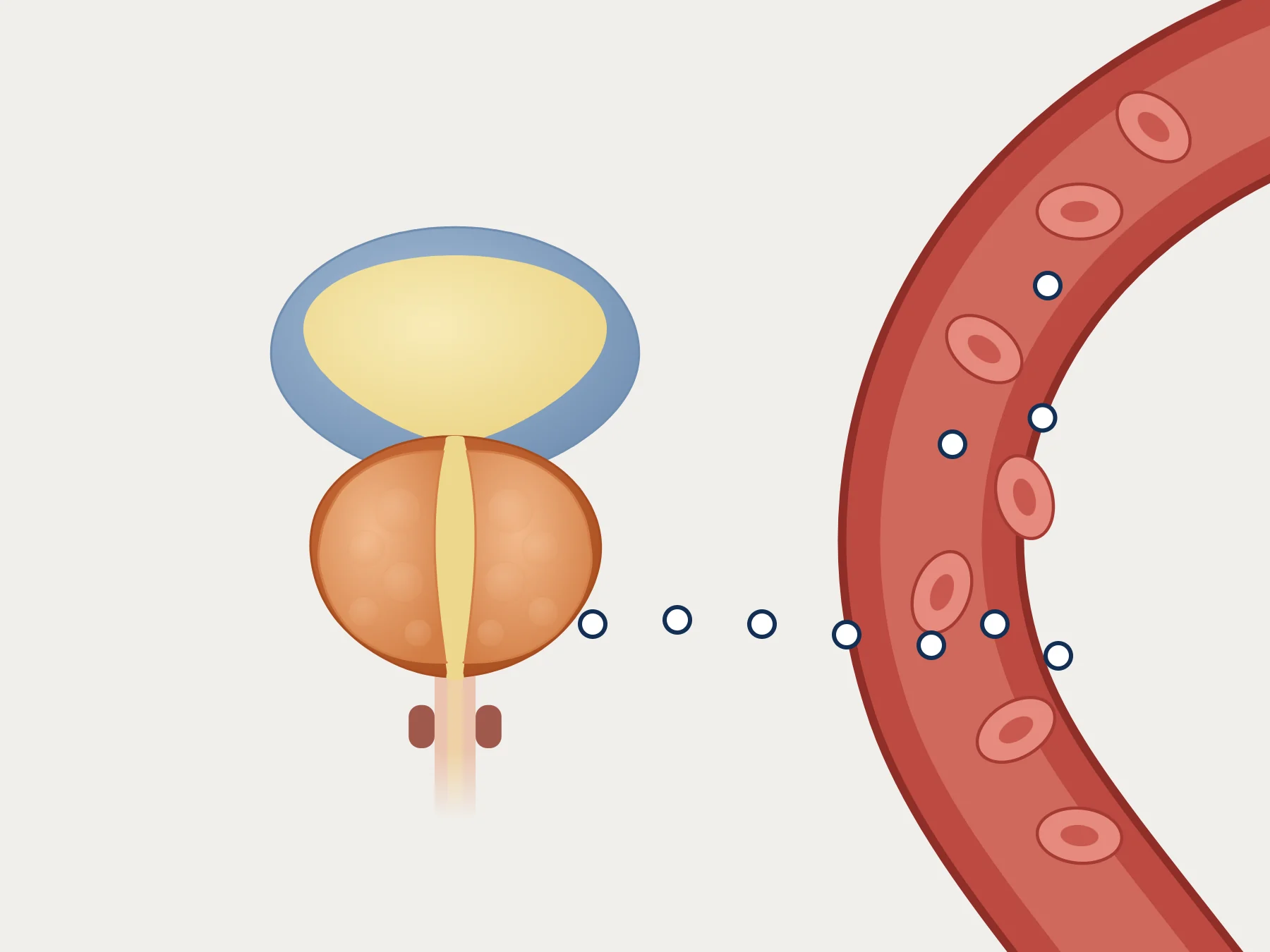
PSA is a protein made by the prostate and measured with a blood test. A high value is not always cancer, because PSA also rises with an enlarged prostate, prostatitis and other benign conditions.1 In screening, the value most often used to investigate is 3.0 ng/mL or higher. Between 3 and 10 ng/mL, with a normal rectal exam, the European guideline advises repeating the test before taking any other step.1
What PSA is
PSA stands for prostate-specific antigen. It is specific to the prostate, but not to cancer.1
The test works as a continuous scale: the higher it is, the greater the chance of cancer. There is no limit that everyone accepts to separate normal from abnormal, and cancer with a low PSA is rare.1 That is why the reference range printed on the report does not decide anything on its own.
When PSA is a concern
The next step depends on the value and on the rectal exam. The European guideline advises men without symptoms as follows:1
| Result | Next step |
|---|---|
| PSA of 3 to 10 ng/mL, normal rectal exam | Repeat the PSA after four weeks. If it returns to normal, test again in a year |
| PSA of 3 to 20 ng/mL, confirmed | Prostate MRI, or another risk tool, to decide about a biopsy |
| Negative MRI, PSA density below 0.20 ng/mL/cc and no family history | The biopsy may be skipped, with PSA follow-up |
A single value can mislead. In a study of 972 men followed for four years, 44% of those with a PSA above 4 ng/mL had a normal result on at least one later test.2
What changes the result
Before interpreting the number, it is worth checking what may have changed the test:
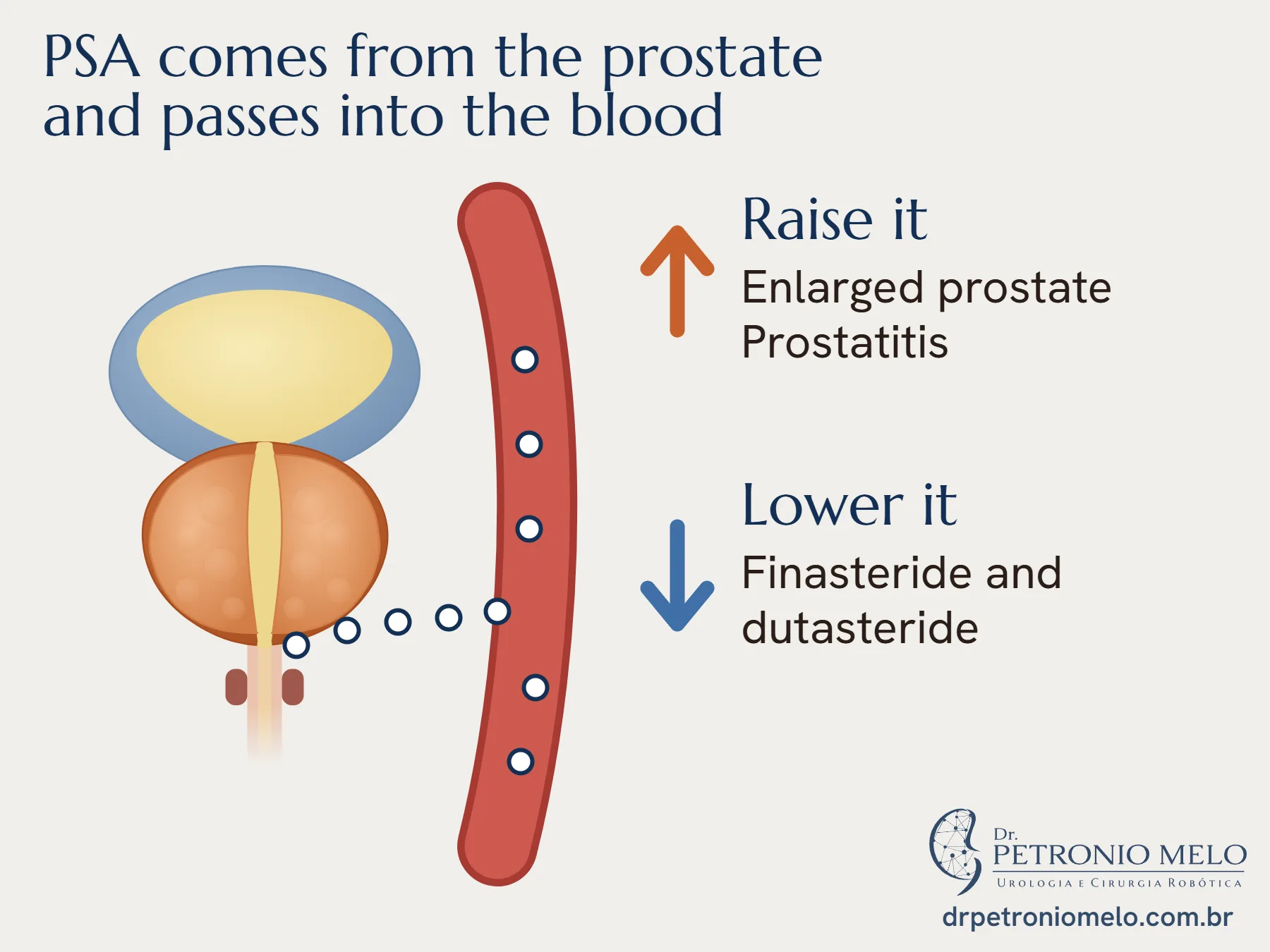
- Enlarged prostate and prostatitis: they raise PSA without cancer being present.1
- Finasteride and dutasteride: they lower PSA by about 50%, and the value needs to be corrected.1
- Finasteride 1 mg, for hair loss: in a randomized study, PSA fell by 40% in men aged 40 to 49 and by 50% in men aged 50 to 60.3
Density and free PSA
PSA density divides the test value by the volume of the prostate, measured on MRI. The higher it is, the greater the chance of a clinically significant cancer. Men with a density below 0.09 ng/mL/cc had a 4% chance of that diagnosis.1
Free PSA is measured along with total PSA and can help when the value is between 4 and 10 ng/mL.2
What the studies show
A European study followed 162,236 men aged 55 to 69 for 23 years. In the group that had repeated PSA tests, prostate cancer deaths were 13% lower. One death was prevented for every 456 men invited and every 12 diagnosed.4
The same group had 30% more diagnoses, and the authors recommend risk-based strategies to reduce overdiagnosis.4 That is why the Brazilian Society of Urology (SBU) and the AUA advise shared decision-making between doctor and patient.5,6
How I approach it
In my practice, I look at how PSA changes over the years and avoid deciding on a single value. Before interpreting it, I ask about finasteride, dutasteride and any recent urinary infection. When PSA rises with no other explanation, I repeat the test and, if the change is confirmed, I order an MRI before talking about a biopsy.
When to see a urologist
Frequently asked questions
Does a high PSA mean cancer?+
Not necessarily. PSA also rises with an enlarged prostate, prostatitis and other benign conditions.1 The higher the value, the greater the chance of cancer, which is why the result needs evaluation.1
What is a normal PSA?+
There is no limit that everyone accepts.1 In screening, the value most often used to investigate is 3.0 ng/mL or higher.1 Interpretation takes into account your age, the rectal exam and how the test changes over time.
Do I need to repeat the PSA?+
With a PSA between 3 and 10 ng/mL and a normal rectal exam, the European guideline advises repeating the test after four weeks.1 In a study of 972 men, 44% of those with a PSA above 4 ng/mL had a normal value on a later test.2
Does a low PSA rule out cancer?+
The risk is almost always lower, but the test does not exclude the disease. Cancer with a low PSA is rare.1
Does finasteride change PSA?+
Yes. Finasteride and dutasteride lower PSA by about 50%, and the value needs to be corrected.1 Finasteride 1 mg, used for hair loss, also lowers the test.3 Tell your doctor if you take any of these medications.
Can MRI replace PSA?+
No. The European guideline advises against using MRI as the first screening test. It comes later, to help decide about a biopsy.1
References
- EAU-EANM-ESTRO-ESUR-ISUP-SIOG Guidelines on Prostate Cancer. European Association of Urology; 2026. EAU
- Eastham JA, Riedel E, Scardino PT, et al. Variation of serum prostate-specific antigen levels: an evaluation of year-to-year fluctuations. JAMA. 2003;289(20):2695-2700. PubMed
- D'Amico AV, Roehrborn CG. Effect of 1 mg/day finasteride on concentrations of serum prostate-specific antigen in men with androgenic alopecia: a randomised controlled trial. Lancet Oncol. 2007;8(1):21-25. PubMed
- Roobol MJ, de Vos II, Månsson M, et al. European Study of Prostate Cancer Screening: 23-Year Follow-up. N Engl J Med. 2025;393(17):1669-1680. PubMed
- Sociedade Brasileira de Urologia. Aconselhamento para o diagnóstico precoce do câncer de próstata. 2020. SBU
- Wei JT, Barocas D, Carlsson S, et al. Early Detection of Prostate Cancer: AUA/SUO Guideline Part I: Prostate Cancer Screening. J Urol. 2023;210(1):46-53. PubMed
Would you like to talk about your case?
In the consultation, I go over your tests and your priorities.
Book a consultation