
Quick answer
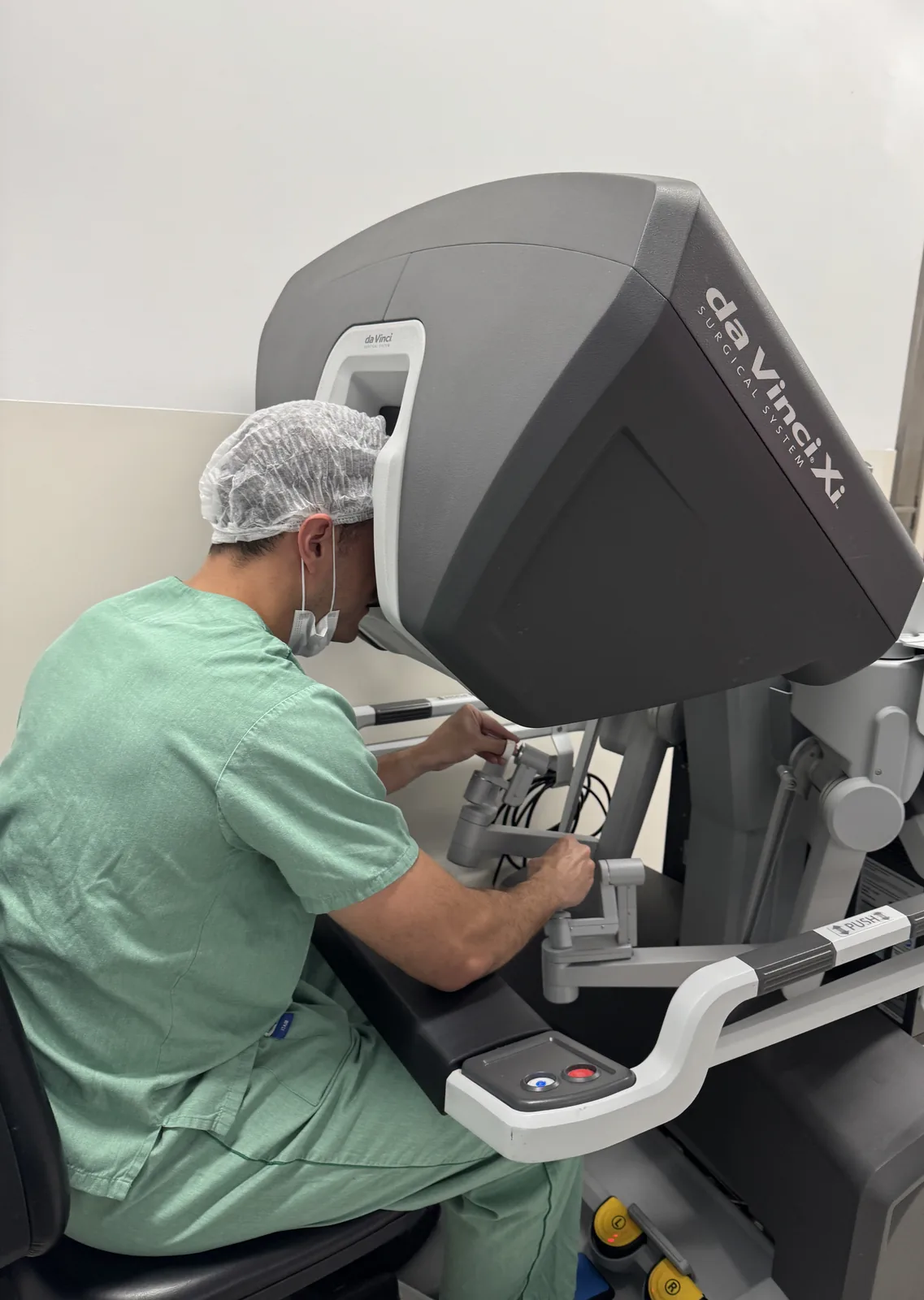
In robotic surgery, the surgeon controls delicate instruments from a console, with a magnified three-dimensional view. The robot does not operate on its own. In urology, it is used in operations on the prostate, kidney, bladder and ureter. The benefits vary from one operation to another and depend on the surgeon's experience. I have performed more than 1,500 robotic and laparoscopic surgeries, more than 500 of them robotic.
How it works
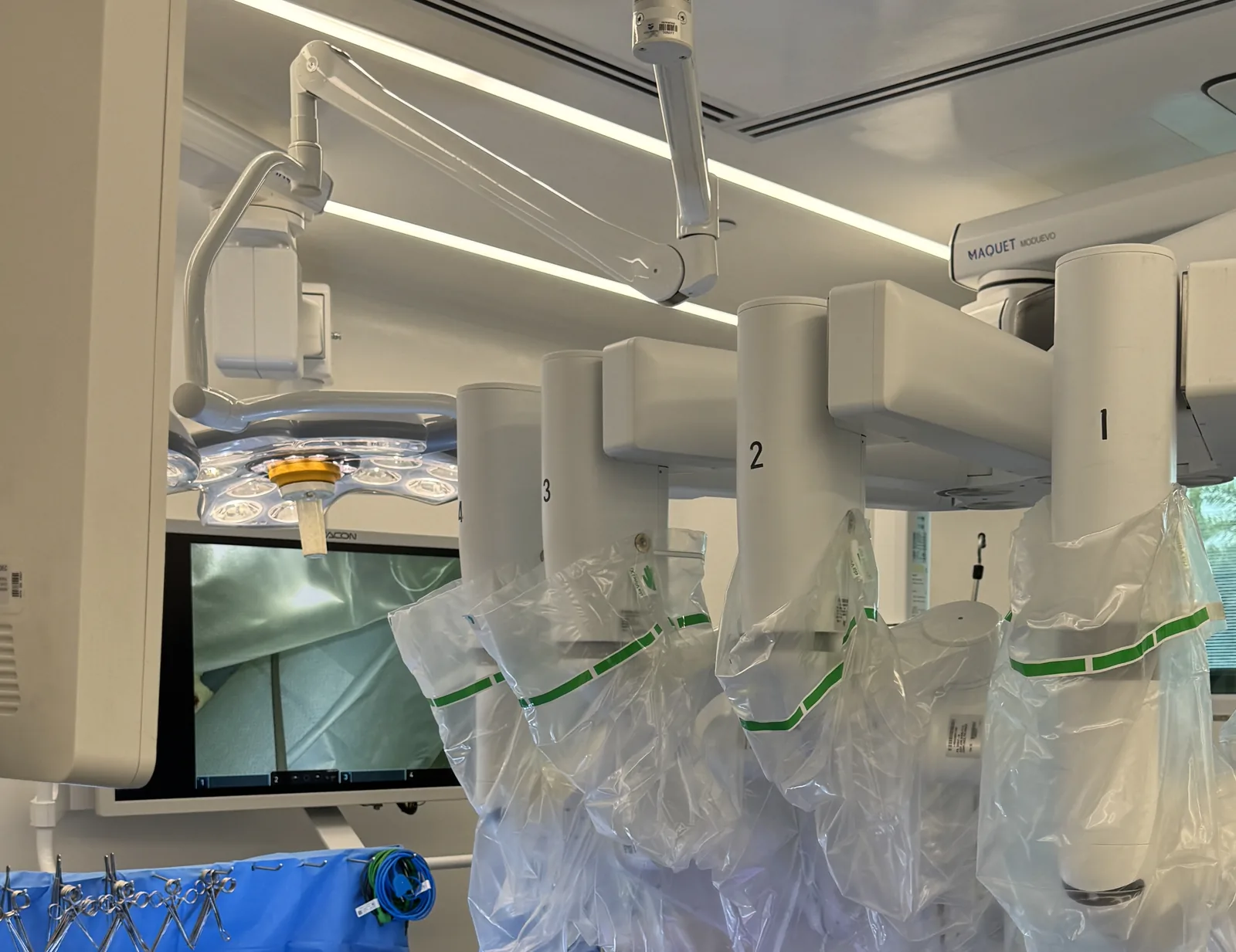
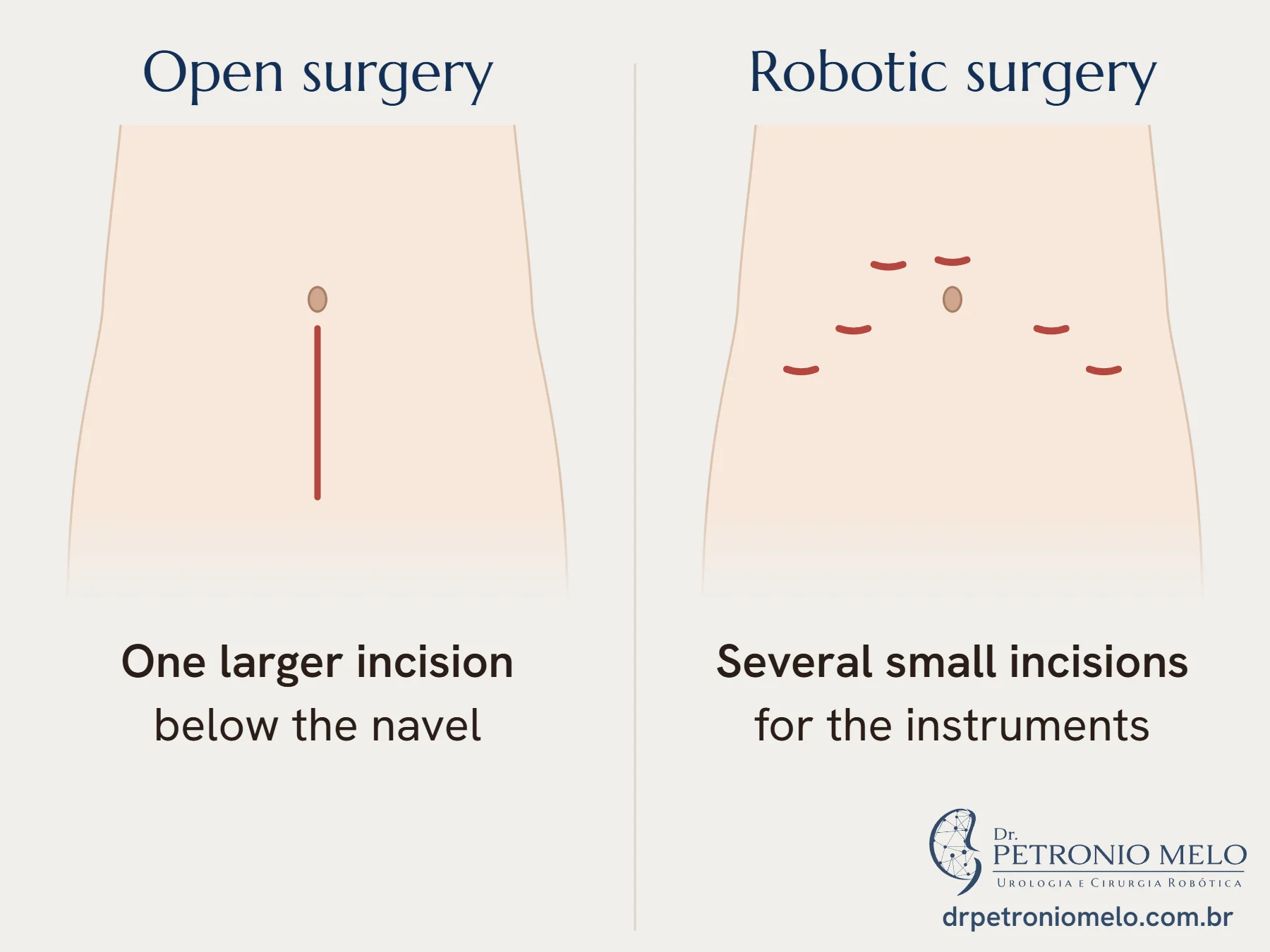
Before going to the console, the surgeon docks the robot's arms to the patient. The surgeon then sits at the console, in the same room, and controls those arms. The camera and the instruments enter through small incisions.
The features most often cited are the three-dimensional view, the magnified image, the instruments that bend like a wrist and the tremor filter.1
Where it is used in urology
| Operation | What it is for |
|---|---|
| Radical prostatectomy | Prostate cancer |
| Simple prostatectomy | Enlarged prostate, in selected cases |
| Partial nephrectomy | Kidney tumor, preserving the organ |
| Cystectomy | Bladder cancer |
| Nephroureterectomy | Tumor of the renal pelvis and ureter7 |
| Pyeloplasty | Narrowing between the kidney and the ureter8 |
What the research shows
Results vary with the operation.
- Prostate. Comparing the robotic and open approaches, the Cochrane review found little or no difference in urinary and sexual quality of life, with limited evidence.2 A randomized study showed similar urinary and sexual function at 24 months.3
- Kidney. In partial nephrectomy, one review found less bleeding, fewer complications and a shorter hospital stay with the robotic approach, with a longer operating time.5
- Bladder. In cystectomy, 90-day complications, margins, quality of life and survival were similar to the open approach, with less bleeding and a longer operating time.6
- Ureter. In nephroureterectomy, the review found less bleeding and a shorter hospital stay, with low-quality evidence.7
- Where the kidney meets the ureter. At one center, robotic pyeloplasty succeeded in 90.6% of cases, similar to laparoscopic surgery, with a shorter stay and a longer operating time.8
In cystectomy, the European guideline considers the surgeon's experience and the volume of the center the main factors, ahead of the technique.6
Risks
Robotic surgery has the risks of any surgery, such as bleeding, infection, injury to nearby organs and problems with anesthesia. It may also need to be converted to another approach during the operation.
Single port
In the single-port technique, all the instruments enter through one opening. In a 2025 review, it had less pain and a shorter hospital stay than traditional robotic surgery, with similar results in prostatectomy.4 In partial nephrectomy, the kidney's blood supply was clamped for longer. The review included no randomized studies.4
Length of hospital stay
In selected series, some robotic urologic operations had same-day discharge, in a paper with no comparison group.9 The real length of stay depends on the operation and on each patient.
How I approach it
In my practice, I assess the case and explain the options, with or without the robot. I have performed more than 1,500 robotic and laparoscopic surgeries, more than 500 of them robotic. The decision is made together with the patient, and the family takes part if the patient wishes.
When to see a urologist
- If you have been told you need urologic surgery and want to know the options
- If you have been diagnosed with prostate, kidney or bladder cancer
- If you want a second opinion on the surgical approach
Frequently asked questions
Does the robot operate on its own?+
No. Every movement is controlled by the surgeon, who stays at the console throughout the operation.
Is robotic surgery better than open surgery?+
It depends on the operation. In prostatectomy, a randomized study showed urinary and sexual function similar to open surgery at 24 months.3 In kidney and bladder surgery, the robotic approach had less bleeding and a longer operating time.5,6 In cystectomy, the surgeon's experience and the volume of the center count for more than the technique.6
Which urologic operations can be done with a robot?+
Radical and simple prostatectomy, partial and radical nephrectomy, cystectomy, nephroureterectomy and pyeloplasty, among others. The indication depends on each case.5,6,7
Does robotic surgery have risks?+
Yes. It has the risks of any surgery, such as bleeding, infection and injury to nearby organs, and it may need to be converted to another approach during the operation.
What is single-port robotic surgery?+
It is surgery with all the instruments passing through a single opening. In a 2025 review, it had less pain and a shorter hospital stay than traditional robotic surgery, with no randomized studies.4
References
- Cozzi G, Lorenzis ED, Palumbo C, et al. Robotic prostatectomy: an update on functional and oncologic outcomes. Ecancermedicalscience. 2013;7:355. PubMed
- Ilic D, Evans SM, Allan CA, et al. Laparoscopic and robotic-assisted versus open radical prostatectomy for the treatment of localised prostate cancer. Cochrane Database Syst Rev. 2017;9(9):CD009625. PubMed
- Coughlin GD, Yaxley JW, Chambers SK, et al. Robot-assisted laparoscopic prostatectomy versus open radical retropubic prostatectomy: 24-month outcomes from a randomised controlled study. Lancet Oncol. 2018;19(8):1051-1060. PubMed
- Ficarra V, Romito I, Sorce G, et al. Comparison of Single- and Multiport Robot-assisted Approaches in Prostate and Renal Surgery: A Systematic Review and Meta-analysis. Eur Urol. 2025;88(6):589-613. PubMed
- Tsai SH, Tseng PT, Sherer BA, et al. Open versus robotic partial nephrectomy: Systematic review and meta-analysis of contemporary studies. Int J Med Robot. 2019;15(1):e1963. PubMed
- EAU Guidelines on Muscle-invasive and Metastatic Bladder Cancer. European Association of Urology; 2026. Disease management chapter. EAU
- Veccia A, Antonelli A, Francavilla S, et al. Robotic versus other nephroureterectomy techniques: a systematic review and meta-analysis of over 87,000 cases. World J Urol. 2020;38(4):845-852. PubMed
- Carmona O, Dotan ZA, Haifler M, et al. Laparoscopic Versus Robot-Assisted Pyeloplasty in Adults-A Single-Center Experience. J Pers Med. 2022;12(10):1586. PubMed
- Orsini A, Lasorsa F, Bignante G, et al. Outpatient Robotic Urological Surgery: An Evidence-based Analysis. Eur Urol Focus. 2025;11(2):337-346. PubMed
Would you like to talk about your case?
In the consultation, I go over your tests and your priorities.
Book a consultation