

Quick answer
A double J stent is a thin tube that stays inside the body, from the kidney to the bladder, and keeps urine draining. It is used to drain a blocked kidney and after some stone operations.1 After a ureteroscopy that goes well, I usually leave it for 5 days. It can be uncomfortable, and the removal date must be kept.2,3
What it is and why it is placed
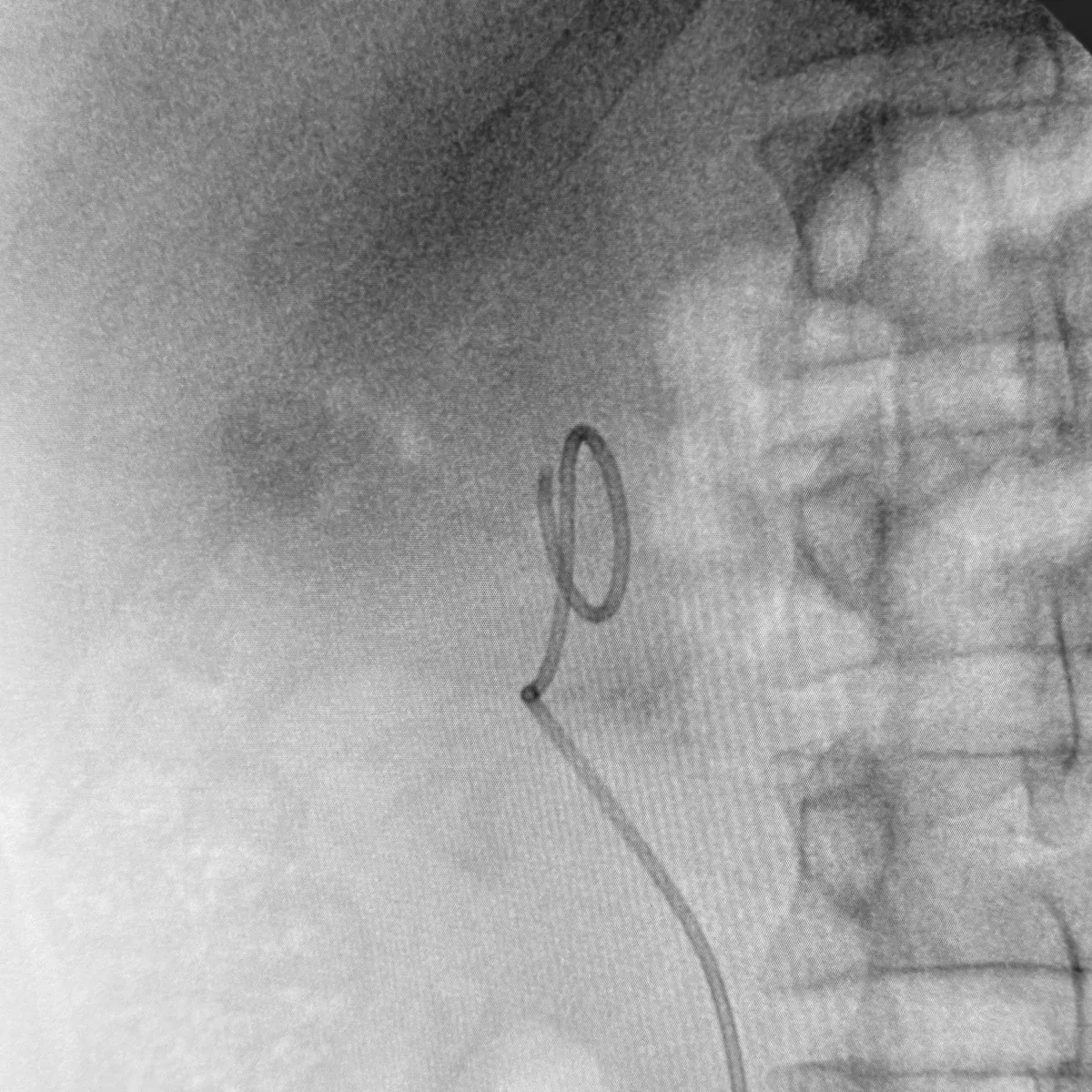
The name comes from the coiled ends, shaped like a J. One sits inside the kidney and the other inside the bladder, which holds the stent in place. Nothing shows on the outside of the body.
It is placed in three main situations:
- A blocked kidney with infection or uncontrolled pain. A stent and a nephrostomy are equally effective at draining the kidney.1
- After ureteroscopy. In my practice, I usually leave a stent. It matters even more when there is injury to the ureter, fragments, bleeding or infection.1
- After percutaneous surgery. Whenever possible, I operate without a nephrostomy tube, with the stent inside.
It can also be placed before a ureteroscopy, when the ureter is too narrow for the scope to pass.1
How long it stays
The European guideline says the ideal duration is not known and depends on the reason.1 A study it cites showed that three days, compared with seven, brought better urinary symptoms, pain and general health.1
In my practice, after a ureteroscopy that goes well, I usually leave it for 5 days, and longer when needed. The date is agreed before discharge.
What can be bothersome
The stent touches the bladder and passes through the ureter, which explains most of the symptoms. In a study of 62 patients who answered a questionnaire designed for stents, these were the complaints:2

The urinary symptoms include urgency, a frequent need to urinate, leakage and blood in the urine.2 The answers were given after four weeks with the stent, a longer period than in many cases.2
What helps
Why it must not be forgotten
How long it stays, the stent material and the urine composition all influence this process.3 If the agreed date passes, talk to your urologist, even if you have no symptoms.
How it is removed
The stent comes out through the urethra. The way it is removed varies: some have a string that stays outside, and removal is simpler, with fewer days of stent and fewer complaints.1 Without the string, it is removed with a scope that goes in through the urethra.
In my practice, a stent with a string is used often when surgery goes smoothly, and I remove it in the office, without sedation. Without the string, I remove it in the operating room, with sedation.
How I approach it
In my practice, I explain before surgery that a stent may be needed and what it usually causes. The date is set at discharge. When the discomfort gets in the way, I adjust the treatment. Removal is scheduled, because the stent must not be forgotten.
When to see a urologist
- If you have fever or chills
- If severe pain does not improve with medicine
- If the blood in your urine becomes heavy or has clots
- If you cannot urinate
- If the removal date is passing
Frequently asked questions
What is a double J stent?+
It is a thin, soft tube that stays inside the body, from the kidney to the bladder. Both ends are coiled, in the shape of a J, and hold the stent in place.
How long does a double J stent stay?+
It depends on the reason. After a ureteroscopy that goes well, I usually leave it for 5 days, and longer if needed. The European guideline says the ideal duration is not known and depends on each case.1
Does a double J stent hurt?+
It can be uncomfortable. In a study using a validated questionnaire, 78% reported bothersome urinary symptoms, and more than 80% had pain that interfered with daily activities.2
Is it normal to have blood in the urine with a stent?+
Blood in the urine is among the symptoms reported with the stent.2 Heavy bleeding, clots, fever or severe pain need evaluation.
What relieves the discomfort?+
The European guideline recommends an alpha-blocker for people who have symptoms from the stent.1 Thinner stents may also reduce symptoms and pain.1
What happens if the stent is forgotten?+
Over time, the stent can become encrusted, and the risk grows the longer it stays, especially in people with a history of stones.3 That is why the removal date needs to be agreed and kept.
How is the double J stent removed?+
Through the urethra. In my practice, a stent with a string comes out in the office, without sedation. Without the string, I remove it in the operating room, with sedation.
Can I work with a double J stent?+
Many people do, but 58% reported a reduced capacity to work in the same study.2 The pace depends on your symptoms and what you do day to day.
References
- EAU Guidelines on Urolithiasis. European Association of Urology; 2026. Guidelines chapter. EAU
- Joshi HB, Stainthorpe A, MacDonagh RP, et al. Indwelling ureteral stents: evaluation of symptoms, quality of life and utility. J Urol. 2003;169(3):1065-1069. PubMed
- Vanderbrink BA, Rastinehad AR, Ost MC, Smith AD. Encrusted urinary stents: evaluation and endourologic management. J Endourol. 2008;22(5):905-912. PubMed
Would you like to talk about your case?
In the consultation, I go over your tests and your priorities.
Book a consultation