

Quick answer
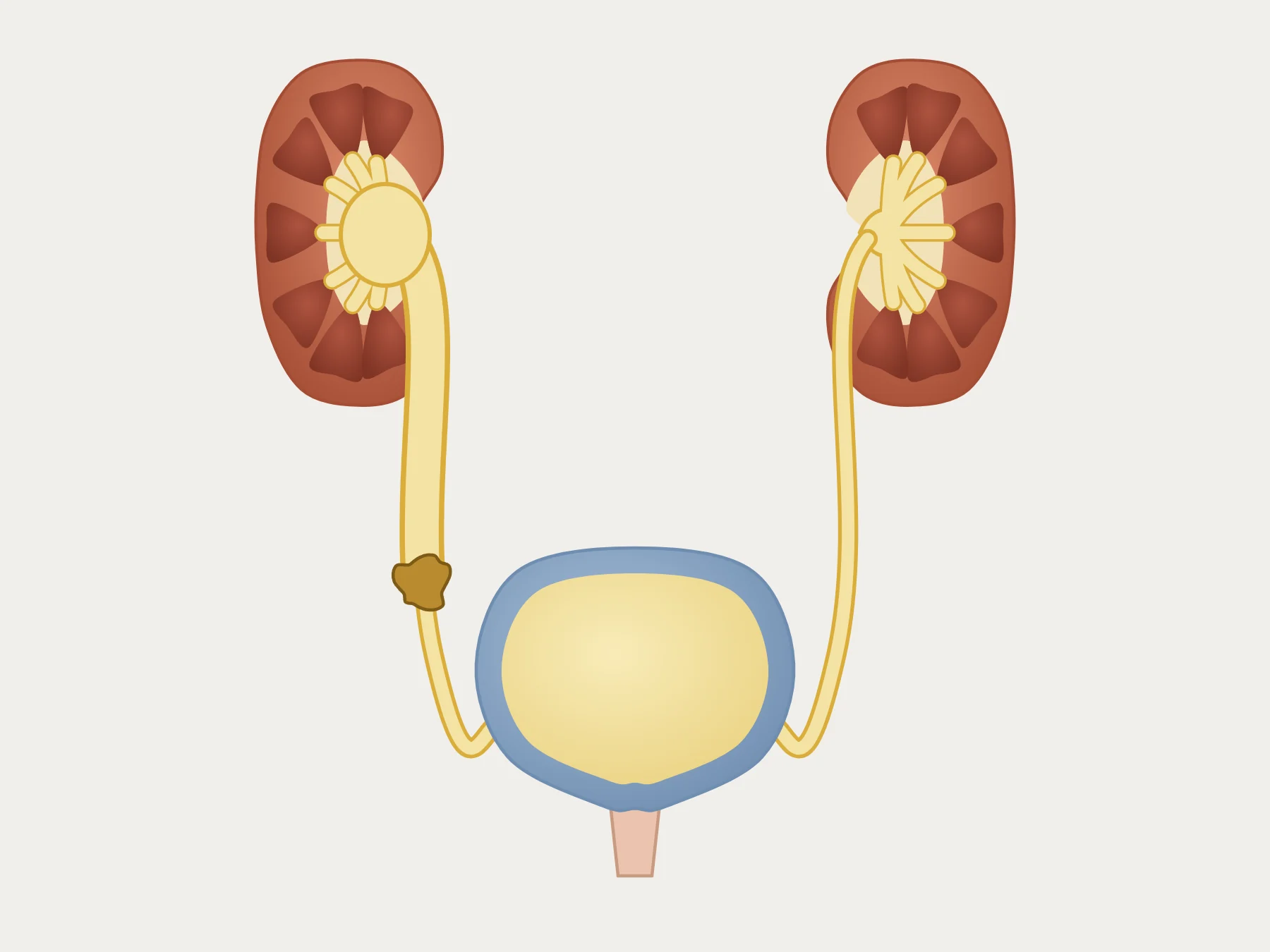
Renal colic is a strong pain that comes in waves when a stone enters the ureter and gets in the way of urine draining. It usually starts in the flank or back and comes with nausea and vomiting.2 When the stone is lower down, the pain moves toward the genital area.2 Colic with fever is a urological emergency.1
What the pain is like
A stone sitting in the kidney usually stays quiet. The strong pain comes when it passes into the ureter and causes a sudden blockage.2 The intensity varies, but it is usually very strong. It comes and goes in cycles of 20 to 60 minutes, and many people cannot keep still: they walk around, writhe and change position all the time.2
Where it hurts and what that suggests
Where the pain is gives a clue to where the stone is.2
| Where the stone is | What usually appears |
|---|---|
| Upper ureter or renal pelvis | Pain in the flank and back, which can spread across the abdomen |
| Lower ureter | Pain that moves along the path of the ureter toward the genital area |
| Next to the bladder | Pain above the pubic bone, urgency and a frequent need to urinate |
Visible blood in the urine may appear, but not in everyone.2 When there is blood with no explanation, the investigation is different, and it is covered in blood in the urine.
Not every flank pain is a stone. Appendicitis, gallbladder problems, bowel obstruction and pancreatitis can be confused with it, which is why the physical exam and imaging matter.2
Signs that call for immediate evaluation
Imaging should also be done right away in people with fever, in people with a single kidney and when the cause of the pain is unclear.1 If medicine does not control the pain, the answer is to drain the kidney or remove the stone.1
Swollen kidney
When urine cannot drain, pressure builds up and the urine-collecting part of the kidney widens. This is hydronephrosis, which many people know as a swollen kidney.2 The swelling itself is a finding, and what matters is finding the cause.
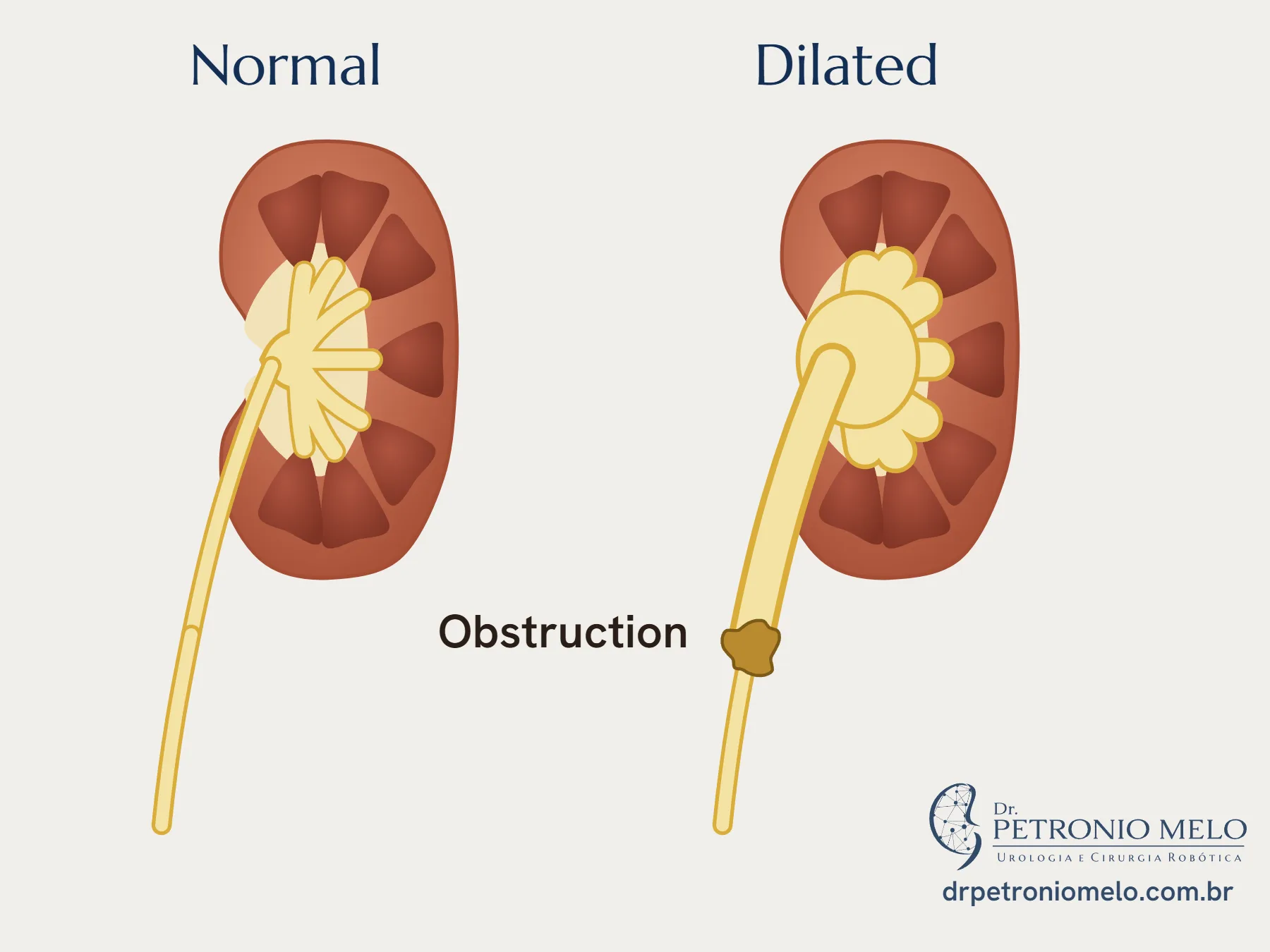
The most common causes change with age.3
| Age | Most common causes |
|---|---|
| Children | Conditions present from birth, such as a narrowing between the kidney and the ureter or between the ureter and the bladder |
| Young adults | Stones |
| Older adults | Enlarged prostate, prostate cancer and other tumors, urethral stricture, neurogenic bladder and stones |
Pregnancy can also make the kidney swell.3 A slow or partial blockage usually causes little or no pain, and then it is found on a test done for another reason.3 Without infection, permanent loss of function usually appears after about 28 days of complete blockage.2 Even a partial blockage already reduces the kidney's filtration, so it is worth not putting off the investigation.2
How an attack is treated
An anti-inflammatory is the first choice, depending on each person's heart risk and side effects. It relieves pain better than opioids, which are the second option. Adding an antispasmodic does not improve pain control.1 People with heart or kidney disease need care with these medicines, so the choice is individual.1
After the pain comes the decision about the stone. It may be monitored or need treatment, and this is covered in when to treat a kidney stone.
How I approach it
In my practice, the first question is whether there is fever or any sign of infection. Then come pain control and imaging, to learn the size and position of the stone. With that, I explain what can wait and what needs treatment. When a test shows a swollen kidney with no stone, I look for the cause before talking about treatment.
When to see a urologist
- If you have colic with fever or chills
- If the pain does not improve with medicine
- If you pass less urine or none at all
- If you have a single kidney
- If a test shows a swollen kidney
- If flank pain keeps coming back
Frequently asked questions
What does renal colic feel like?+
The pain is usually very strong and comes in waves lasting 20 to 60 minutes. Nausea and vomiting are common, and many people cannot keep still or find a comfortable position.2
Where does a kidney stone hurt?+
It depends on where the stone is. Higher up, the pain is in the flank and back and can spread across the abdomen. Lower down, it moves along the path of the ureter toward the genital area. Near the bladder, there may be pain above the pubic bone, urgency and a frequent need to urinate.2
Does a kidney stone always hurt?+
No. A stone sitting in the kidney may cause no symptoms at all. The strong pain usually starts when it enters the ureter and blocks the flow of urine.1,2
What is a swollen kidney?+
It is a kidney whose urine-collecting part is widened, usually because urine is not draining well. The medical name is hydronephrosis. In young adults, a stone is the most common cause. In older people, the prostate, tumors and narrowings also come into play.3
Is a swollen kidney serious?+
It depends on the cause, how long it has lasted and whether there is infection. With signs of infection, it is a urological emergency.1 Without infection, permanent loss of function usually appears after about 28 days of complete blockage, which is why the cause needs to be investigated without delay.2
Which medicine helps with colic?+
An anti-inflammatory is the first choice, depending on each person's heart risk and side effects. It relieves pain better than opioids, and adding an antispasmodic does not improve pain control.1
References
- EAU Guidelines on Urolithiasis. European Association of Urology; 2026. Guidelines chapter. EAU
- Preminger GM. Urinary Calculi. MSD Manual, Professional Version. Updated April 2025. MSD Manual
- Preminger GM. Obstructive Uropathy. MSD Manual, Professional Version. Updated August 2026. MSD Manual
Would you like to talk about your case?
In the consultation, I go over your tests and your priorities.
Book a consultation