

Quick answer
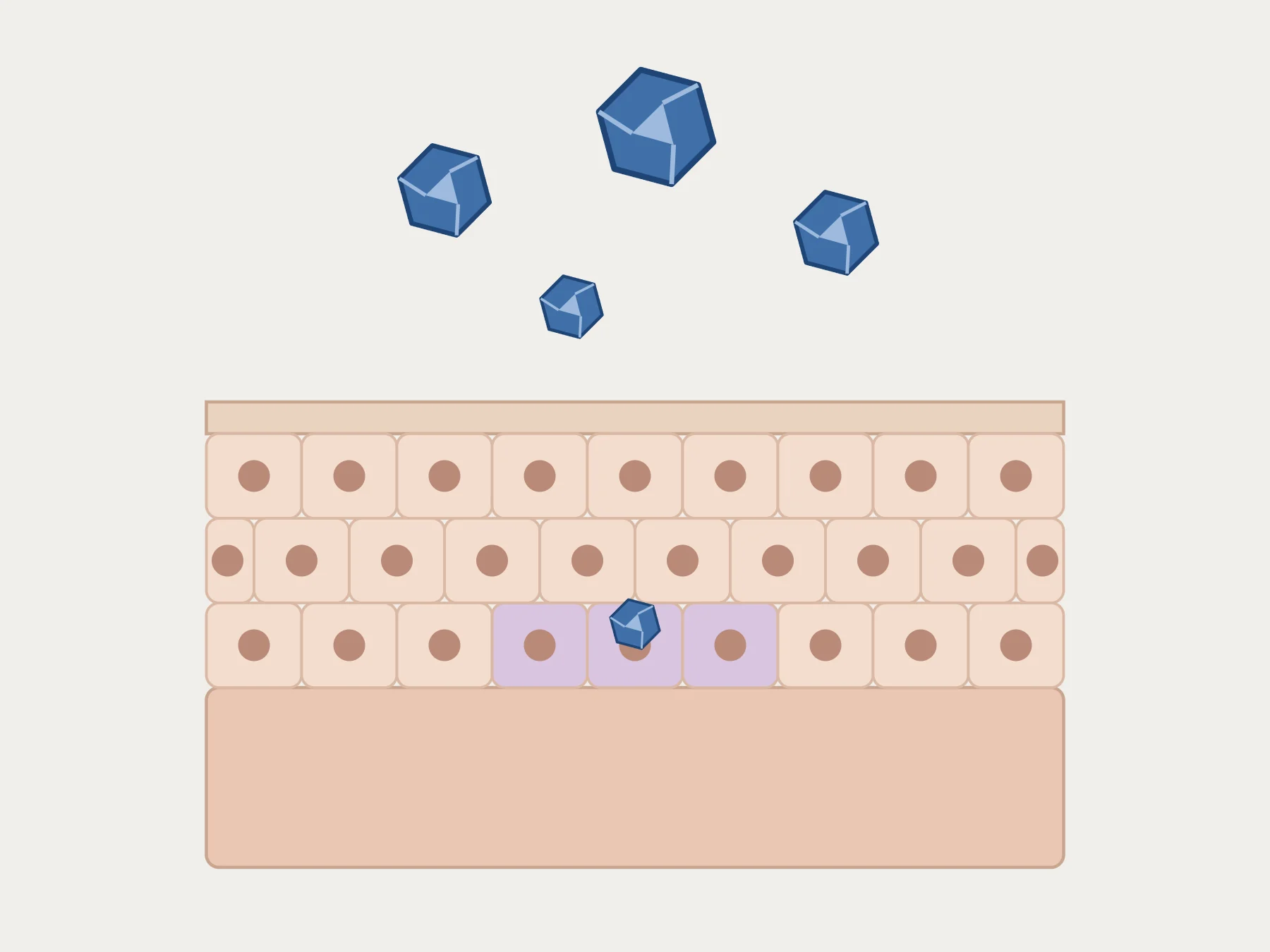
HPV is a very common virus: almost everyone who is sexually active will come into contact with it at some point.1 Most of the time it causes no signs and clears on its own.1,2 Types 6 and 11 cause more than 90% of genital warts, and types 16 and 18 cause most HPV-related cancers.2 Treatment removes the lesions, but they can come back.1 The vaccine is the main form of prevention.1
What it is and how it spreads
There are more than 200 types of HPV, and about 40 affect the genital and anal area.1 The virus passes through any type of sexual activity.1 The risk is estimated at 15% to 25% with each new partner.1 Transmission through objects is rare.1
The virus can stay silent for months or years.1 In a study of 1,159 men from Brazil, Mexico and the United States, the infection lasted about 7.5 months on average, and about 12 months for HPV 16.3
Genital warts
Warts, also called condylomas, have a dull, velvety or cauliflower-like surface. They can be single or multiple, skin-colored or darker, and range from 1 millimeter to a few centimeters.1 They usually cause no discomfort but may itch, hurt or bleed.1
In men, they appear most often on the inner foreskin, in the groove behind the glans and on the glans. They can affect the skin of the penis, the scrotum, the groin and the area around the anus.1
Diagnosis is clinical. A biopsy is for doubtful cases, atypical lesions, lack of response to treatment or low immunity.1 The protocol does not recommend routine tests to identify virus types, nor tests for people without symptoms, and virus detection tests have no role in following warts.1
HPV and cancer in men
The types that cause warts are almost always different from those that cause cancer.1 Having a wart does not mean having cancer.
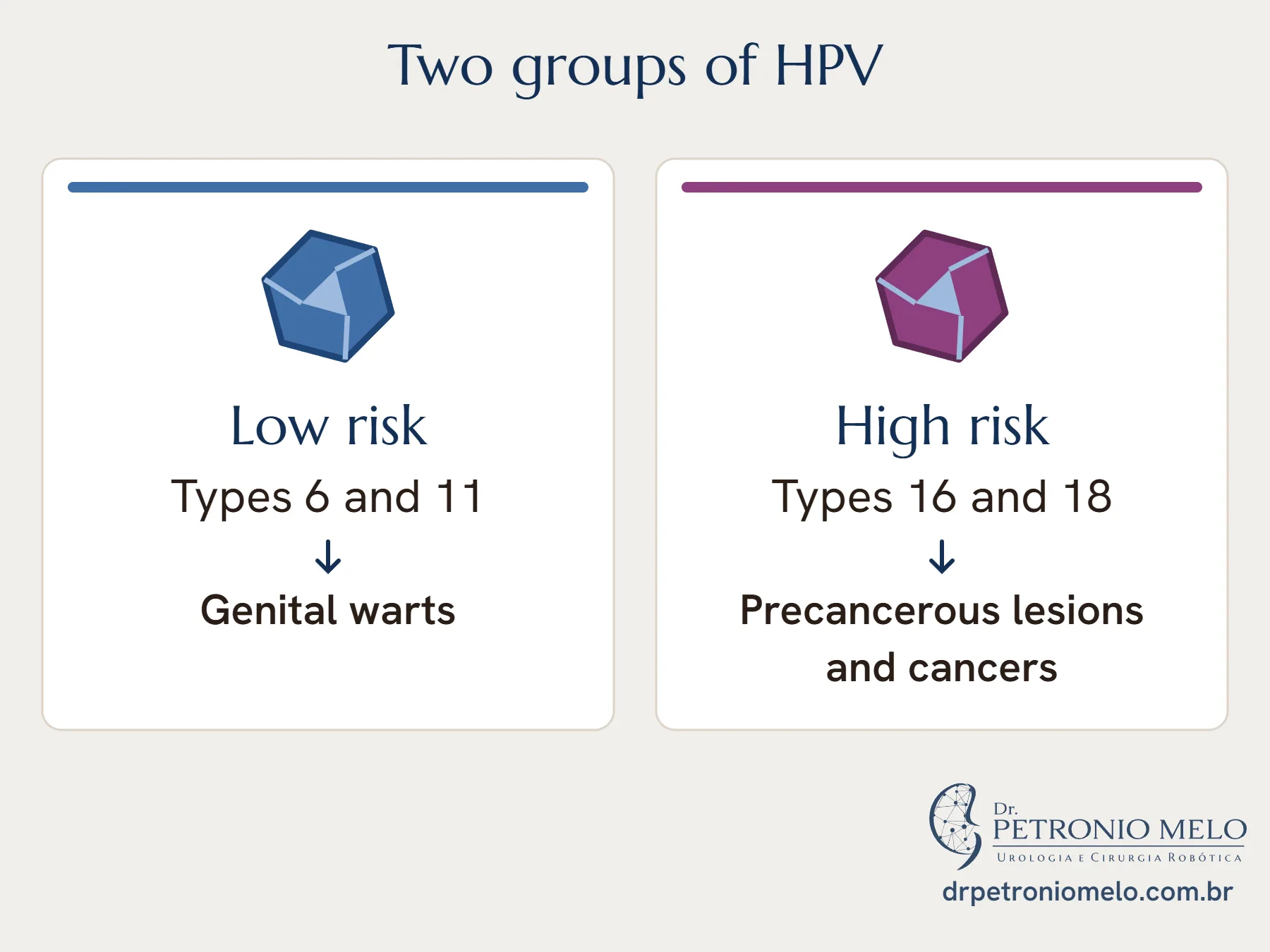
In a review of 52 studies, about half of penile cancers contained HPV material, and the most common type was 16.4 Smoking and low immunity make it more likely that infection with high-risk types progresses.1 Any sore or lesion on the penis that does not heal needs examination.
Cauterization and other treatments
Treatment destroys or removes the visible lesions.1 It does not change the natural course of the infection, and no antiviral medicine is indicated to eliminate the virus.1,2 With or without treatment, warts can disappear, stay the same or grow.1 The choice depends on the type, size and location of the lesions.1
| Option | What it involves | For which lesions |
|---|---|---|
| Electrocautery | With local anesthesia. Destroys all the lesions in one session | Raised, stalked or bulky lesions |
| Surgical removal | With local anesthesia. Allows the tissue to be sent for analysis | Bulky lesions, especially stalked ones |
| Cryotherapy | Freezing with liquid nitrogen, in sessions | Isolated, firmer lesions |
| Trichloroacetic acid | Applied in the office, in sessions. Never for home use | According to the response |
| Imiquimod | Cream applied at home, 3 times a week, for up to 16 weeks | External warts |
| Podophyllotoxin | Cream applied at home, in weekly cycles | External warts |
Source for the table: Brazilian protocol.1
In my practice, I offer cauterization, trichloroacetic acid and imiquimod, case by case, and the decision is made together with the patient. I do cauterization in the office.
Improper use of cauterization can leave scars and, rarely, cause narrowing of the urethra.1 Because the condition tends to improve over time, treatments that leave large scars should be avoided.1 The protocol suggests switching options if there is no improvement after 3 sessions, or if warts remain after 6.1
Recurrences are frequent, because treatment does not eliminate the virus.1 Most respond within 3 months, and warts come back most often during that period.7 If a new lesion appears, the right step is to come back.1
Partners
Partners should be advised and examined.1 Because the infection causes no symptoms and can stay silent for a long time, most of the time there is no way to know with which partner it started. It may have come from someone who never had any lesion.1
Women with warts need a full gynecological examination, including a cervical screening test.1
Vaccine
The SUS vaccine protects against types 6, 11, 16 and 18.5 It works best before sexual life begins.1 In women aged 15 to 20, a study in Kenya showed high, lasting protection against the vaccine types with a single dose, over 3 years.8
| Who | In the SUS |
|---|---|
| Girls and boys aged 9 to 14 | Single dose |
| Aged 15 to 19 with no vaccination record | One dose, until 31 December 2026 |
| Transplant recipients, cancer patients and other people with low immunity | 3 doses |
Sources for the table: Brazilian Ministry of Health.5,6 The vaccine does not treat existing warts.7 Adults outside these groups are not on the SUS schedule. In my practice, I offer the vaccine in private care to all sexually active adult patients, to prevent HPV.
When to see a urologist
- If a wart or lesion appears on the penis, scrotum or groin
- If your partner is diagnosed with HPV
- If a lesion grows, bleeds or does not heal
- If warts come back after treatment
Frequently asked questions
Is HPV dangerous in men?+
Most of the time, the infection causes no signs at all.1 The types that cause warts are almost always different from those that cause cancer.1 High-risk types, such as type 16, are linked to some penile cancers and to other cancers.1,4
Can HPV be cured?+
Most infections clear on their own.2 When there are warts, treatment removes the lesions, but no antiviral medicine is indicated to eliminate the virus, which is why they can come back.1,2
How long does HPV stay in men?+
In a study of 1,159 men from Brazil, Mexico and the United States, the infection lasted about 7.5 months on average. For HPV 16, about 12 months.3
What is HPV cauterization like?+
Electrocautery uses local anesthesia and destroys the lesions in one session. It is suitable for raised, bulky warts. The result depends on the experience of whoever does it, and improper use can leave scars.1 In my practice, I do cauterization in the office.
Is there an HPV test for men?+
Warts are diagnosed by clinical examination. The Brazilian protocol does not recommend routine tests to identify virus types, nor tests for people without symptoms.1
I have warts. Does that mean my partner cheated?+
Usually, there is no way to know. The virus can stay silent for months or years, and most of the time it is not possible to say with which partner the infection started.1
Can adult men get the vaccine?+
In Brazil's public health system (SUS), the routine is a single dose from age 9 to 14, and until 31 December 2026 there is a catch-up for those aged 15 to 19 who were not vaccinated.5 There are also special groups.6 Adults outside these groups are not on the SUS schedule. In my practice, I offer the vaccine in private care to all sexually active adult patients, to prevent HPV. It does not treat existing warts.7
Does HPV cause infertility?+
No. The Brazilian protocol states that HPV does not cause infertility.1
References
- Brasil. Ministério da Saúde. Protocolo Clínico e Diretrizes Terapêuticas para Atenção Integral às Pessoas com Infecções Sexualmente Transmissíveis (IST). Brasília: Ministério da Saúde; 2022. Brazilian Ministry of Health
- Workowski KA, Bachmann LH, Chan PA, et al. Sexually Transmitted Infections Treatment Guidelines, 2021. MMWR Recomm Rep. 2021;70(4):1-187. HPV chapter. CDC
- Giuliano AR, Lee JH, Fulp W, et al. Incidence and clearance of genital human papillomavirus infection in men (HIM): a cohort study. Lancet. 2011;377(9769):932-940. PubMed
- Olesen TB, Sand FL, Rasmussen CL, et al. Prevalence of human papillomavirus DNA and p16INK4a in penile cancer and penile intraepithelial neoplasia: a systematic review and meta-analysis. Lancet Oncol. 2019;20(1):145-158. PubMed
- Agência Gov. Vacinação contra o HPV para jovens de 15 a 19 anos é prorrogada até dezembro. 21 jul. 2026. PubMed
- Brasil. Ministério da Saúde. HPV. Saúde de A a Z. Brazilian Ministry of Health
- Workowski KA, Bachmann LH, Chan PA, et al. Sexually Transmitted Infections Treatment Guidelines, 2021. MMWR Recomm Rep. 2021;70(4):1-187. Anogenital warts chapter. CDC
- Barnabas RV, Brown ER, Onono MA, et al. Durability of single-dose HPV vaccination in young Kenyan women: randomized controlled trial 3-year results. Nat Med. 2023;29(12):3224-3232. PubMed
Would you like to talk about your case?
In the consultation, I go over your tests and your priorities.
Book a consultation