

Quick answer
Genital herpes is an infection with the herpes simplex virus, usually type 2, although type 1 can also cause it.1,2 Painful blisters appear and turn into small sores.1 After the first episode, the virus stays dormant in a nerve ganglion and can come back.1 Antivirals reduce the severity and length of outbreaks when started early, and outbreaks tend to become milder and less frequent over time.1
Symptoms of the first episode
Many people carry the virus and will never have symptoms: the share of infections with symptoms is estimated at 13% to 37%.1 When they do appear, symptoms start on average 6 days after contact.1
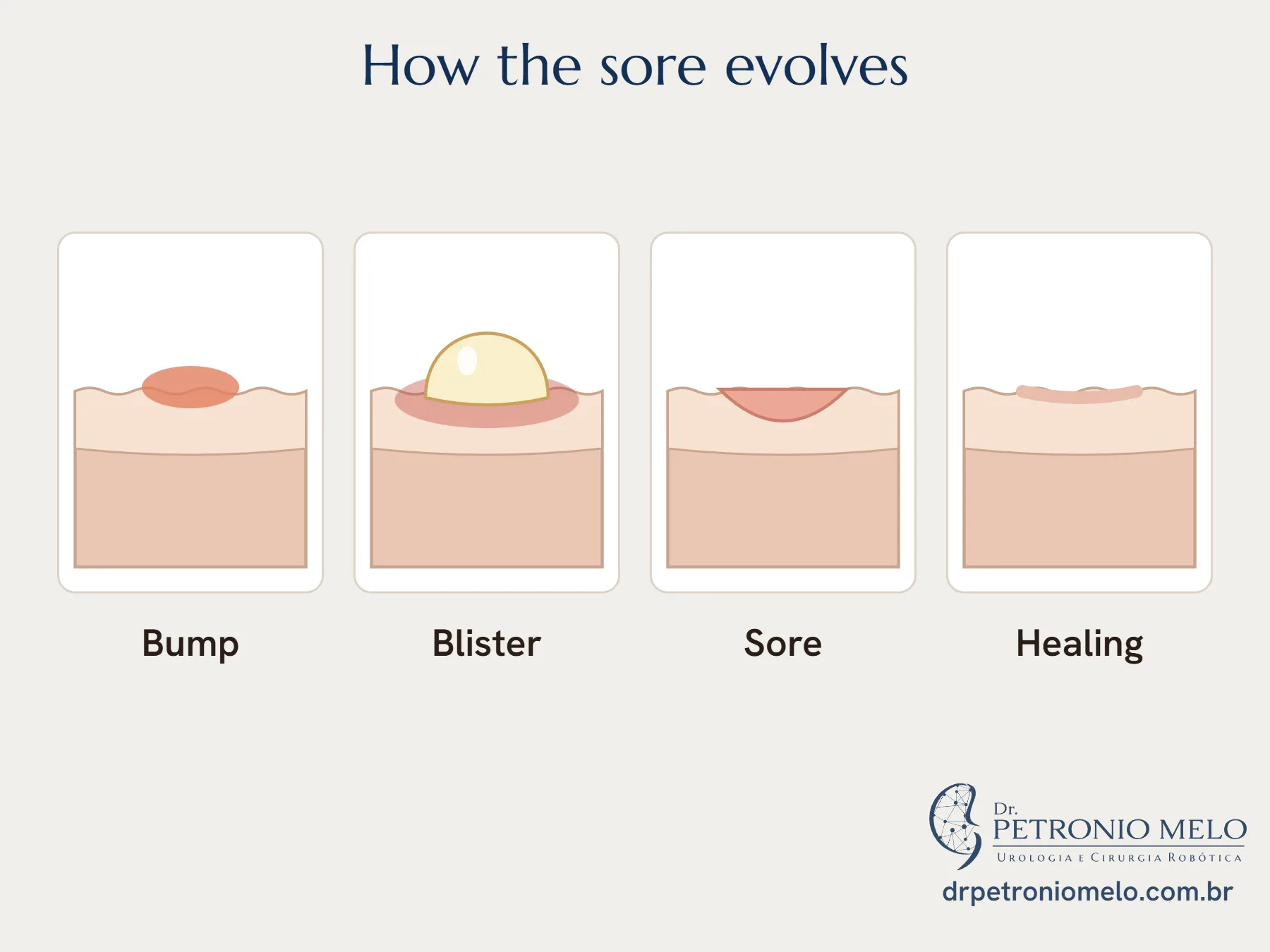
First come red spots and bumps of 1 to 3 millimeters, which soon become very painful blisters with clear fluid.1 There may be fever, malaise, body aches and pain when urinating, sometimes with difficulty urinating.1 Half of people have tender swollen glands on both sides of the groin.1 The episode can last 2 to 3 weeks.1 In men, infection of the urethra can cause discharge.1
Genital sores have other causes, such as syphilis, chancroid and trauma, and examination is what tells them apart.1
Why herpes comes back
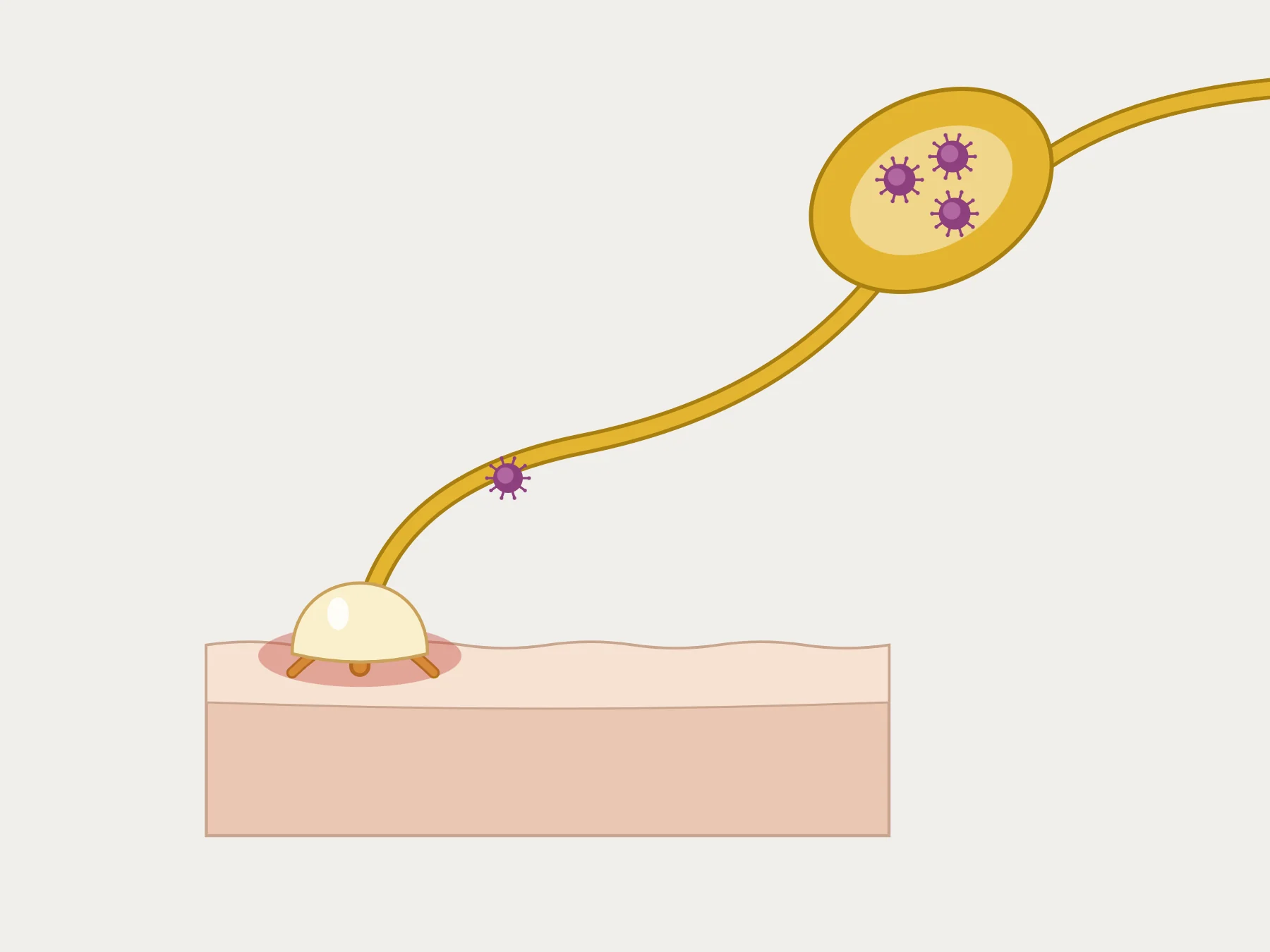
After infection, the virus travels up the sensory nerves and becomes latent, that is, dormant, inside a ganglion.1 No treatment prevents this.1 When it reactivates, it travels down the same nerve, which is why the lesion tends to come back in the same place.1
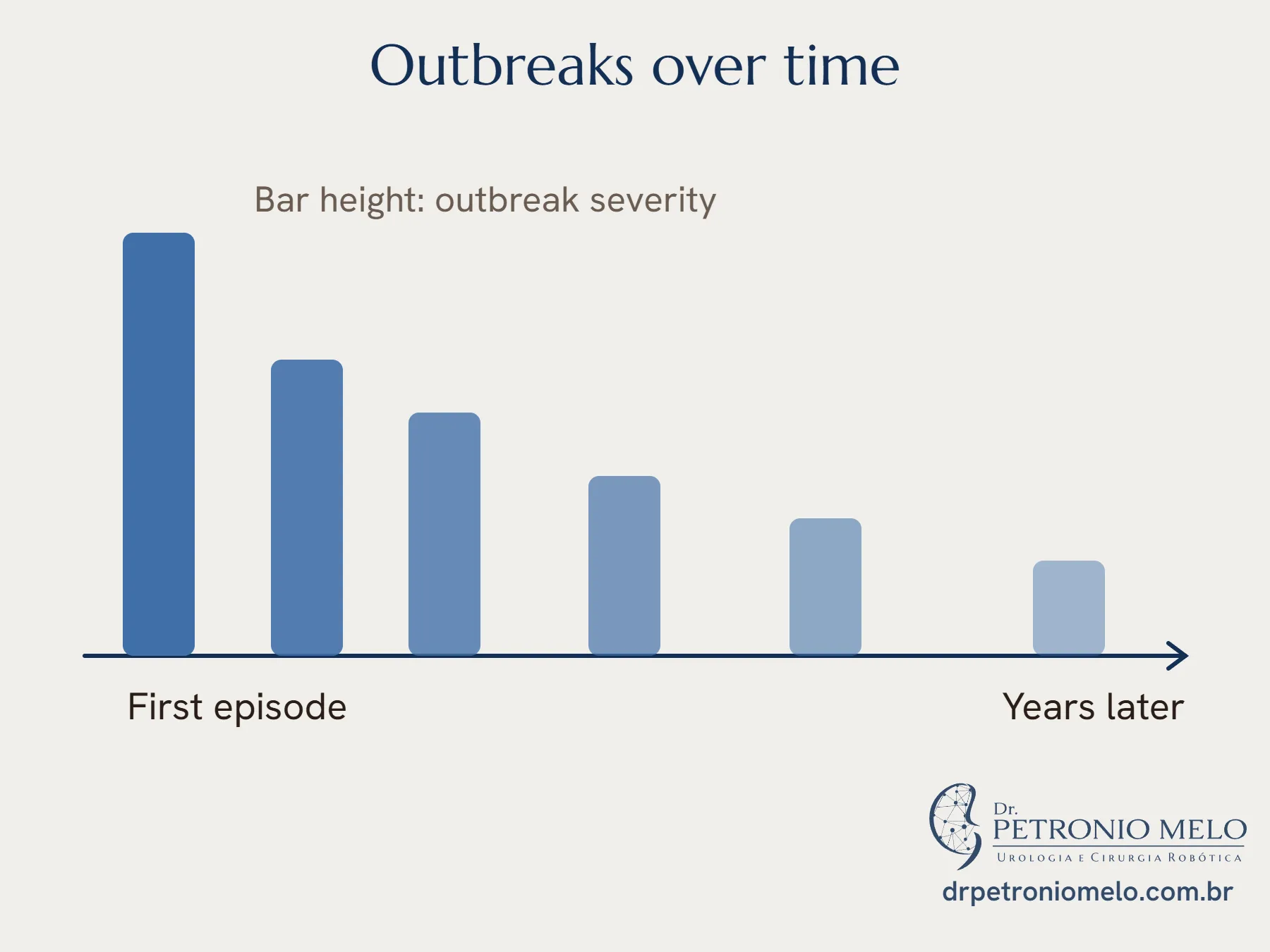
In the first 12 months, 90% of people with HSV-2 and 60% of people with HSV-1 have new episodes.1 Outbreaks are milder than the first and are usually announced by mild itching, burning and shooting pains in the legs, hips or genital area.1 The lesions clear in 7 to 10 days.1
Triggers include other infections, sun, local trauma, menstruation, physical or emotional stress, long courses of antibiotics and lowered immunity.1
How herpes spreads
The virus can be shed on the skin and mucous membranes even without a visible lesion, intermittently, especially in the first 12 months of HSV-2 infection.2 That is why many people catch the virus from someone who did not know they had it.
Condoms reduce transmission but do not eliminate it.2 HSV-1, more often linked to sores around the mouth, causes a growing share of genital herpes, and oral sex is one of the routes.2 Recurrences and shedding without symptoms are much more frequent with HSV-2.2
How it is diagnosed
Examining the lesion guides the suspicion. Material collected from the sore can be tested for the virus, which also shows whether it is type 1 or type 2.2
Blood tests need care. The American guideline recommends type-specific tests, does not recommend IgM and warns that weakly positive HSV-2 results can be false.2 The HSV-1 test does not distinguish oral from genital infection.2 Soon after contact, the blood may not yet show the infection: the advice is to repeat the test 12 weeks after the presumed contact.2
How it is treated
The antiviral in the Brazilian protocol is oral acyclovir.1 It reduces the severity and length of episodes when started early.1 The dose is set in the consultation.
| Situation | Duration in the Brazilian protocol | Note |
|---|---|---|
| First episode | 7 to 10 days | Start as early as possible |
| Recurrence | 5 days | Preferably at the first warning symptoms |
| Suppression, with 6 or more episodes a year | Up to 6 months, possibly up to 2 years | Requires periodic kidney and liver checks |
Source for the table: Brazilian protocol.1 The American guideline also includes valacyclovir and famciclovir.2 I prefer valacyclovir, but that is a personal choice.
Daily treatment reduces recurrences by 70% to 80% in people with frequent outbreaks.2 In a study of 1,484 heterosexual couples, daily valacyclovir reduced transmission of symptomatic HSV-2: 4 cases in 743 people, against 16 in 741 on placebo.3 This result applies to people who had symptoms, and protection was not complete.2,3
For the lesion, the protocol advises saline compresses to clean it and a painkiller if needed, with a return visit in one week.1
When to see a urologist
- If blisters or sores appear on the genitals
- If you have repeated outbreaks
- If the pain stops you from urinating
- If your partner is diagnosed with herpes and you want advice
- If you have a positive blood test and are unsure what it means
Frequently asked questions
What are the first symptoms of genital herpes?+
Small, very painful blisters in the genital area, which break and become sores. In the first episode there may be fever, malaise, body aches, pain when urinating and swollen glands in the groin.1
Can genital herpes be cured?+
Treatment controls the episodes, but the virus stays dormant in the nerve ganglia. No measure prevents this from happening.1 Over time, outbreaks tend to become milder and less frequent.1
How long does an outbreak last?+
The first episode can last 2 to 3 weeks. In recurrences, the lesions clear in 7 to 10 days.1
Can I pass on herpes without a sore?+
Yes. The virus can be shed intermittently even without a lesion, especially in the first 12 months after HSV-2 infection.2
Do condoms protect against herpes?+
They reduce transmission but do not eliminate it.2
Can herpes on the mouth spread to the genitals?+
Yes. HSV-1, the type more often linked to sores around the mouth, causes a growing share of genital herpes.2
What triggers a new outbreak?+
Other infections, sun, local trauma, physical or emotional stress, long courses of antibiotics and lowered immunity are among the triggers cited by the Brazilian protocol.1
Does a positive blood test mean genital herpes?+
Not necessarily. The HSV-1 test does not distinguish oral from genital infection. The American guideline also warns of false results, and IgM is not recommended.2
References
- Brasil. Ministério da Saúde. Protocolo Clínico e Diretrizes Terapêuticas para Atenção Integral às Pessoas com Infecções Sexualmente Transmissíveis (IST). Brasília: Ministério da Saúde; 2022. Brazilian Ministry of Health
- Workowski KA, Bachmann LH, Chan PA, et al. Sexually Transmitted Infections Treatment Guidelines, 2021. MMWR Recomm Rep. 2021;70(4):1-187. Genital herpes chapter. CDC
- Corey L, Wald A, Patel R, et al. Once-daily valacyclovir to reduce the risk of transmission of genital herpes. N Engl J Med. 2004;350(1):11-20. PubMed
Would you like to talk about your case?
In the consultation, I go over your tests and your priorities.
Book a consultation