

Quick answer
Discharge from the urethra, in men, is usually urethritis: inflammation of the channel urine passes through.1 The most frequent causes are gonorrhea and chlamydia, which pass through vaginal, anal and oral sex.1 Treatment uses an antibiotic chosen according to the cause, and partners also need treatment.1 Without treatment, the infection can spread upward and reach the epididymis and the prostate.1
What urethritis is
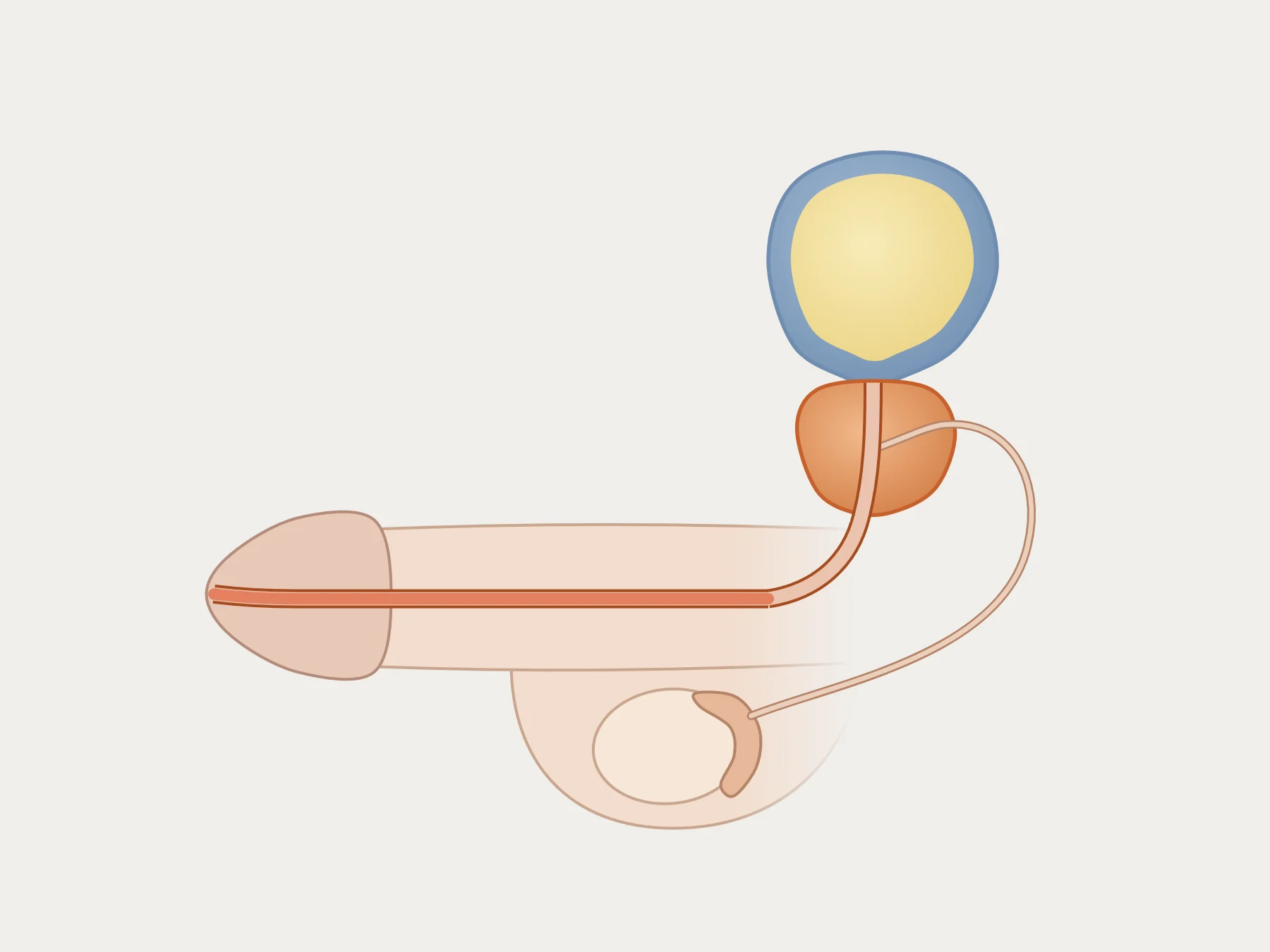
The urethra is the channel that carries urine from the bladder to the tip of the penis. When it becomes inflamed, there is a variable amount of discharge, pain or burning when urinating, itching in the urethra and redness at the opening.1 The pain may come even when not urinating.1 In some men, discharge is seen on examination without any complaint.2
What the causes are
Gonorrhea and chlamydia top the list.1 When gonorrhea is ruled out, the term used is non-gonococcal urethritis. According to the Brazilian protocol, chlamydia accounts for about half of these cases.1 Data from the United States put it at 15% to 40%, and in about half of cases no germ is identified.2
| Cause | When it appears | What it is usually like |
|---|---|---|
| Gonorrhea | 2 to 5 days after infection | Pus-like discharge, frequent, and burning when urinating |
| Chlamydia | 14 to 21 days after infection | Clearer, scant discharge, mild burning that comes and goes |
| Mycoplasma genitalium | Variable | Considered when urethritis does not improve |
| Trichomonas | Variable | Less frequent: 1% to 8% of non-gonococcal cases |
| Other causes | Variable | Herpes, adenovirus, ureaplasma, candida and bowel bacteria with insertive anal sex |
| No infection | Variable | Trauma, products and objects used during sex, chemical irritation |
Sources for the table: Brazilian protocol and American guideline.1,2
What the color of the discharge suggests
The appearance helps but does not define the cause. Yellowish or greenish, pus-like discharge is typical of gonorrhea. Clear, scant discharge with mild burning is more common in non-gonococcal urethritis. In some cases, however, non-gonococcal urethritis looks just like gonorrhea.1 Discharge without a smell does not rule out infection either. That is why color alone does not define the cause.
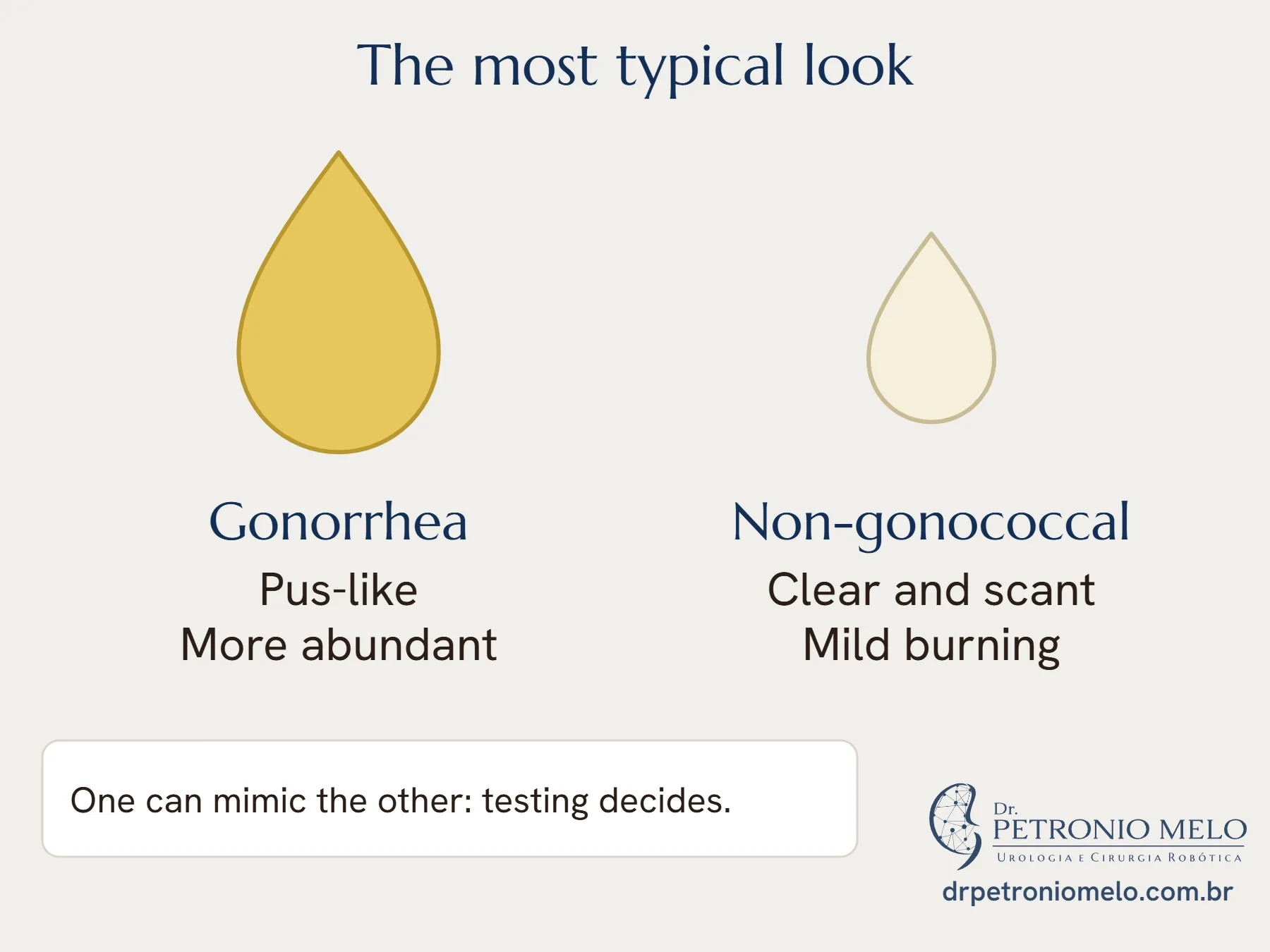
Not every discharge is urethritis. The clear drop that comes out with arousal is the natural pre-ejaculatory fluid. Discharge under the foreskin, with a red glans, suggests balanoposthitis. A pus-filled bump on the skin of the penis is something else, and an examination shows what it is.
How it is diagnosed
Diagnosis starts with a conversation about symptoms, partners and the type of sex, and with an examination. From there, the Brazilian protocol gives priority to tests that identify the germ, because of antibiotic resistance.1
- Molecular testing. Looks for the genetic material of chlamydia and gonorrhea, with high accuracy. It is also the method of choice for people without symptoms.1
- Gram stain. The discharge is examined under a microscope. It is quick and performs well for gonorrhea in men with symptoms.1
- Culture. Identifies gonorrhea and shows which antibiotics it responds to.1
- First-void urine test. Suggests infection but does not say which germ. It is for when the other methods are not available.1
In my practice, urethritis is always treated empirically, without waiting for a test. Tests are for when treatment fails: cultures and PCR for the most common germs.
The protocol also advises offering tests for other STIs and vaccines for hepatitis A and B and for HPV, when indicated.1
How it is treated
The plan follows the cause. When testing is not available or does not identify the germ, the Brazilian protocol treats gonorrhea and chlamydia at the same time.1 This regimen also covers Mycoplasma genitalium.1
| Situation | First option in the Brazilian protocol |
|---|---|
| Cause not identified | Injectable ceftriaxone and oral azithromycin, as a single dose |
| Gonorrhea | Injectable ceftriaxone and oral azithromycin, as a single dose |
| Chlamydia or non-gonococcal urethritis | Oral azithromycin, as a single dose. Doxycycline for 7 days is the second option |
| Trichomonas | Oral metronidazole for 7 days |
Source for the table: Brazilian protocol.1 The dose is set in the consultation. In the United States, the first option for non-gonococcal urethritis is doxycycline.2
The protocol advises a return visit 7 to 10 days after treatment ends.1 The American guideline recommends repeat testing 3 months later when the cause was chlamydia, gonorrhea or trichomonas.2
Why partners need treatment
If only one of the two is treated, the infection comes back. The Brazilian protocol considers that the partner has the same infection, even without symptoms, and advises the same treatment.1 Many women with gonorrhea in the urethra have no symptoms, and untreated chlamydia can cause pelvic inflammatory disease.1 The American guideline includes partners from the previous 60 days.2
Until everyone has finished treatment, the advice is no unprotected sex. That means waiting for the end of a multi-day regimen, or 7 days after single-dose treatment.1
When the discharge does not improve
Symptoms can take up to 7 days to clear after treatment for chlamydia and non-gonococcal urethritis ends.1 When they persist or come back, the protocol lists these causes:1
- re-exposure to an untreated partner
- infection picked up from another partner
- medicine taken wrongly or incompletely
- another germ, such as Mycoplasma genitalium, trichomonas or ureaplasma
- a resistant germ
- other conditions, such as urinary infection, prostatitis, phimosis, urethral stricture and tumors
The American guideline asks for an objective sign of inflammation before treating again, because the symptom alone is not enough to justify another antibiotic.2
What happens without treatment
The infection can spread up the urethra. In men, the complications cited by the protocol are epididymo-orchitis, which is inflammation of the testicle and epididymis, prostatitis and urethral stricture.1
When to see a urologist
- If there is discharge or pus from the urethra
- If you have pain or burning when urinating after sex
- If your partner is diagnosed with an STI
- If symptoms continue after treatment
- If the discharge keeps coming back
Frequently asked questions
What is penile discharge?+
It is fluid coming out of the urethra, the channel urine passes through. It is usually a sign of urethritis, inflammation of this channel, and the most frequent causes are gonorrhea and chlamydia.1
Is yellow discharge from the penis gonorrhea?+
Yellowish, pus-like discharge is common in gonorrhea, but the color does not settle the diagnosis. Urethritis from other causes can look the same.1
Do I need a test before treating urethritis?+
The Brazilian protocol gives priority to tests that identify the germ and has a regimen for when testing is not available.1 In my practice, I treat empirically, without waiting for a test. I order cultures and PCR for the most common germs when treatment fails.
Which medicine treats penile discharge?+
It depends on the cause. The Brazilian protocol uses different antibiotics for gonorrhea, chlamydia and trichomonas, and a combination when the cause could not be identified.1 Taking antibiotics on your own can leave the infection incorrectly treated and encourages resistance.1,3
How long after sex does discharge appear?+
With gonorrhea, it usually appears 2 to 5 days after infection. With chlamydia, 14 to 21 days.1
I finished the antibiotic and the discharge continues. What could it be?+
With some regimens, symptoms can take up to 7 days to clear after treatment ends. When they continue, possible causes are re-exposure to an untreated partner, medicine taken incompletely, another germ, resistance or a cause that is not an infection.1
Does my partner need treatment?+
Yes. The Brazilian protocol considers that the partner has the same infection, even without symptoms, and advises the same treatment.1 The American guideline includes partners from the previous 60 days.2
How long should I avoid sex?+
No unprotected sex until everyone's treatment is complete. That means the end of a multi-day regimen, or 7 days after single-dose treatment.1
Can urethritis have causes other than an STI?+
Yes. Irritation from lubricants and spermicides, trauma, objects in the urethra, catheters and piercings are among the causes listed by the protocol. Urinary infection, prostatitis, phimosis, urethral stricture and tumors can also cause similar symptoms.1
References
- Brasil. Ministério da Saúde. Protocolo Clínico e Diretrizes Terapêuticas para Atenção Integral às Pessoas com Infecções Sexualmente Transmissíveis (IST). Brasília: Ministério da Saúde; 2022. Brazilian Ministry of Health
- Workowski KA, Bachmann LH, Chan PA, et al. Sexually Transmitted Infections Treatment Guidelines, 2021. MMWR Recomm Rep. 2021;70(4):1-187. Urethritis and cervicitis chapter. CDC
- Brasil. Ministério da Saúde. Por que o monitoramento da resistência da gonorreia é importante para o SUS? Brasília: Ministério da Saúde; 2023. Brazilian Ministry of Health
Would you like to talk about your case?
In the consultation, I go over your tests and your priorities.
Book a consultation