

Quick answer
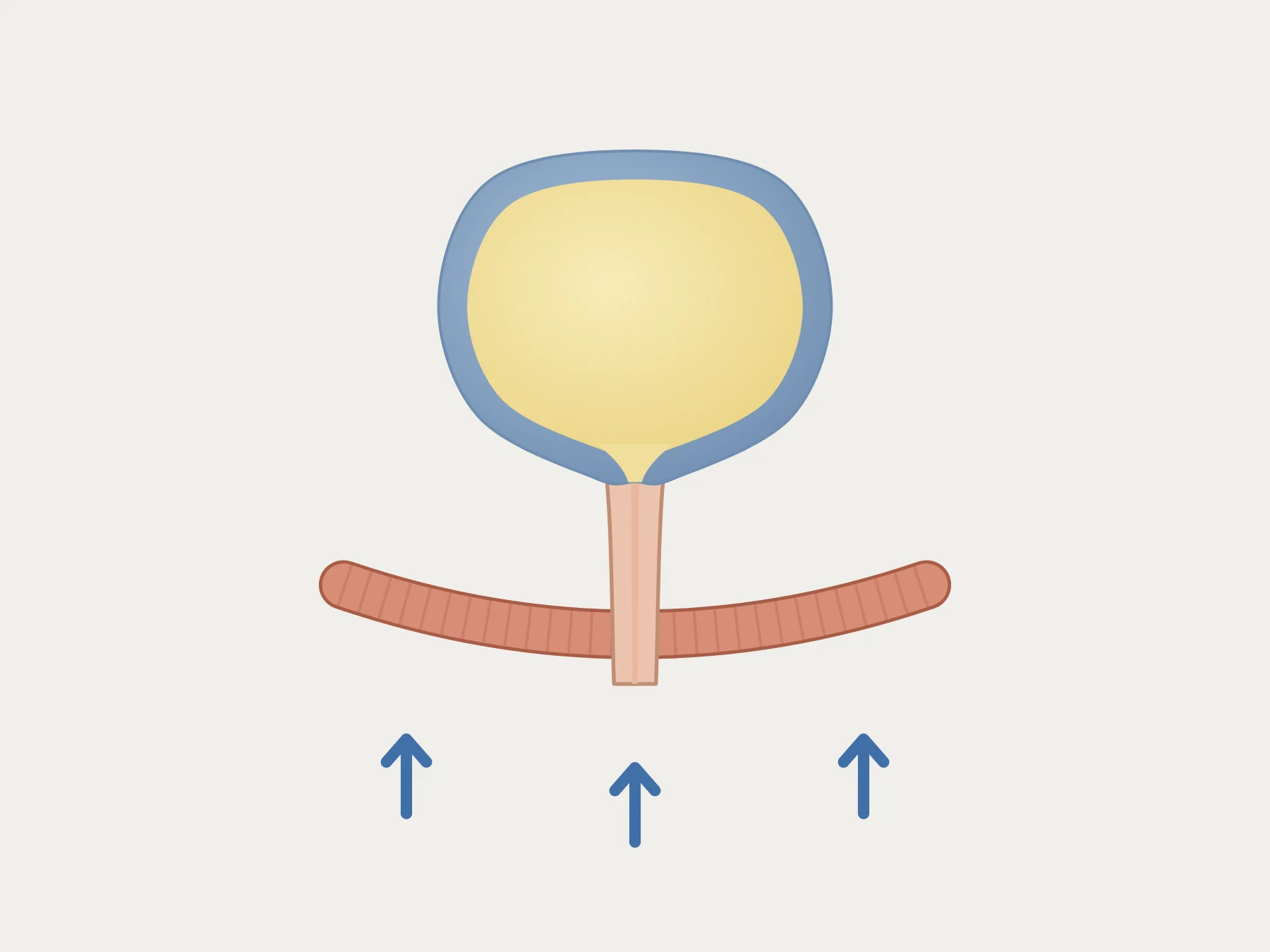
Kegel exercises train the pelvic floor muscles, which support the bladder and help hold in urine.1 Tighten as if holding in gas, hold for 3 seconds and relax completely.1 The program includes at least 8 contractions, 3 times a day, for at least 3 months.2 Improvement may appear after 3 to 6 weeks.1
What Kegels are
The pelvic floor is a group of muscles at the base of the pelvis, like a hammock. It supports the bladder and helps keep the urethra closed. When these muscles are weak, urine escapes more easily when coughing or straining.
Kegels are training for these muscles: tighten, hold and relax. No device is needed, and they can be done at home.
How to find the right muscle
This is the hardest step, and squeezing the wrong place does not help.
- Imagine holding in gas. The muscles you squeeze for that are the pelvic floor muscles.1
- Stop the stream once. This is only to recognize the muscles. Do not do it as an exercise.1
- For women, use a finger. With a clean finger in the vagina, squeeze: you should feel the finger being gripped.1
- For men, the same applies to the anus. A clean finger feels the squeeze.1
The abdomen, thighs and buttocks stay relaxed.1 Keep breathing normally.
How to do them
- Get readyEmpty your bladder and lie on your back, which is the easiest position to start.
- TightenSqueeze the muscles, pulling in and up, and hold for 3 seconds.1
- RelaxLet go completely before the next contraction.1
- RepeatStart with at least 8 and try to reach 10 to 15.1,2
- Keep up the routineDo the set 3 times a day and, over time, also sitting and standing.1,2
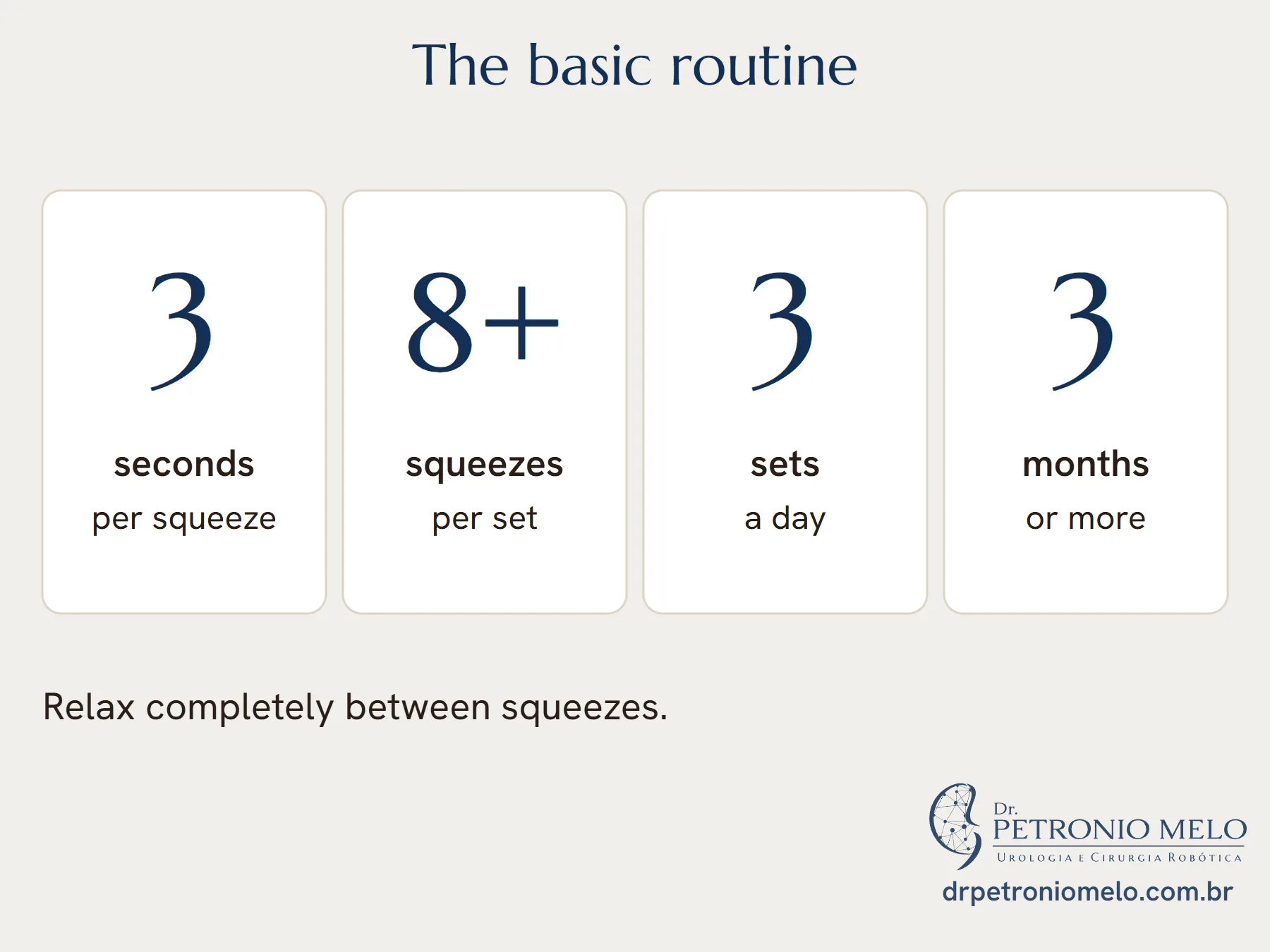
Source: NIDDK and NHS.1,2 The European guideline recommends supervised programs that are as intensive as possible.3
How long it takes to improve
Better urine control may appear after 3 to 6 weeks.1 Even so, the program lasts at least 3 months.2,3 If it is helping, you can carry on after that.2
In a Cochrane review of 31 studies and 1,817 women, 56% of those with stress incontinence who did the training reported a cure at the end of treatment, against 6% of those who did not. Improvement or cure was reported by 74%, against 11%.4 Follow-up in most studies was under 12 months, and long-term results still need more research.4
Who it is for
Women. Training can be the first option for stress and mixed incontinence.3,4
Men. After prostate surgery, a review of 25 studies concluded that the value of conservative treatments, alone or combined, is still uncertain, because the studies are small and vary a lot.5 In my practice, I recommend Kegels before and after prostatectomy.
The most common mistakes
When to see a urologist
- If leakage continues after 3 months of training
- If you cannot identify the muscles
- If leakage comes with pain, blood in the urine or fever
- If leakage started after an operation
Frequently asked questions
What is a Kegel exercise?+
It is training of the pelvic floor muscles, which support the bladder and help hold in urine. It consists of tightening and relaxing these muscles in sets, and both women and men can do it.1
How do I do Kegels?+
Tighten the muscles you would use to hold in gas, hold for 3 seconds and relax completely. Repeat at least 8 times, 3 times a day, lying down, sitting and standing.1,2
How do I know I am doing it right?+
It feels like closing and pulling in and up. The abdomen, thighs and buttocks stay relaxed.1 In my practice, I always recommend pelvic floor physiotherapy for incontinence.
How long do Kegels take to work?+
Improvement may appear after 3 to 6 weeks.1 The recommended program lasts at least 3 months.2,3
Do Kegels really work?+
In women with stress incontinence, 56% of those who trained reported a cure at the end of treatment, against 6% of those who did not.4 The long-term effect still needs more study.4
Can men do Kegels?+
Yes. After prostate surgery, studies do not yet give a firm answer on how large the benefit is.5 In my practice, I recommend Kegels before and after prostatectomy.
Can I do Kegels while urinating?+
Not as a routine. Stopping the stream is only for finding the muscle, not for training.1
Can doing too many Kegels be harmful?+
Overdoing them can lead to straining to urinate or to have a bowel movement.1 Stick to the number of repetitions agreed.
References
- National Institute of Diabetes and Digestive and Kidney Diseases (NIDDK). Kegel Exercises. NIH
- National Health Service (NHS). Non-surgical treatments for urinary incontinence. NHS
- European Association of Urology. EAU Guidelines on Non-neurogenic Female LUTS. Disease management chapter. EAU
- Dumoulin C, Cacciari LP, Hay-Smith EJC. Pelvic floor muscle training versus no treatment, or inactive control treatments, for urinary incontinence in women. Cochrane Database Syst Rev. 2018;10:CD005654. PubMed
- Johnson EE, Mamoulakis C, Stoniute A, Omar MI, Sinha S. Conservative interventions for managing urinary incontinence after prostate surgery. Cochrane Database Syst Rev. 2023;4:CD014799. PubMed
Would you like to talk about your case?
In the consultation, I go over your tests and your priorities.
Book a consultation