

Quick answer
After prostatectomy, most men have some urine leakage at first, and the vast majority regain control over the months.1 In a randomized study at the University of São Paulo, 95.4% of men who had robotic surgery were continent at 18 months.2 When leakage continues after a year, or is severe at six months, a man may choose surgery.1 The most studied options are the male sling and the artificial urinary sphincter.8
Why it happens
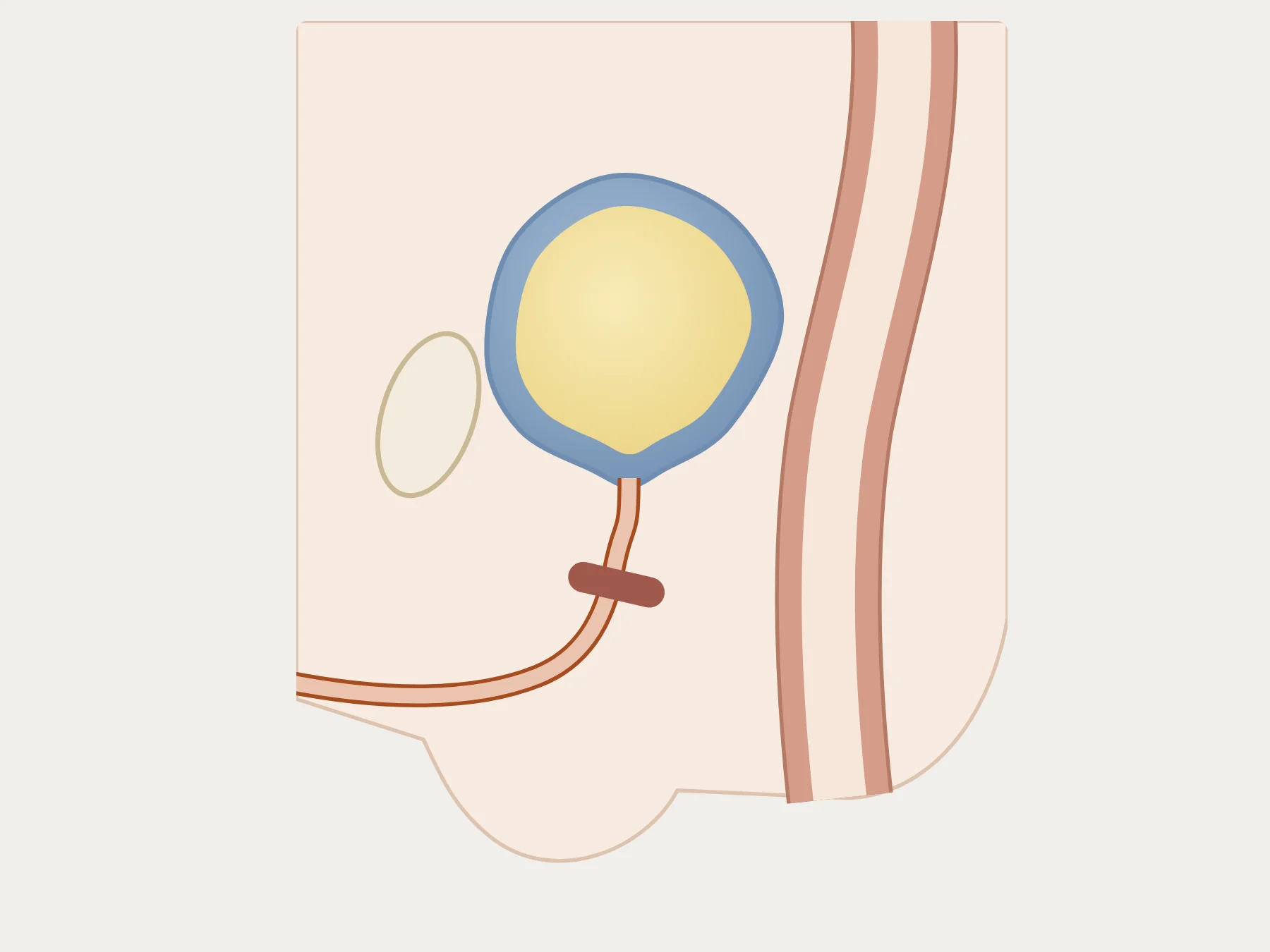
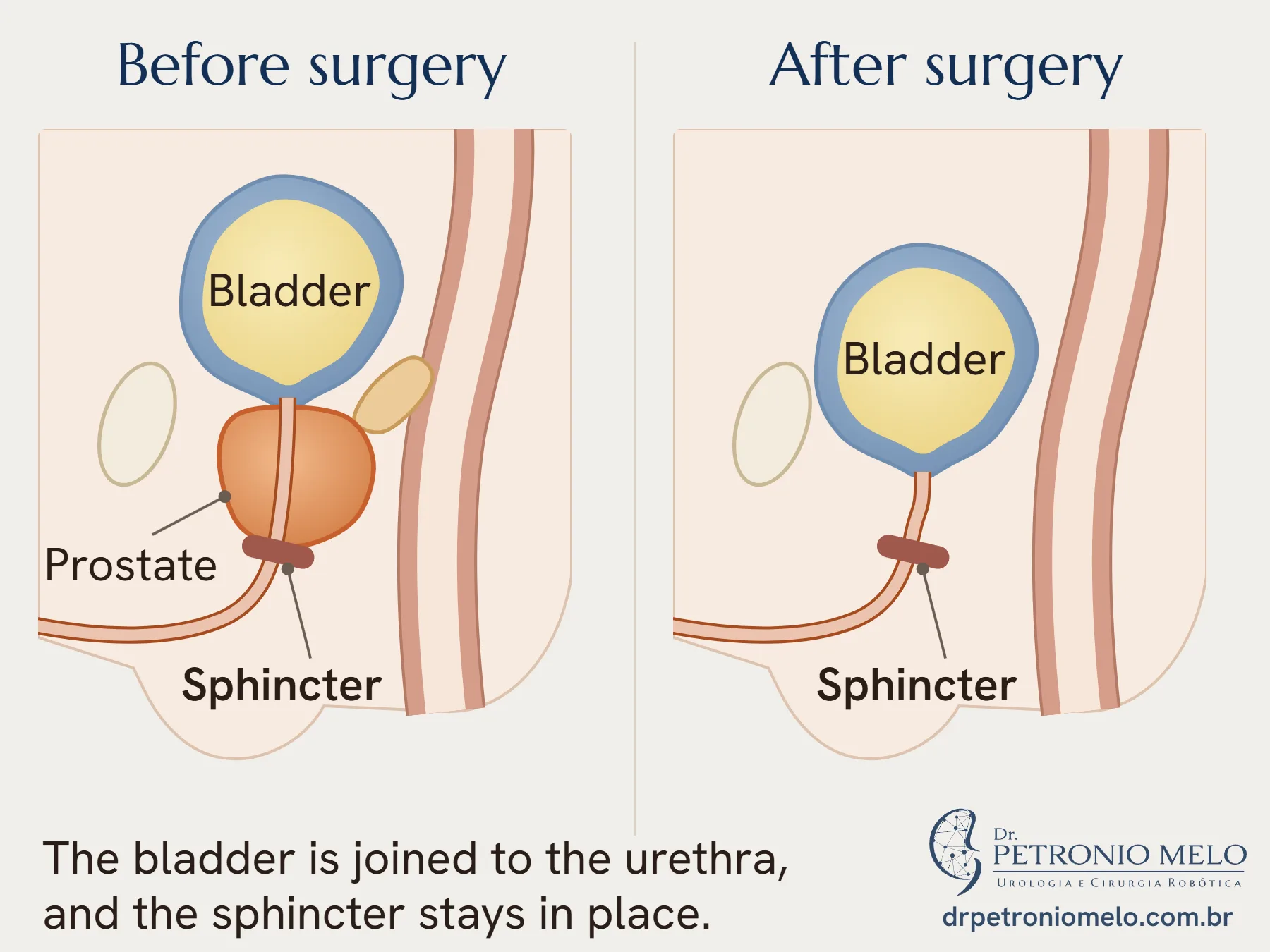
The prostate sits just below the bladder, around the urethra and next to the sphincter, the muscle that holds urine in. Removing the prostate changes part of the control mechanism.
The typical leakage is stress leakage, when coughing, sneezing or exercising.8 It appears when the catheter is removed and usually decreases gradually.
What the numbers show
The results below show urine control after surgery at different points in time.
| Source | Time point | Result |
|---|---|---|
| University of São Paulo randomized study, 2024 | 18 months | Continent: 95.4% with the robot and 78.8% with open surgery |
| European guideline, 2026 | 12 months | Continent: 89% to 100% with the robot and 80% to 97% with open surgery |
| Review of 51 articles, 2012 | 12 months | Incontinence with the robot: 16% when no pad was accepted and 9% when a safety pad was accepted |
What affects recovery
Part of the risk exists before surgery. Age, weight, other illnesses, previous urinary symptoms and prostate volume all weigh in. The technique and the surgeon's experience also count.4
Pelvic floor exercises
The American guideline says the exercises may speed up recovery.1 Research has not settled the question yet. A Cochrane review of 50 studies considered the value of conservative measures uncertain and called for better studies.5
Results on starting before surgery also vary. A 2025 review found less incontinence in the first year with training done before the operation, using biofeedback.6 Another, from 2026, saw improvement only in the first three months.7
If leakage continues
The American guideline sets two points in time to consider surgery: one year after the procedure, or six months if leakage is severe.1 The MASTER study compared the two most used options in 380 men:8
| Item | Male sling | Artificial sphincter |
|---|---|---|
| What it is | A synthetic mesh placed under the urethra | An inflatable ring around the urethra, with a pump in the scrotum |
| Day to day | The man does not need to operate anything | The man squeezes the pump to urinate |
| Symptoms at 12 months | Incontinence score fell from 16.1 to 8.7 | Incontinence score fell from 16.4 to 7.5 |
| Serious adverse events | 8 | 15 |
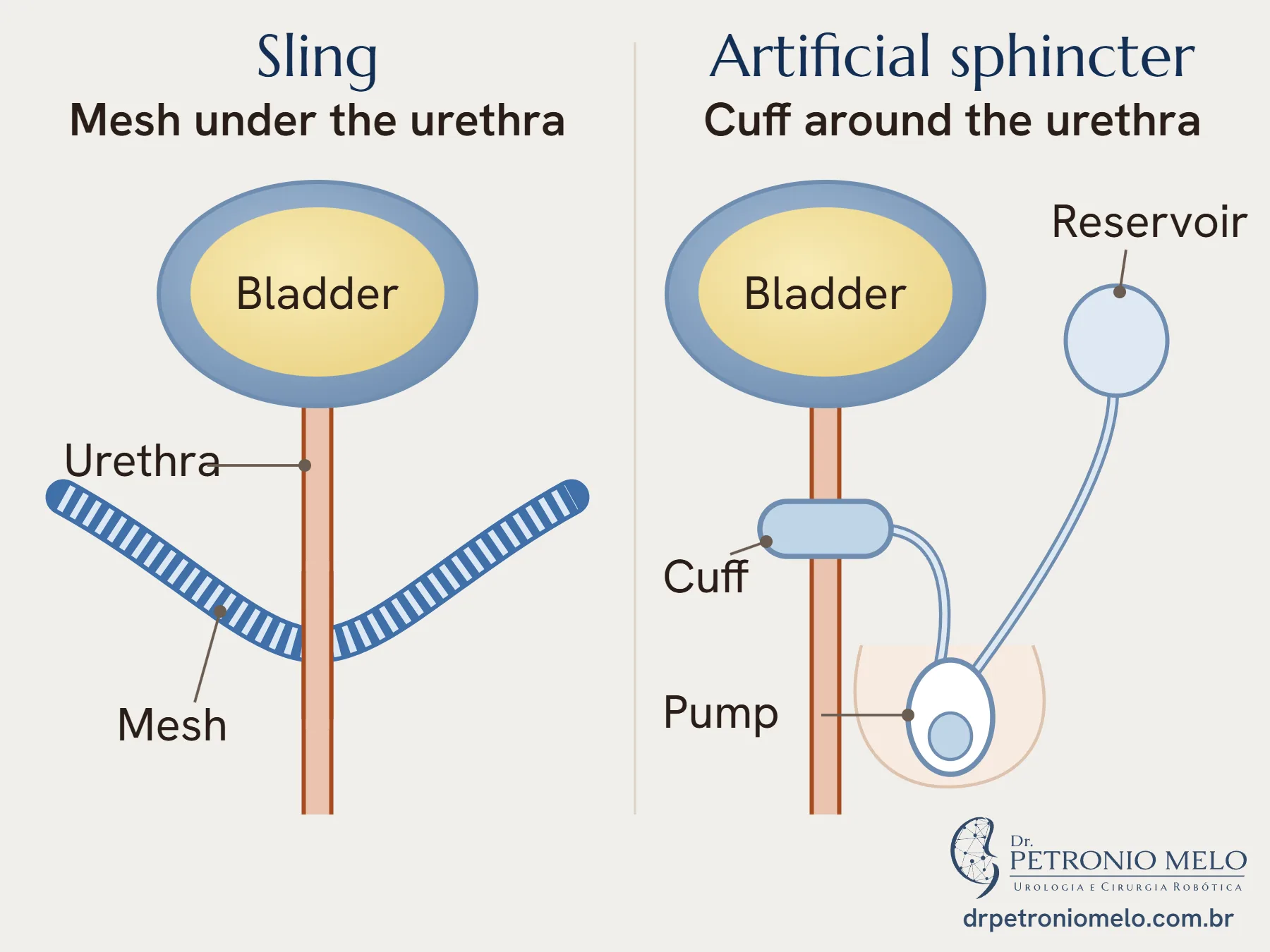
The sling was not inferior to the sphincter for continence at 12 months. Secondary analyses favored the sphincter, and satisfaction was high in both groups.8 Some men needed another operation.8
There are other techniques besides these two. The choice depends on how much urine you lose, previous treatments such as radiotherapy, and what you prefer. The risks are part of the conversation before the decision.1
How I approach it
In my practice, I assess the risk of urine leakage before surgery and explain what to expect. I teach pelvic floor exercises before and after surgery and, when it makes sense, physical therapy. After the catheter comes out, I follow progress by the number of pads per day. If leakage continues, I go over the options with you, and I usually wait a year before recommending surgery.
When to see a urologist
- If urine leakage is not improving over time
- If leakage gets in the way of work, sleep or social life
- If leakage continues a year after surgery, even if it was done elsewhere
- If difficulty urinating, with a weak stream, appears after a good period
Frequently asked questions
How long does urine leakage last after surgery?+
It varies from one man to another. It usually starts right after the catheter is removed, and the vast majority improve over the months. In a randomized study at the University of São Paulo, 95.4% of men who had robotic surgery were continent at 18 months.2
Do Kegel exercises work?+
The American guideline says pelvic floor exercises may speed up recovery.1 A Cochrane review found conflicting results and called for better studies.5 They cost little, and I teach the training before and after surgery.
When is surgery for incontinence considered?+
The American guideline sets two points in time. A man who is still incontinent one year after the procedure, or who has severe leakage at six months, may choose surgical treatment.1
Sling or artificial sphincter, which is better?+
It depends on your case. In the MASTER study, with 380 men, the sling was not inferior to the sphincter for continence at 12 months. Secondary analyses favored the sphincter, and satisfaction was higher in that group.8
Is the artificial sphincter visible?+
No. The ring sits around the urethra and the pump sits inside the scrotum, under the skin.8 To urinate, the man squeezes the pump.
Does robotic surgery reduce incontinence?+
In a randomized study at the University of São Paulo, 95.4% of men who had robotic surgery and 78.8% of those who had open surgery were continent at 18 months.2 The European guideline reports 89% to 100% with the robot and 80% to 97% with open surgery at 12 months.3
References
- Sandhu JS, Breyer B, Comiter C, et al. Incontinence after Prostate Treatment: AUA/SUFU Guideline. J Urol. 2019;202(2):369-378. PubMed
- Nahas WC, Rodrigues GJ, Rodrigues Gonçalves FA, et al. Perioperative, Oncological, and Functional Outcomes Between Robot-Assisted Laparoscopic Prostatectomy and Open Radical Retropubic Prostatectomy: A Randomized Clinical Trial. J Urol. 2024;212(1):32-40. PubMed
- EAU-EANM-ESTRO-ESUR-ISUP-SIOG Guidelines on Prostate Cancer. European Association of Urology; 2026. EAU
- Ficarra V, Novara G, Rosen RC, et al. Systematic review and meta-analysis of studies reporting urinary continence recovery after robot-assisted radical prostatectomy. Eur Urol. 2012;62(3):405-417. PubMed
- Anderson CA, Omar MI, Campbell SE, et al. Conservative management for postprostatectomy urinary incontinence. Cochrane Database Syst Rev. 2015;1(1):CD001843. PubMed
- Brea-Gómez B, Pazo-Palacios R, Pérez-Gisbert L, et al. Pelvic Floor Muscle Training with Preoperative Biofeedback in Patients with Postprostatectomy Incontinence: A Systematic Review and Meta-analysis of Randomised Clinical Trials. Eur Urol Focus. 2025;11(5):767-781. PubMed
- Terzoni S, Maruccia S, Di Prisco L, et al. Preoperative Pelvic Muscle Training for Continence Recovery After Prostatectomy: Yet Another Meta-Analysis? Neurourol Urodyn. 2026;45(1):127-136. PubMed
- Constable L, Abrams P, Cooper D, et al. Synthetic sling or artificial urinary sphincter for men with urodynamic stress incontinence after prostate surgery: the MASTER non-inferiority RCT. Health Technol Assess. 2022;26(36):1-152. PubMed
Would you like to talk about your case?
In the consultation, I go over your tests and your priorities.
Book a consultation