

Quick answer
Urinary incontinence is the involuntary loss of urine.1 The most frequent types are stress incontinence, in which urine escapes when coughing or straining; urge incontinence, in which the need comes on suddenly; and mixed incontinence.1 Treatment depends on the type and can include pelvic floor exercises, bladder training, medicines, procedures and surgery.2,4,5
What it is
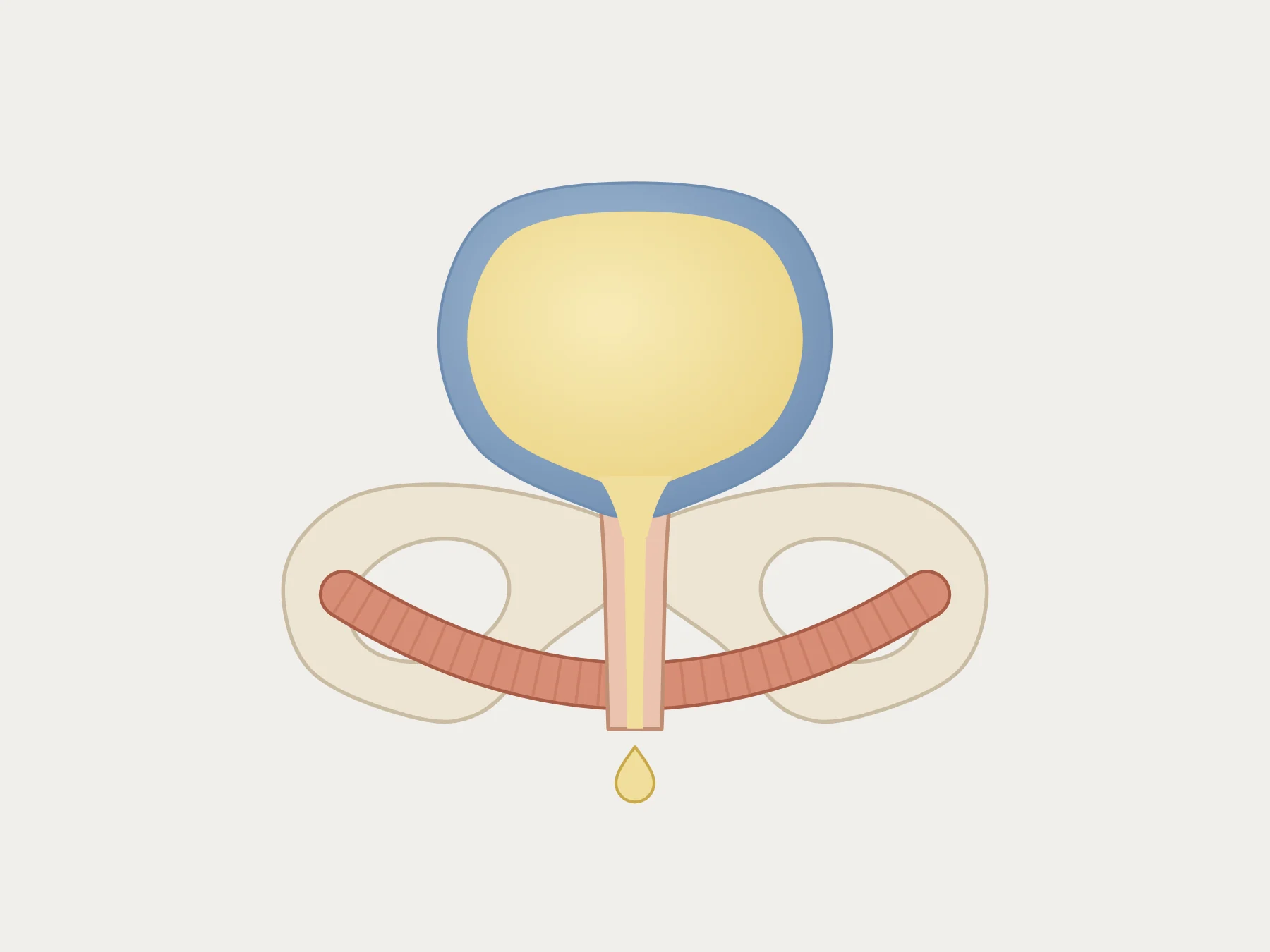
The bladder stores urine, and control depends on two things: the bladder muscle needs to stay relaxed while it fills, and the urethra needs to stay closed. When either one fails, urine escapes.
Urine leakage is common, especially in women. Researchers estimate that about half of women experience it, and that up to 1 in 3 men over 65 may leak urine involuntarily.1
The types of incontinence
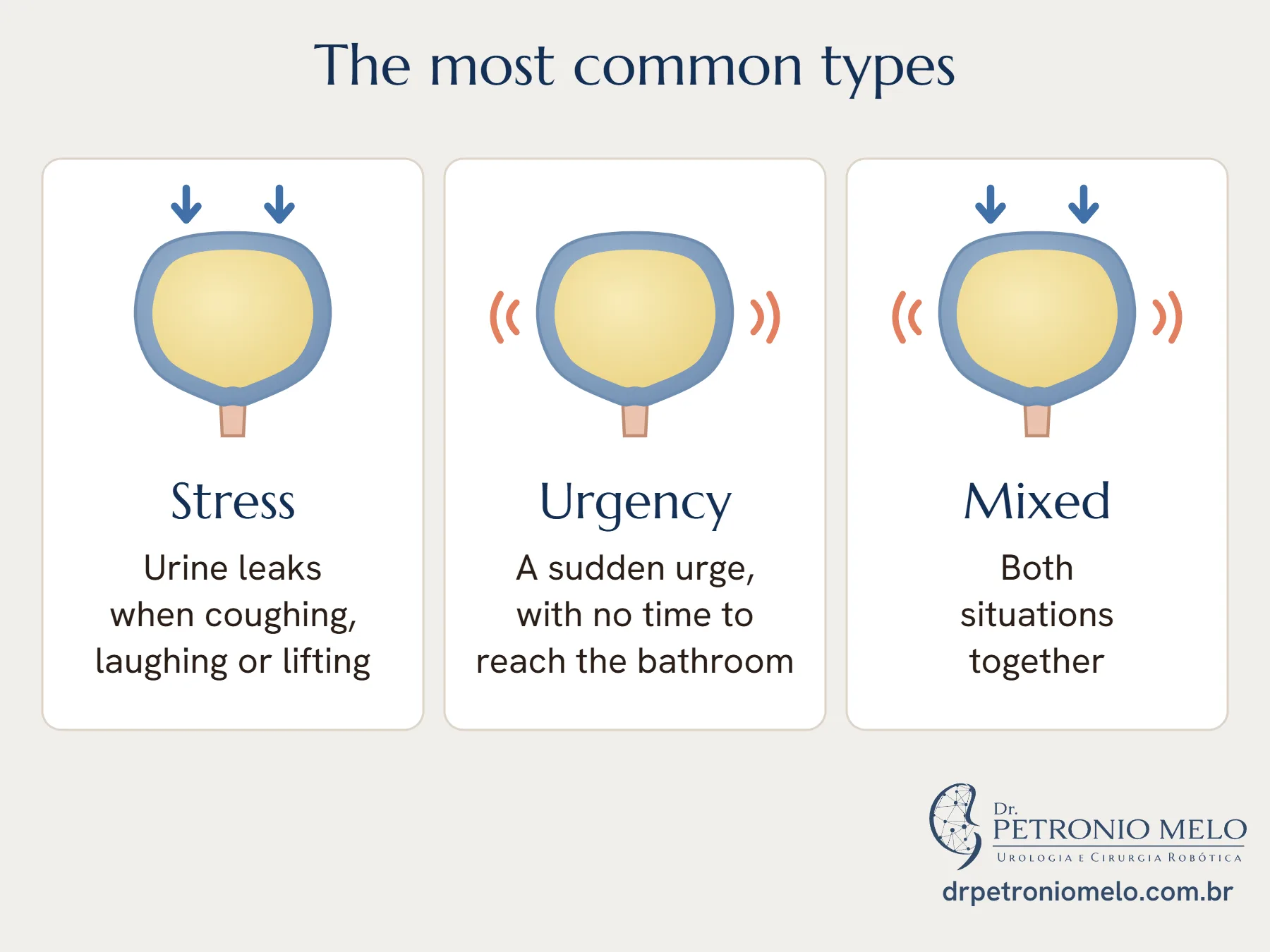
Knowing the type is the first step, because the treatment changes.
| Type | What it is like |
|---|---|
| Stress | Coughing, sneezing, laughing or physical activity raise the pressure on the bladder, and urine escapes |
| Urge | A sudden, strong need, with no time to reach the toilet. It is usually part of overactive bladder |
| Mixed | Stress and urge at the same time |
| Overflow | The bladder does not empty well and urine leaks little by little |
| Functional | A physical or mental limitation gets in the way of reaching the toilet in time |
| Temporary | It goes away when the cause is resolved, as with a urinary infection |
Why it happens
In women, pregnancy, childbirth, menopause and pelvic organ prolapse are on the list.6 In anyone, aging, obesity, chronic cough, constipation, diabetes, nerve diseases, urinary infection and obstacles to urine flow all play a part.6 Smoking and a sedentary lifestyle also count.6
In men, an enlarged prostate and surgery for prostate cancer can also cause leakage.
How it is evaluated
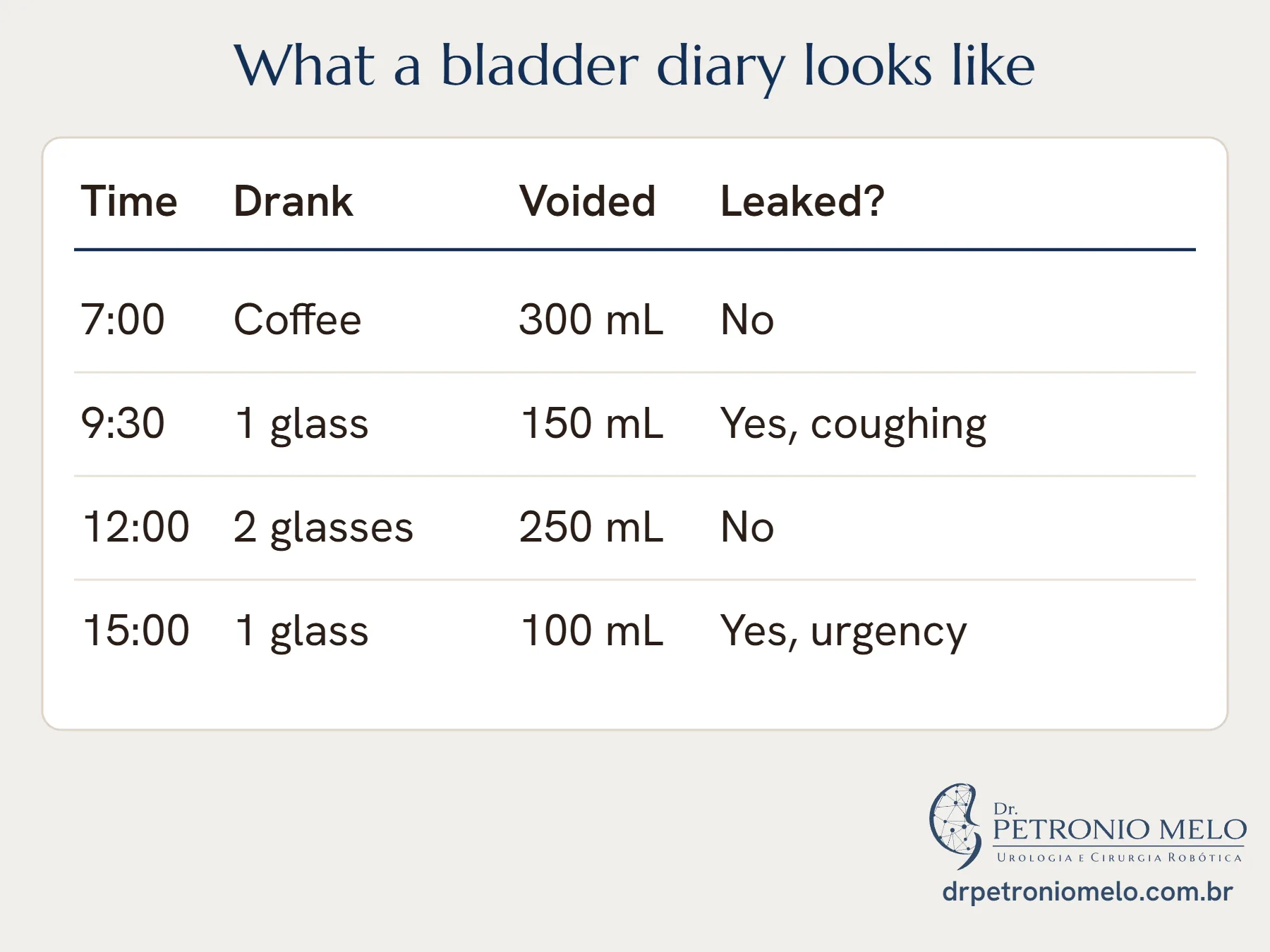
The conversation and physical examination come first. A urine test helps rule out infection and blood in the urine.5 For people with urgency, the European guideline calls for a bladder diary of at least 3 days.2
Urodynamics, which measures how the bladder works, is not needed for everyone. The American guideline does not recommend it routinely in the initial evaluation of overactive bladder, and the European guideline does not recommend it for uncomplicated cases either.2,5 It is useful in selected situations, such as before some operations.2
How it is treated
Some simple changes help. Losing weight reduces leakage, and it is worth cutting down on caffeine and alcohol, treating constipation and stopping smoking.4,6 The amount of fluid is adjusted case by case, because drinking too much or too little can make things worse.4
| Type | Options |
|---|---|
| Stress | Pelvic floor training for at least 3 months and, if that is not enough, surgery, usually a sling |
| Urge | Bladder training, medicines and, when needed, botox, tibial nerve stimulation or sacral neuromodulation |
| Mixed | A combination, starting with whatever bothers you most |
Source for the table: European and American guidelines.2,5 In my practice, I always recommend pelvic floor physiotherapy for incontinence. The choice is made with you.
Where to start
- Kegel exercisesHow to find the right muscle, how often to do them and the most common mistakes.
- Female sling surgeryHow it is done, who it is for, results and risks.
- Overactive bladderUrgency, frequent trips to the toilet and treatment options.
- Bladder botoxWho it is for, how it is given and how long it lasts.
When to see a urologist
- If leakage interferes with your routine, sleep or physical activity
- If you need to wear pads because of urine
- If you go to the toilet 8 or more times a day6
- If leakage started after an operation
- If leakage comes with blood in the urine, pain or fever
Frequently asked questions
What is urinary incontinence?+
It is the involuntary loss of urine. It is common, especially in women, and it can be treated.1
What are the types of urinary incontinence?+
The most frequent are stress incontinence, in which urine escapes when coughing, laughing or straining; urge incontinence, with a sudden need that leaves no time to hold on; and mixed incontinence, which combines the two.1
Can urinary incontinence be cured?+
It depends on the type and the cause. In women with stress incontinence, 56% of those who did pelvic floor training reported a cure, against 6% of those who did not.3 When conservative treatment is not enough, there are medicines, procedures and surgery.2,5
Is leaking urine normal with age?+
Age raises the risk, but leaking urine is not something you have to accept.4 The evaluation shows the type of leakage and the options for each case.
Do men also have urinary incontinence?+
Yes. Up to 1 in 3 men over 65 may leak urine involuntarily.1 An enlarged prostate and prostate surgery are among the situations that can cause leakage.
Which tests are done?+
The evaluation starts with a conversation, a physical examination and a urine test.5 A bladder diary of at least 3 days helps a lot.2 More complex tests, such as urodynamics, are not needed for everyone.2,5
Does drinking less water help stop leakage?+
Not always. Drinking too much or too little can make incontinence worse, and fluid intake is adjusted case by case.4
References
- National Institute of Diabetes and Digestive and Kidney Diseases (NIDDK). Definition & Facts for Bladder Control Problems (Urinary Incontinence). NIH
- European Association of Urology. EAU Guidelines on Non-neurogenic Female LUTS. Disease management chapter. EAU
- Dumoulin C, Cacciari LP, Hay-Smith EJC. Pelvic floor muscle training versus no treatment, or inactive control treatments, for urinary incontinence in women. Cochrane Database Syst Rev. 2018;10:CD005654. PubMed
- National Health Service (NHS). Urinary incontinence and Non-surgical treatments for urinary incontinence. NHS
- Cameron AP, Chung DE, Dielubanza EJ, et al. The AUA/SUFU Guideline on the Diagnosis and Treatment of Idiopathic Overactive Bladder. J Urol. 2024;212(1):11-20. AUA/SUFU
- National Institute of Diabetes and Digestive and Kidney Diseases (NIDDK). Symptoms & Causes of Bladder Control Problems (Urinary Incontinence). NIH
Would you like to talk about your case?
In the consultation, I go over your tests and your priorities.
Book a consultation