

Quick answer
Overactive bladder is urinary urgency, usually with many trips to the toilet during the day and night, with or without leakage, when there is no infection or other obvious cause.1 Treatment includes bladder training, habit changes, medicines and, when needed, bladder botox or nerve stimulation.1 There is no fixed order: the choice is made together with the patient.1
What it is
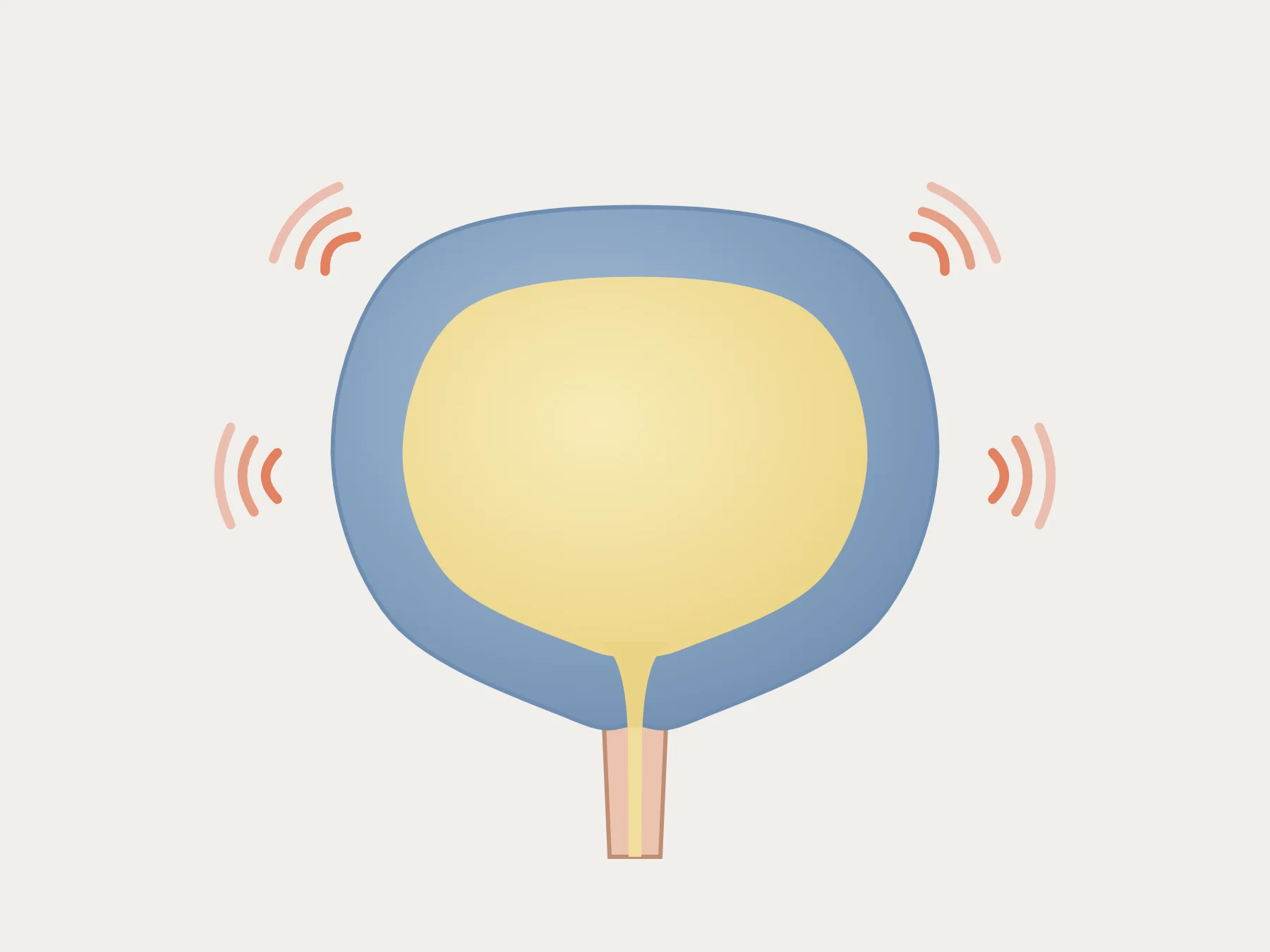
The bladder should fill quietly and give a calm warning. In overactive bladder, the warning comes suddenly and strongly, sometimes with little urine inside. That is urgency: a need that is hard to put off.
Symptoms
- Urgency. A sudden need that is hard to put off. It is the central symptom.1
- Frequency. Many trips to the toilet during the day.1
- Nocturia. Waking up at night to urinate.1
- Urge incontinence. Leakage together with urgency, present in some cases.1
The impact goes beyond the bathroom. Many people start checking where the toilets are before leaving home and stop doing activities they enjoy. It is worth mentioning this in the consultation.
What the causes are
The name overactive bladder is used when symptoms exist without urinary infection and without another obvious disease.1 That is why the evaluation first looks for what can mimic it:
- urinary infection
- blood in the urine, which needs investigation1
- incomplete bladder emptying1
- an enlarged prostate, in men
- diabetes, constipation and nerve diseases4
How it is evaluated
The evaluation includes the history of symptoms, a physical examination and a urine test, to rule out infection and blood.1 The amount of urine left in the bladder after urinating can be measured to rule out incomplete emptying.1 The European guideline recommends a bladder diary of at least 3 days.2
Urodynamics, cystoscopy and imaging are not part of the routine initial evaluation.1 In my practice, I do not order urodynamics at the start: it has specific indications.
How it is treated
The American guideline presents a menu of options, with no required order, which can be combined.1 The patient's values and preferences are part of the decision, including the option not to treat.1
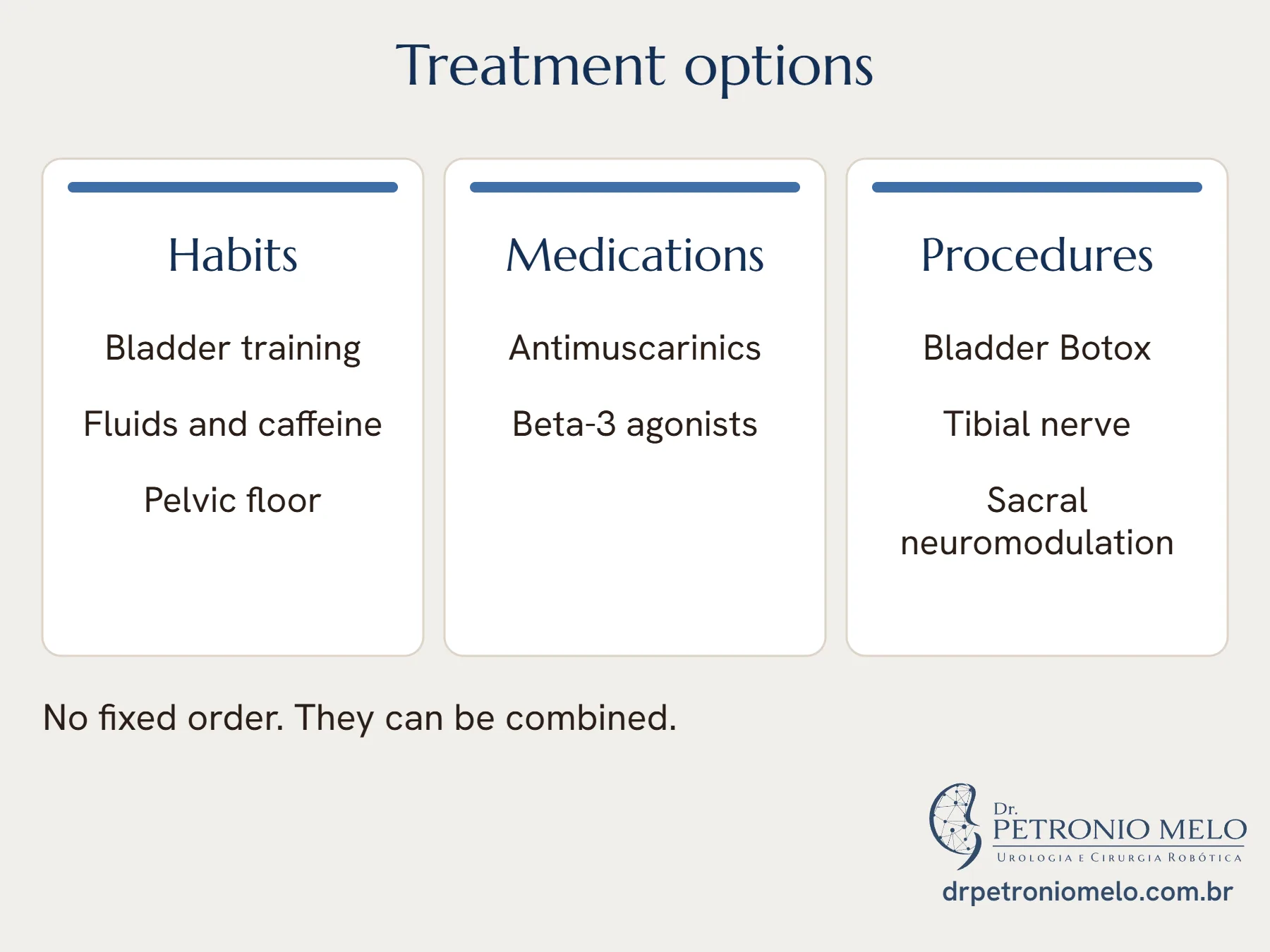
Habits. Bladder training gradually increases the time between trips to the toilet and usually lasts at least 6 weeks.3 It is worth cutting down on caffeine, adjusting fluids and losing weight when appropriate.3
Medicines. There are two classes, antimuscarinics and beta-3 agonists, such as mirabegron and vibegron.1,3 The choice takes into account each one's side effects.1 Antimuscarinics call for a conversation about the risk of dementia and memory decline, and great care in people with narrow-angle glaucoma, slow stomach emptying or urinary retention.1 The result is reassessed after about 4 weeks.3 In my practice, I use mirabegron and anticholinergics, and the choice is made case by case.
Procedures. When the response is not enough or side effects are bothersome, the options are bladder botox, tibial nerve stimulation and sacral neuromodulation.1 In selected cases, the conversation about them can happen earlier.1
When to see a urologist
- If the need to urinate comes on suddenly and interferes with your routine
- If you go to the toilet 8 or more times a day4
- If you wake up several times at night to urinate
- If you leak urine before reaching the toilet
- If symptoms come with blood in the urine, pain or fever
Frequently asked questions
What is overactive bladder?+
It is urinary urgency, usually with many trips to the toilet during the day and night, with or without leakage, when there is no infection or other obvious cause.1
What causes overactive bladder?+
Often no single cause is found. Before using this name, the evaluation rules out urinary infection and other diseases.1
What is the difference between overactive bladder and urge incontinence?+
Urge incontinence is urine leakage that comes with urgency. It can be part of overactive bladder, but not everyone with overactive bladder leaks urine.1
Is a strong need to urinate always overactive bladder?+
No. Urinary infection, an enlarged prostate and diabetes can also cause this symptom, and the evaluation shows the cause.1,4
Which tests are needed?+
A conversation, a physical examination and a urine test. The American guideline does not recommend urodynamics, cystoscopy or imaging routinely in the initial evaluation.1 The European guideline calls for a bladder diary of at least 3 days.2 In my practice, I do not order urodynamics at the start.
Can overactive bladder be cured?+
The goal is to control symptoms and improve quality of life, and there are several options, chosen with the patient.1
What medicines are used for overactive bladder?+
Antimuscarinics and beta-3 agonists. The choice takes side effects into account.1 With antimuscarinics, the American guideline asks for a conversation about the risk of dementia and memory decline.1
What if the medicines do not work?+
There are bladder botox, tibial nerve stimulation and sacral neuromodulation.1
References
- Cameron AP, Chung DE, Dielubanza EJ, et al. The AUA/SUFU Guideline on the Diagnosis and Treatment of Idiopathic Overactive Bladder. J Urol. 2024;212(1):11-20. AUA/SUFU
- European Association of Urology. EAU Guidelines on Non-neurogenic Female LUTS. Disease management chapter. EAU
- National Health Service (NHS). Non-surgical treatments for urinary incontinence. NHS
- National Institute of Diabetes and Digestive and Kidney Diseases (NIDDK). Symptoms & Causes of Bladder Control Problems (Urinary Incontinence). NIH
Would you like to talk about your case?
In the consultation, I go over your tests and your priorities.
Book a consultation