

Quick answer
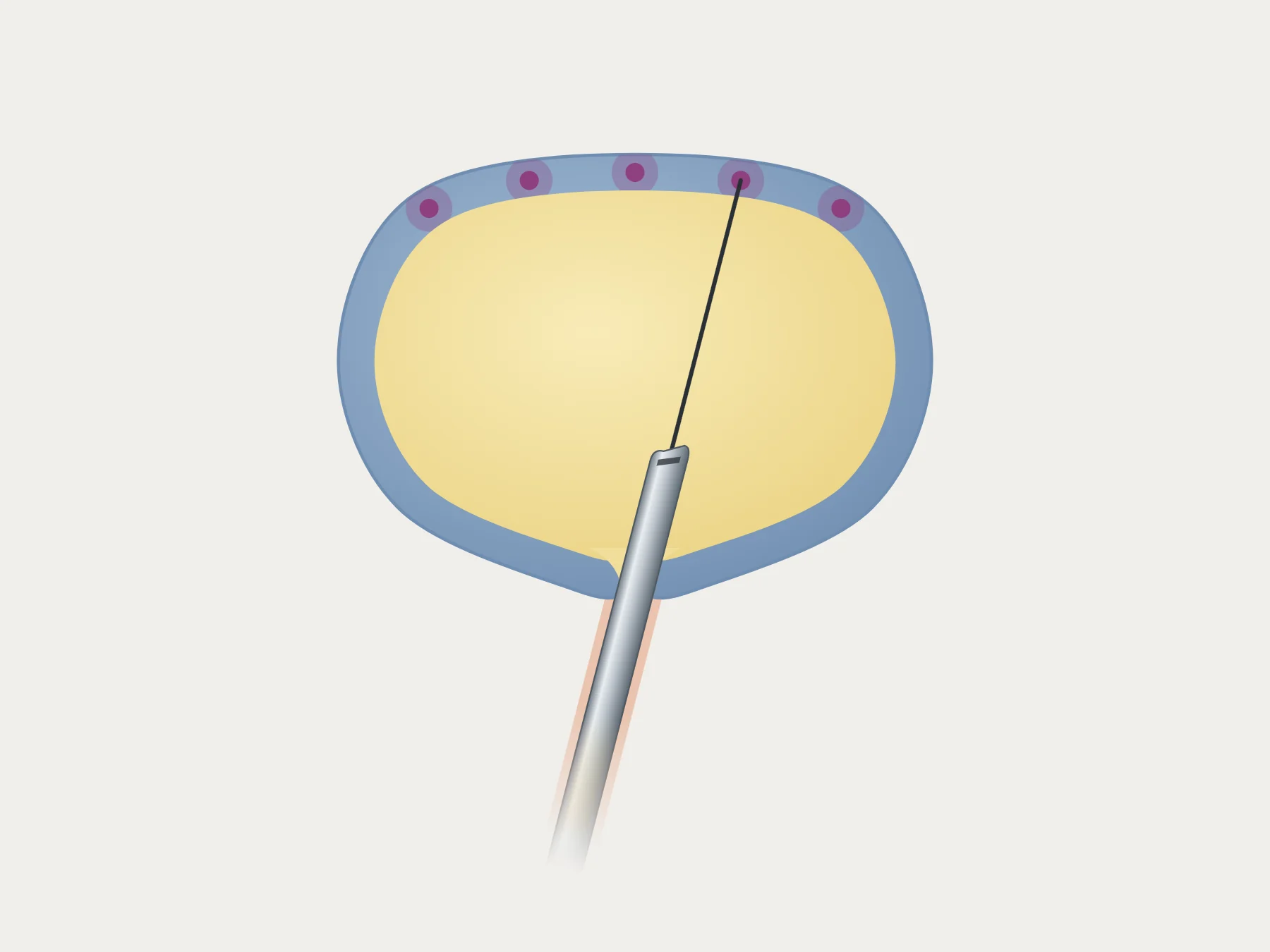
Bladder botox is an option for overactive bladder and urge incontinence when conservative treatment or medicines are not enough.1,2 Botulinum toxin is injected into the bladder wall, from the inside, with a cystoscope, and relaxes the muscle.1 The effect is temporary and the injection can be repeated.1 The main risks are urinary infection and temporary difficulty emptying the bladder.1,3
What it is and how it works
In overactive bladder, the bladder muscle contracts too early. Botulinum toxin, injected into this muscle, reduces these contractions. The medical name is botulinum toxin, and botox is how most people know the treatment.
Who it is for
The European guideline recommends offering botox to people with overactive bladder or urge incontinence that has not improved with conservative treatment or medicines.1 The American guideline places botox alongside tibial nerve stimulation and sacral neuromodulation.2
Before the injection, the American guideline calls for measuring the urine left in the bladder after urinating.2 The possibility of needing a catheter for a while should be discussed beforehand.1
How it is given
The cystoscope goes in through the urethra, and a thin needle injects the toxin at several points in the bladder wall.1 The dose recommended by the European guideline is 100 units.1
In my practice, I give it with a rigid cystoscope and a Williams needle, a needle designed for this use. The injection is done in the operating room, with local anesthesia and sedation, and the follow-up visit is 1 week later, in the office.
How long it lasts
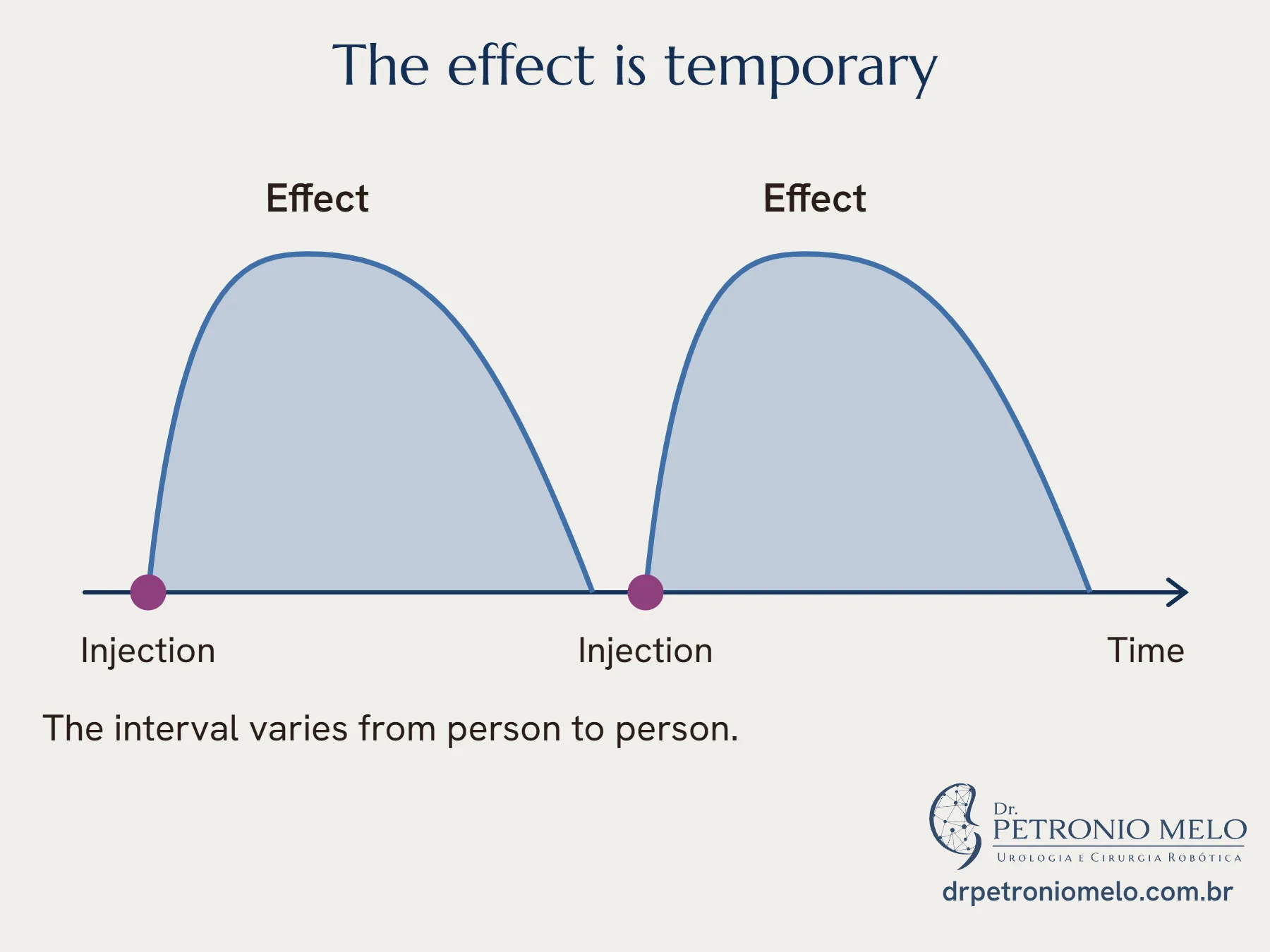
The effect is temporary. In an analysis of two studies, the median time until a new injection was requested was 24 weeks. In a 3.5-year follow-up, it was 7.5 months.1 The injection can be repeated in people who had a good result.1
If symptoms do not improve or get worse after the injection, the American guideline advises measuring the urine left in the bladder.2
Results
| Study | Comparison | Result at 6 months |
|---|---|---|
| Visco, 2012 | Botox and an anticholinergic medicine, in 247 treated women | A similar drop in leakage: 3.3 and 3.4 episodes a day, from a starting point of 5. Leakage stopped completely in 27% and 13% |
| Amundsen, 2016 | Botox and sacral neuromodulation, in 364 women | A drop of 3.9 and 3.3 episodes a day. The difference is small and of uncertain clinical importance |
Sources for the table: the studies cited.3,4 These figures are not a promise of results.
Risks
The European guideline asks that patients be told about the limited duration of the effect, the risk of urinary infection and the possible need for intermittent catheterization for a while.1
In the Visco study, 33% had a urinary infection with botox, against 13% with medicine, and 5% needed a catheter at 2 months, against no patients in the other group. Dry mouth was less common with botox: 31% against 46%.3 Compared with sacral neuromodulation, botox also had more urinary infection and more temporary need for a catheter.4
When to see a urologist
- If medicines for overactive bladder have not helped
- If the side effects of the medicines are bothersome
- If the botox effect has worn off and symptoms have come back
- If you have difficulty urinating after the injection
Frequently asked questions
What is bladder botox for?+
To treat overactive bladder and urge incontinence when conservative treatment or medicines are not enough.1,2
How is bladder botox given?+
Botulinum toxin is injected into the bladder wall, from the inside, with a cystoscope.1 The dose recommended by the European guideline is 100 units.1 In my practice, I give it with a rigid cystoscope and a Williams needle, with local anesthesia and sedation, in the operating room.
How long does the effect last?+
The effect is temporary. In an analysis of two studies, the median time until a new injection was requested was 24 weeks, and in a 3.5-year follow-up it was 7.5 months.1
Can the injection be repeated?+
Yes, in people for whom it worked.1
Does bladder botox work?+
In a study of 247 treated women, urge leakage fell from about 5 episodes a day by 3.3 episodes with botox and by 3.4 with medicine. Leakage stopped completely in 27% and 13%.3
References
- European Association of Urology. EAU Guidelines on Non-neurogenic Female LUTS. Disease management chapter. EAU
- Cameron AP, Chung DE, Dielubanza EJ, et al. The AUA/SUFU Guideline on the Diagnosis and Treatment of Idiopathic Overactive Bladder. J Urol. 2024;212(1):11-20. AUA/SUFU
- Visco AG, Brubaker L, Richter HE, et al. Anticholinergic therapy vs. onabotulinumtoxinA for urgency urinary incontinence. N Engl J Med. 2012;367(19):1803-13. PubMed
- Amundsen CL, Richter HE, Menefee SA, et al. OnabotulinumtoxinA vs sacral neuromodulation on refractory urgency urinary incontinence in women: a randomized clinical trial. JAMA. 2016;316(13):1366-1374. PubMed
Would you like to talk about your case?
In the consultation, I go over your tests and your priorities.
Book a consultation