
Quick answer
TURP is transurethral resection of the prostate. An instrument goes in through the urethra, and an energized loop cuts away the tissue that blocks the flow of urine, with no cuts in the skin. The European guideline treats it as the standard for prostates of 30 to 80 g.1 In 20 randomized studies, the IPSS, the symptom score, fell by 70% on average.1
How it is done
- AnesthesiaIn my practice, the surgery is done under general or spinal anesthesia.
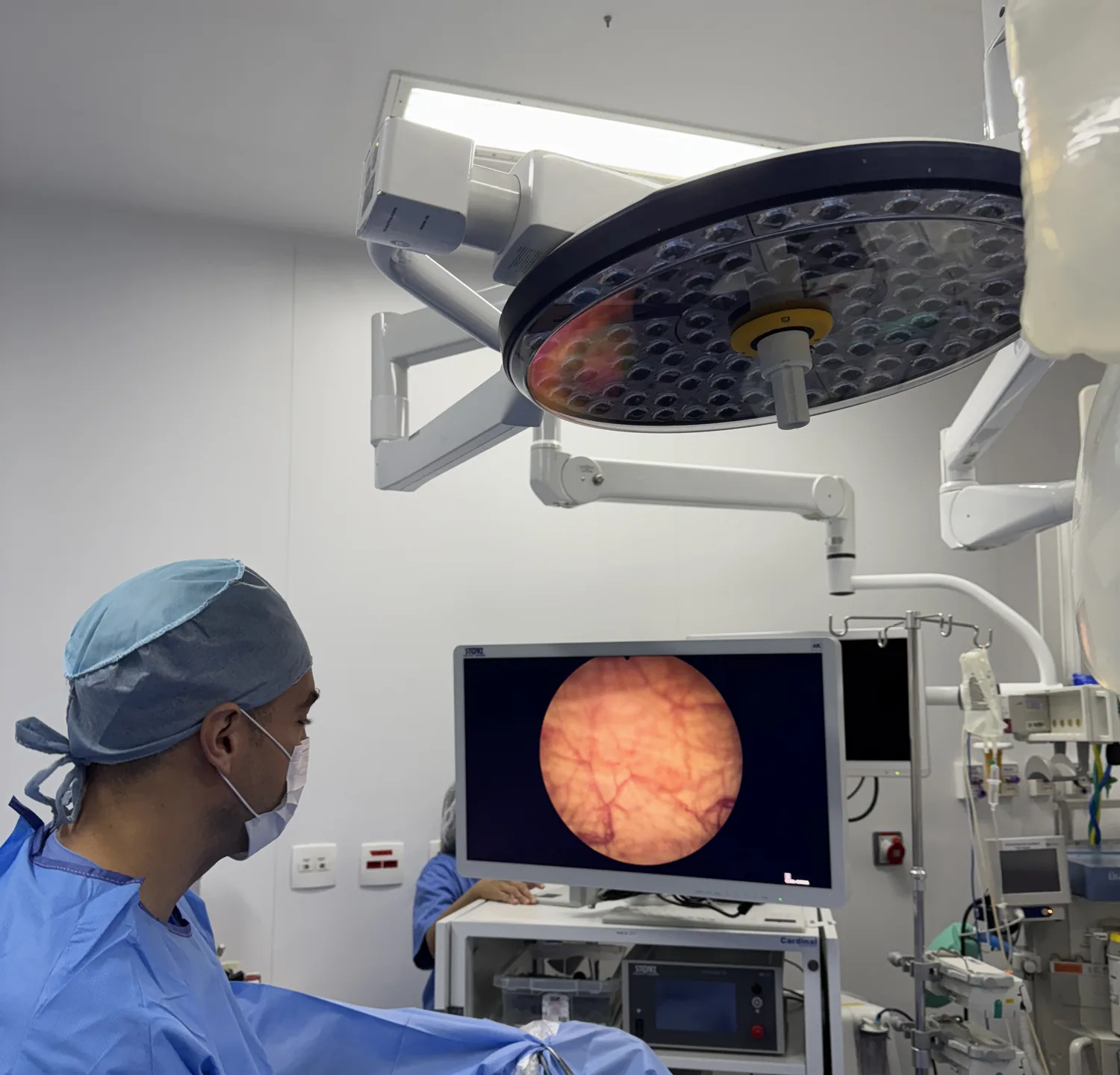
- AccessThe resectoscope, an instrument with a camera, goes in through the urethra.
- CuttingAn energized loop cuts the tissue into small pieces and controls bleeding.1
- RemovalThe pieces stay in the bladder and are then removed through the instrument. They go to the lab for examination.
- Catheter and dischargeYou leave surgery with a catheter in the bladder. In my practice, the catheter and hospital stay last 1 to 2 days.
TURP removes tissue from the central part of the prostate, and prostate volume and PSA fall by 25% to 58%.1 The surgery is safer when it lasts less than 90 minutes.1
Monopolar and bipolar
In monopolar TURP, the current leaves the loop, crosses the body and returns through a pad stuck to the skin. In bipolar TURP, it stays between two poles at the tip of the instrument.1
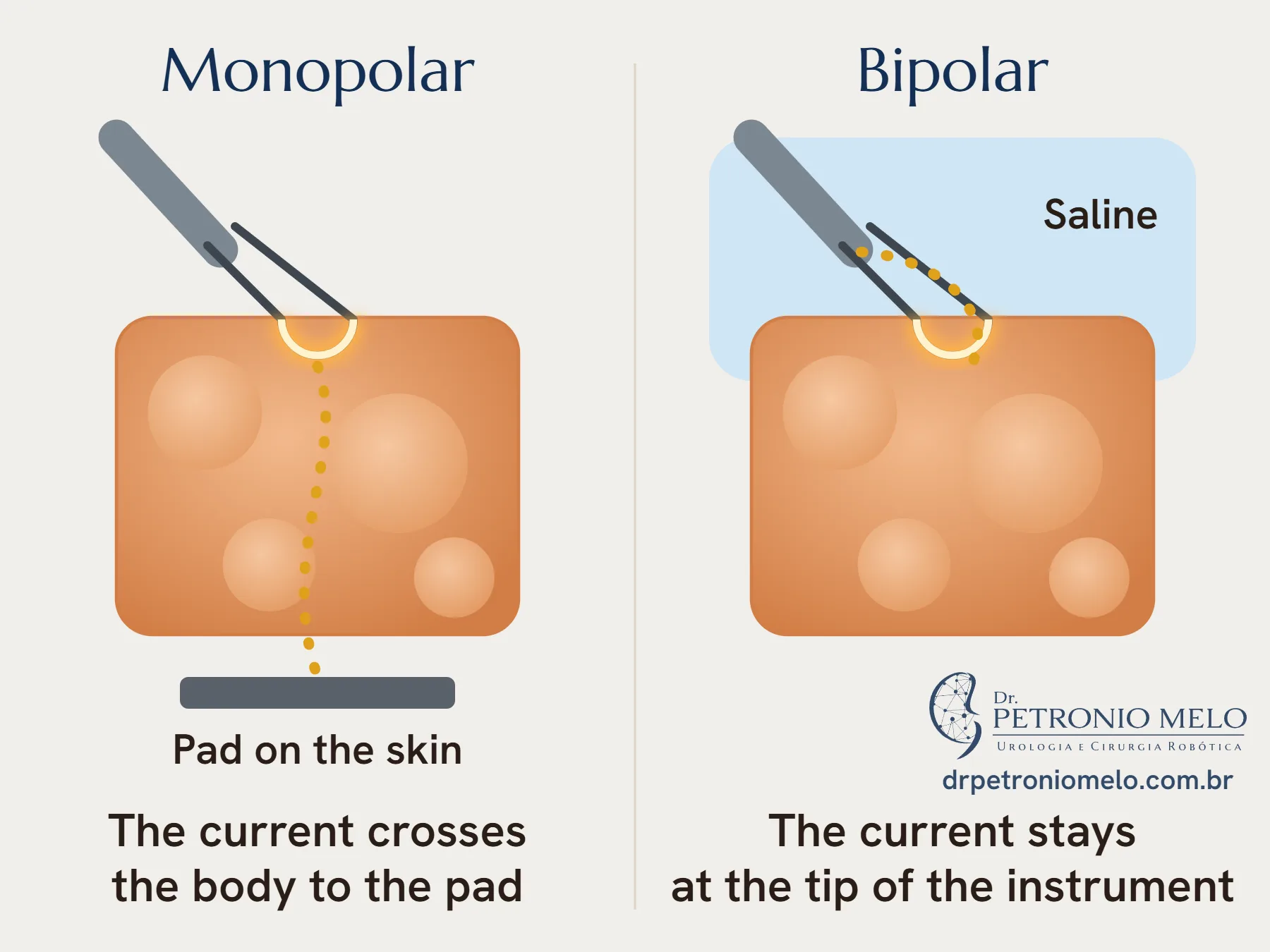
A Cochrane review estimated, per 1,000 men, 20 fewer cases of TUR syndrome and 28 fewer transfusions with bipolar TURP.2 Erections were similar with both.2 TUR syndrome is the disturbance caused by absorption of the fluid used during surgery.
Who it is for
The European guideline strongly recommends TURP for men with moderate or severe symptoms and a prostate of 30 to 80 g. The upper limit of 80 g came from a consensus, without a proven exact number.1 In practice, this has to be assessed case by case.
In prostates under 30 g without a middle lobe, incision of the prostate, also done through the urethra, is another option.1
What the studies show
| Average of 20 randomized studies | Change |
|---|---|
| IPSS, the symptom score | fell 70% |
| Urinary quality of life | improved 69% |
| Urine left in the bladder | fell 77% |
| Urine flow | rose 162% |
These figures come from the European guideline.1 A second operation is needed in about 1% to 2% of men per year.1
Risks
| German study, 10,654 men | Frequency |
|---|---|
| Difficulty urinating when the catheter comes out | 5.8% |
| Second surgery during the same stay | 5.6% |
| Urinary infection | 3.6% |
| Transfusion | 2.9% |
| TUR syndrome | 1.4% |
In this study, done with monopolar TURP, mortality was 0.10%.3 In 9.8% of men, examination of the tissue found a cancer that had not been known before.3 In the long term, urine leakage, narrowing of the urethra or bladder neck, and retrograde ejaculation can occur.1
Erections and ejaculation
Retrograde ejaculation, in which semen goes into the bladder, is very common after TURP.1,4 In a review of 151 studies, erection scores did not change significantly.4 See what changes with each technique in ejaculation and erections.
How I approach it
In my practice, I look at the size of the prostate, your medications and what you want to preserve before recommending surgery. I compare TURP with the other options and explain what may change in urination and sexual life.
When to see a urologist
- If you have an enlarged prostate and medications do not bring enough relief
- If you have had urinary retention
- If you want to compare TURP with other techniques
- After surgery, if you have fever, difficulty urinating or blood with clots
Frequently asked questions
What is TURP?+
It is transurethral resection of the prostate. An instrument goes in through the urethra, and an energized loop cuts the tissue that blocks urine into small pieces.1
Does TURP involve a cut in the skin?+
No. The whole procedure is done through the urethra.1
What is the difference between monopolar and bipolar TURP?+
In bipolar TURP, the current stays between two poles at the tip of the instrument. The effect on symptoms was similar, with less TUR syndrome and fewer transfusions.1,2
What anesthesia is used, and how long are the catheter and hospital stay?+
In my practice, I use general or spinal anesthesia, and the catheter and hospital stay last 1 to 2 days.
What prostate size is TURP suited to?+
The European guideline treats it as the standard for prostates of 30 to 80 g. The 80 g limit came from an expert consensus.1 In practice, this has to be assessed case by case.
How much does TURP improve symptoms?+
In 20 randomized studies, the IPSS fell by 70% and urine flow rose by 162%, on average.1
Might I need another operation?+
It can happen. The European guideline cites a second operation in about 1% to 2% of men per year.1
References
- EAU Guidelines on the Management of Non-neurogenic Male LUTS. European Association of Urology; 2026. Disease management chapter. EAU
- Alexander CE, Scullion MM, Omar MI, et al. Bipolar versus monopolar transurethral resection of the prostate for lower urinary tract symptoms secondary to benign prostatic obstruction. Cochrane Database Syst Rev. 2019;12(12):CD009629. PubMed
- Reich O, Gratzke C, Bachmann A, et al. Morbidity, mortality and early outcome of transurethral resection of the prostate: a prospective multicenter evaluation of 10,654 patients. J Urol. 2008;180(1):246-9. PubMed
- Manfredi C, García-Gómez B, Arcaniolo D, et al. Impact of Surgery for Benign Prostatic Hyperplasia on Sexual Function: A Systematic Review and Meta-analysis of Erectile Function and Ejaculatory Function. Eur Urol Focus. 2022;8(6):1711-1732. PubMed
Would you like to talk about your case?
In the consultation, I go over your tests and your priorities.
Book a consultation