

Quick answer
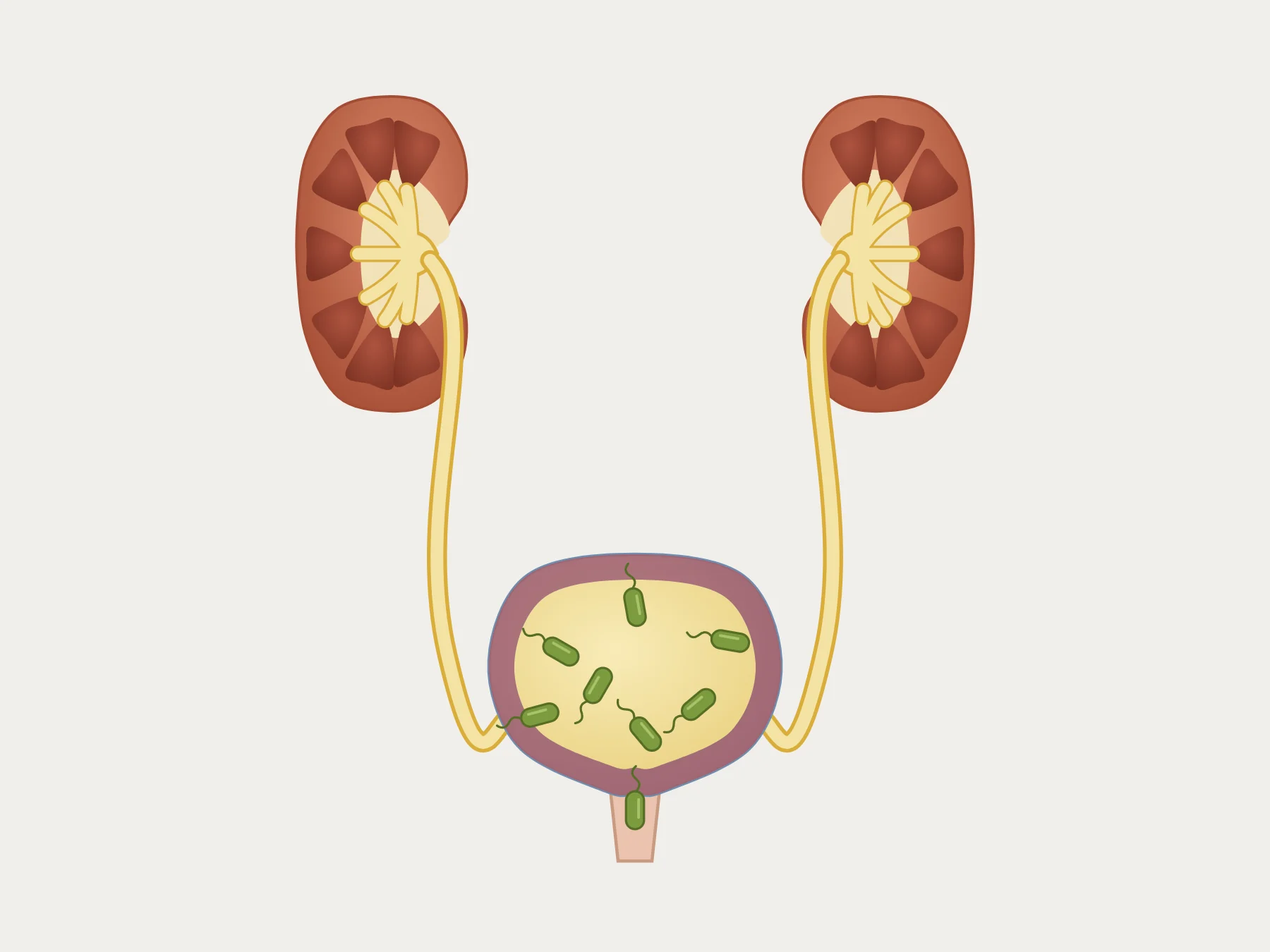
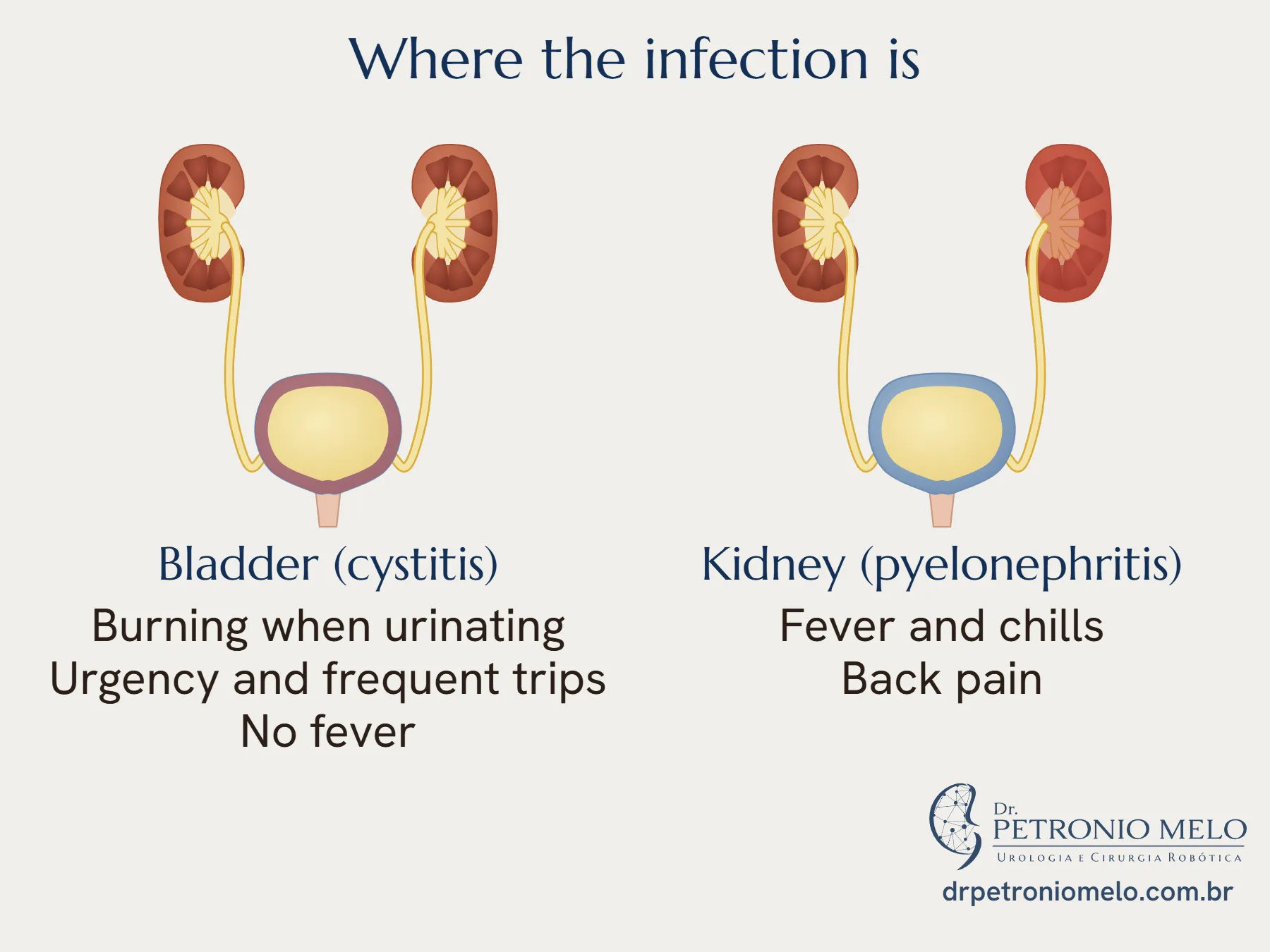
A urinary tract infection is an infection of the urinary tract, usually caused by bacteria. The most common form is cystitis, in the bladder, with burning when urinating, frequency and urgency.1,2 With fever, chills or back pain, the infection may have reached the kidney, and evaluation should happen the same day.3 The antibiotic is chosen according to where the infection is and each person's situation.1
What it is
Bacteria usually enter through the urethra and multiply in the bladder.2 If the infection is not treated, it can travel up to the kidneys.2 About half of women will have a bladder infection during their lives, and about a quarter of them will have repeated infections.2
Symptoms
In the bladder, the most common symptoms are:3
- burning when urinating
- a frequent and strong need to urinate, even with little urine
- discomfort in the lower abdomen
- urine that is cloudy, bloody or strong-smelling
When the infection reaches the kidney, fever, chills, nausea or vomiting and pain in the back, side or groin appear.3
Who is at higher risk
How to ease the symptoms
Painkillers, rest and enough fluid to keep the urine clear help with the discomfort.4 Coffee and alcohol can be avoided for those days.4
These measures ease symptoms but do not replace evaluation. Avoid using leftover antibiotics at home: the choice depends on where the infection is, and some widely used antibiotics are not recommended for cystitis.1
How it is diagnosed
In women with burning, urgency and frequent trips to the toilet, without vaginal discharge, the history alone makes cystitis very likely.1 A urine test helps with the evaluation.1
The European guideline recommends a urine culture when an infection beyond the bladder is suspected, with atypical symptoms, with symptoms that do not improve or come back within 4 weeks of treatment, with a risk of resistant bacteria and in pregnancy.1 In my practice, I always order a urine culture, except for a first episode of uncomplicated cystitis in women.
When kidney infection is suspected, imaging is ordered selectively. CT comes in when fever continues after 48 to 72 hours of treatment or when a complication is suspected.1
How it is treated
Cystitis. The European guideline recommends fosfomycin, nitrofurantoin and other short-course antibiotics, and asks that aminopenicillins and fluoroquinolones not be used for cystitis.1 The antibiotic depends on each institution's protocol, and for uncomplicated cystitis I usually start with fosfomycin or nitrofurantoin. See more in cystitis.
Kidney infection. The antibiotics for cystitis do not work: nitrofurantoin, oral fosfomycin and pivmecillinam should not be used.1 Treatment can be at home or in hospital, depending on severity.1
In men. Infections limited to the bladder are rare, and nitrofurantoin should only be used if the prostate is not involved.1
Urinary tract infections that come back
An infection is called recurrent when there are at least 3 episodes in a year or 2 in 6 months.1 In these cases, I try to understand what lies behind it, and prevention follows an order: first avoiding risk factors, then non-antibiotic measures and, only then, preventive antibiotics.1 The details are in cystitis.
Abnormal test, no symptoms
Bacteria in the urine without any symptoms is called asymptomatic bacteriuria. The European guideline recommends not screening for it or treating it in most people, including women after menopause, older people, people with controlled diabetes and people with recurrent urinary tract infections.1 In that last group, treating it is harmful.1
The exceptions are pregnancy and urological procedures that breach the mucosa.1
Prostatitis
Prostatitis is inflammation of the prostate. The bacterial form can be acute or chronic.
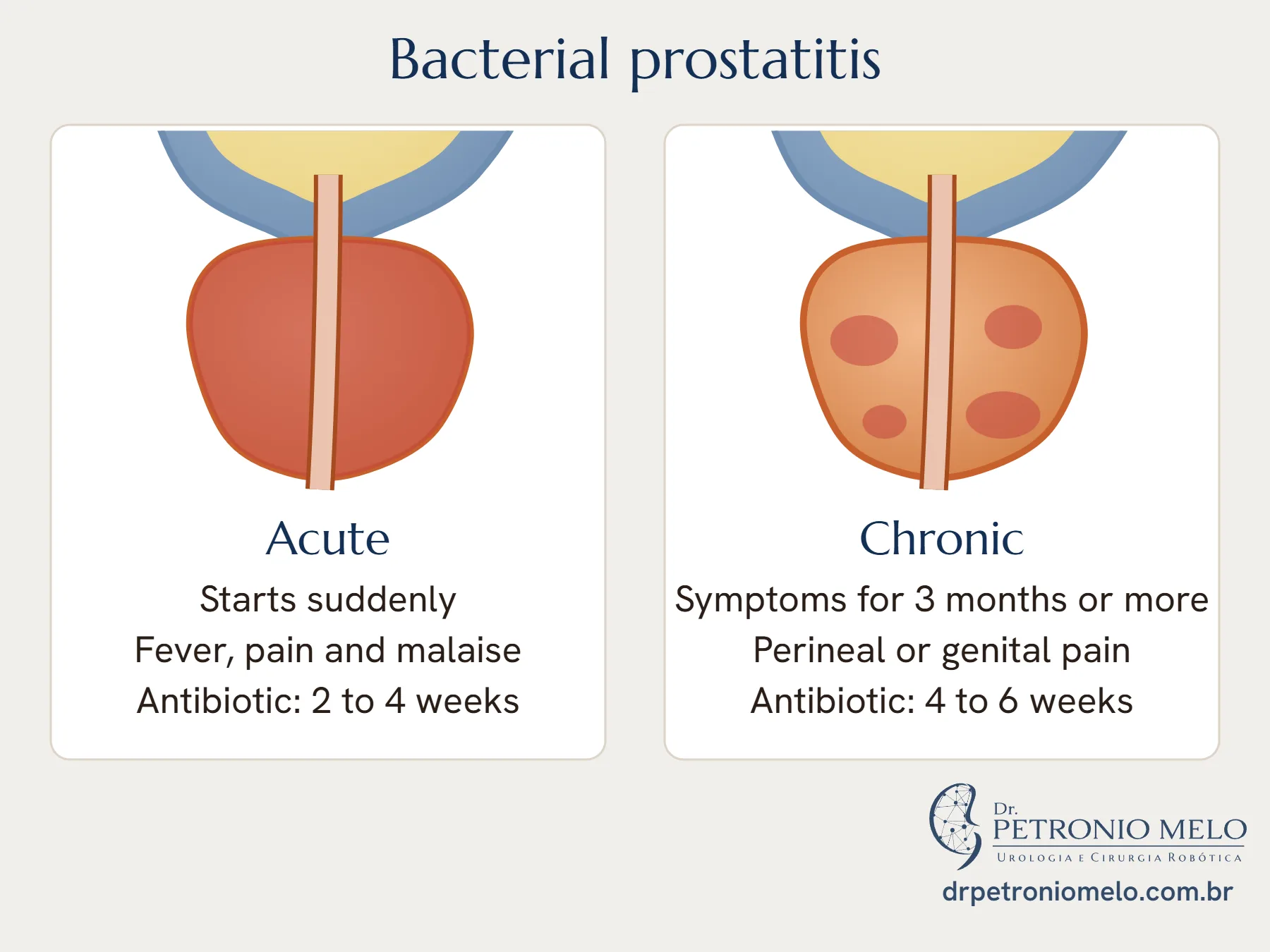
In the acute form, a urine culture is the most important test, and prostate massage should not be done.1 After improvement, treatment continues by mouth, to complete 2 to 4 weeks.1
In the chronic form, symptoms last at least 3 months, and staged urine tests help identify the bacterium.1 The antibiotic is used for 4 to 6 weeks after diagnosis.1
Where to start
When to see a urologist
Frequently asked questions
What is a urinary tract infection?+
It is an infection of the urinary tract, usually caused by bacteria. The most common form is cystitis, which is in the bladder.1,2
What are the symptoms of a urinary tract infection?+
Burning when urinating, a frequent and strong need to urinate even with little urine, discomfort in the lower abdomen and urine that is cloudy, bloody or strong-smelling.3
How do I know if the infection has reached the kidney?+
Fever, chills, nausea or vomiting and pain in the back, side or groin suggest a kidney infection.3 These signs call for evaluation the same day.
How can I ease a urinary tract infection right away?+
Painkillers, rest and fluids help with the symptoms.4 They do not treat the infection. If the cause is bacterial, treatment is with antibiotics, and the right step is to be evaluated before choosing which one.1
Does a urinary tract infection cause discharge?+
The European guideline considers the absence of vaginal discharge part of the typical picture of cystitis.1 Discharge, in women or men, points to other causes, such as [urethritis](/en/sexually-transmitted-infections/urethritis/), and needs evaluation.
Does an abnormal urine test without symptoms need antibiotics?+
For most people, no. The European guideline only recommends treating bacteria in the urine without symptoms during pregnancy and before urological procedures that breach the mucosa.1
Do men get urinary tract infections?+
Yes, but men under 50 rarely have a bladder infection.2 When it happens, the prostate and bladder emptying are part of the evaluation.1,2
Does PSA rise with prostatitis?+
It can. PSA is raised in about 60% of men with acute bacterial prostatitis and in 20% of those with the chronic form.1
References
- European Association of Urology. EAU Guidelines on Urological Infections. EAU
- National Institute of Diabetes and Digestive and Kidney Diseases (NIDDK). Definition & Facts of Bladder Infection in Adults. NIH
- National Institute of Diabetes and Digestive and Kidney Diseases (NIDDK). Symptoms & Causes of Bladder Infection in Adults. NIH
- National Health Service (NHS). Urinary tract infections (UTIs). NHS
Would you like to talk about your case?
In the consultation, I go over your tests and your priorities.
Book a consultation