

Quick answer
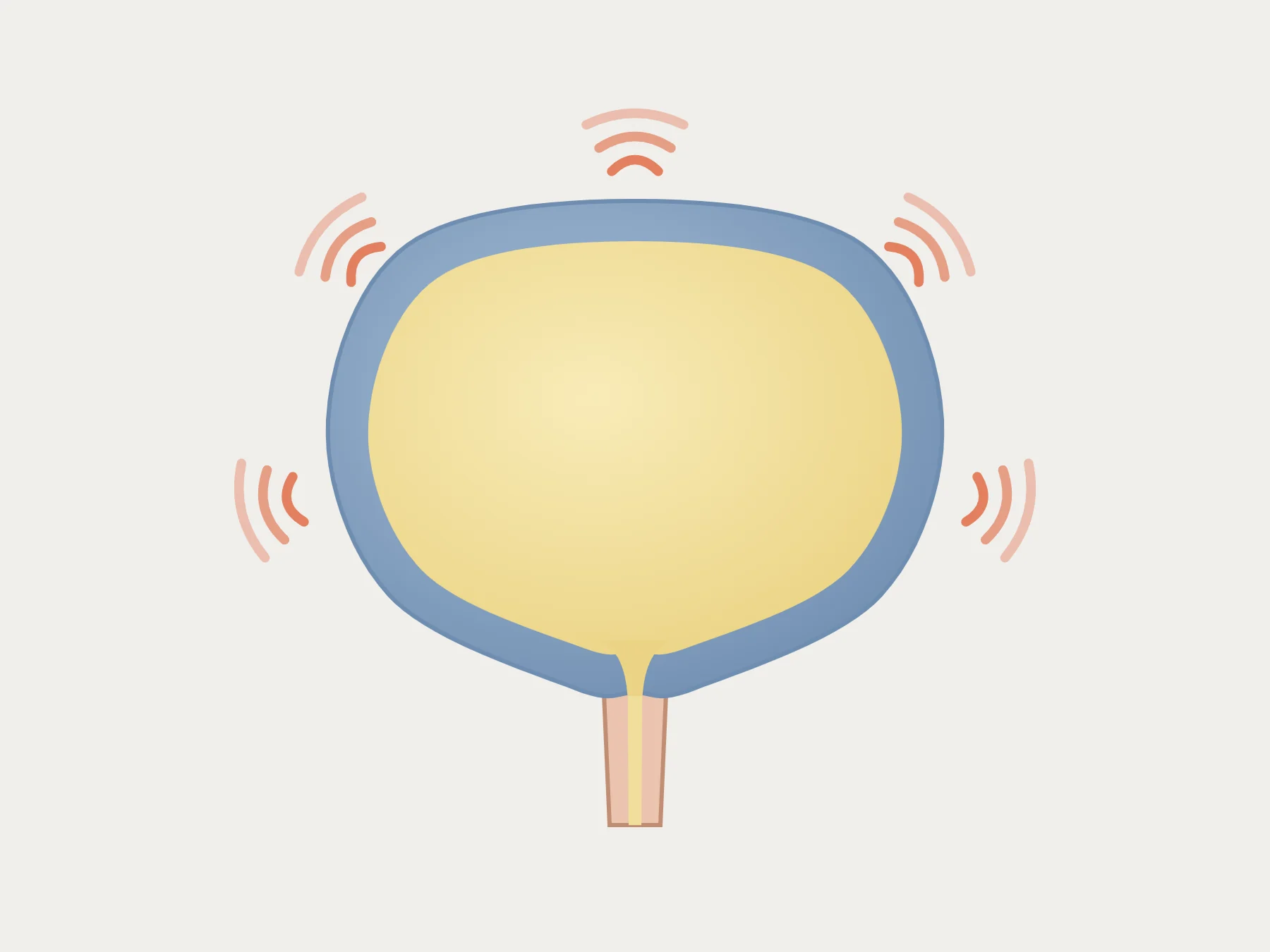
Interstitial cystitis, also called bladder pain syndrome, is persistent or recurrent pain in the bladder area, with at least one other symptom, such as pain that worsens as the bladder fills or more frequent trips to the toilet, without proven infection.1 Diagnosis is based on symptoms and on ruling out other diseases, sometimes with cystoscopy.2 Treatment is individual and combines habits, medicines, treatments given inside the bladder and procedures.3
What it is
The European guideline now uses the name primary bladder pain syndrome and no longer recommends the term interstitial cystitis.1 I keep both names on this page because that is how most people search.
Despite the name, and despite sitting in this section of the site, it is not an infection.1 No single cause is known.4
Symptoms
How it is diagnosed
Diagnosis rests on the symptoms and on ruling out diseases that can be confused with it.2 The European guideline recommends a urine test and urine culture in all suspected cases.2 In risk groups, urine cytology is also done.2
Cystoscopy allows the bladder wall to be seen from the inside. There are two groups: with a Hunner lesion and without one.2
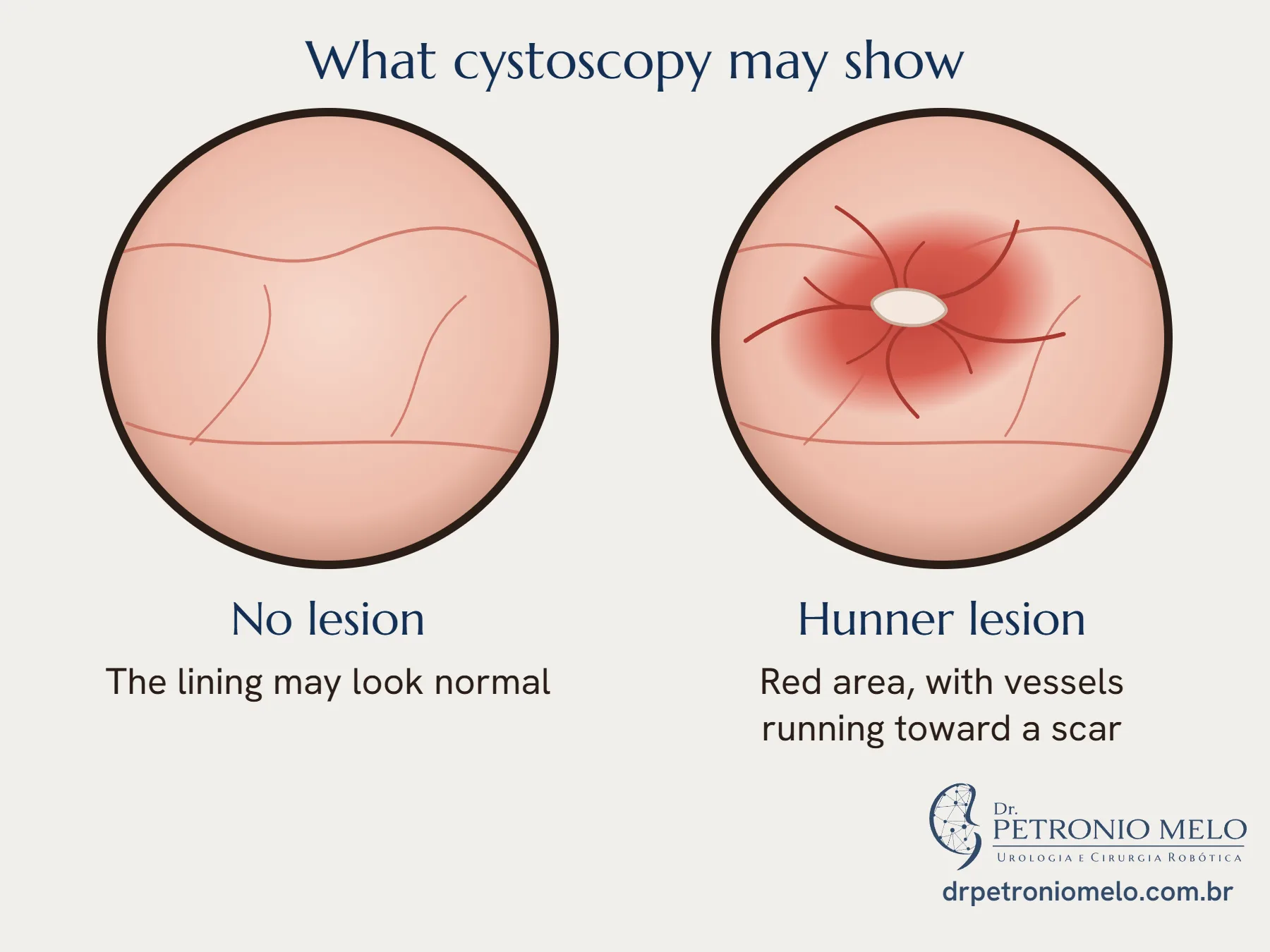
A biopsy helps confirm the condition and rule out other diseases, such as carcinoma in situ and bladder tuberculosis.2
How it is treated
To define the plan, I follow the European guideline. The 2022 American guideline stopped dividing treatments into lines and grouped them by type instead, to stress that the plan is individual.3
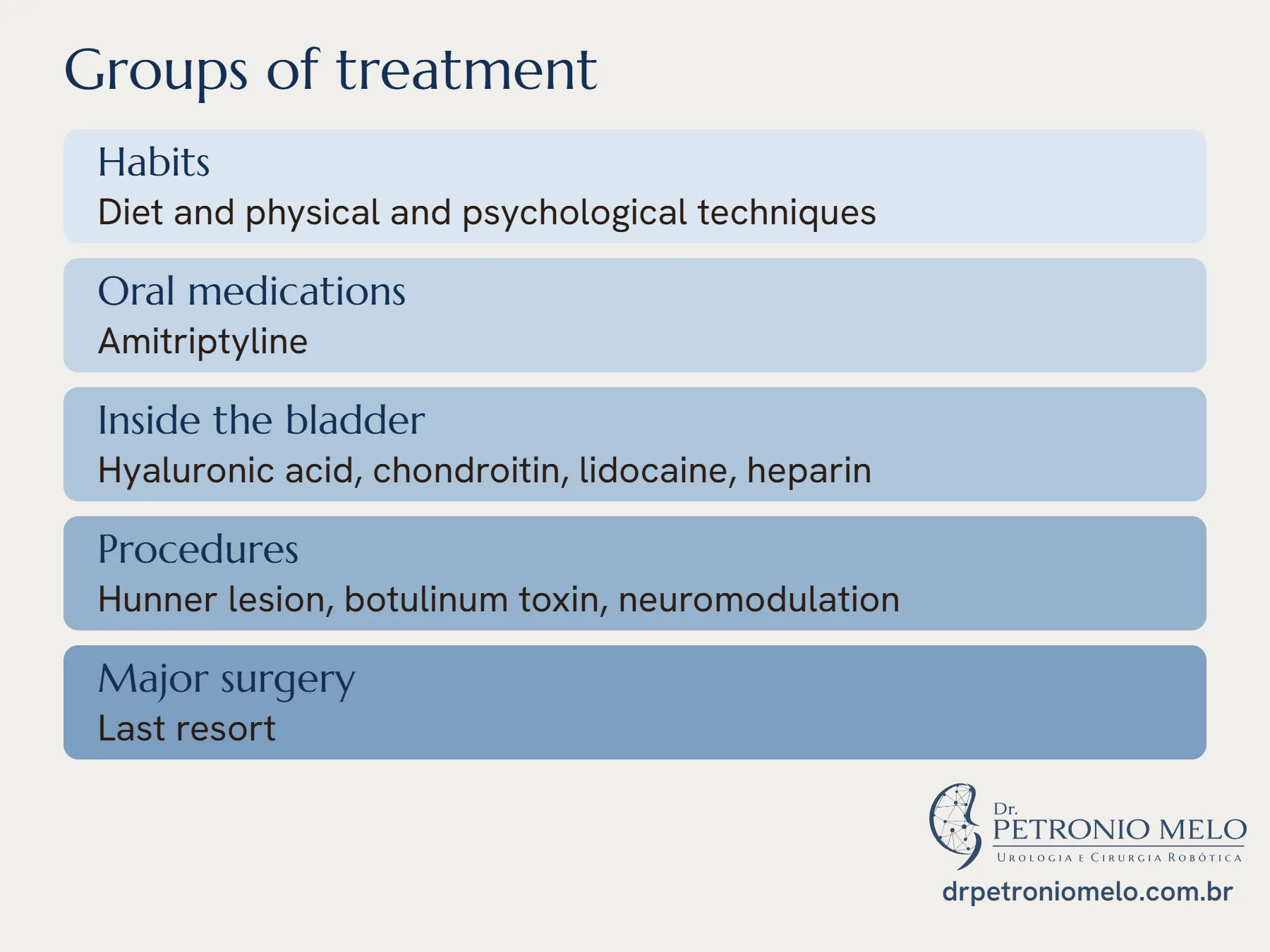
Habits and non-drug measures. The European guideline recommends dietary advice and behavioral, physical and psychological techniques alongside the other treatments.4
Oral medicines. The European guideline recommends amitriptyline.4 Drowsiness is one of its limits.4 Oral steroids are not recommended for long-term use.4
Treatments given inside the bladder. Hyaluronic acid, chondroitin sulfate, lidocaine with bicarbonate and heparin are options before more invasive measures.4
Procedures. For a Hunner lesion, the guideline recommends resection, coagulation or laser treatment of the lesion.4 Botulinum toxin with hydrodistension can be considered when treatments given inside the bladder have failed.4 The technique is the same one I use for overactive bladder. Neuromodulation is another option before more invasive measures.4 Bladder distension on its own should not be used as a treatment.4
Major surgery. It is a last resort, after evaluation by a team that includes pain management.4
When to see a urologist
- If bladder pain lasts for weeks, with normal urine tests
- If antibiotics do not resolve symptoms of cystitis
- If the pain increases as the bladder fills and eases with urination
- If there is blood in the urine
Frequently asked questions
What is interstitial cystitis?+
It is persistent or recurrent pain in the bladder area, with at least one other symptom, such as pain that worsens as the bladder fills or more frequent trips to the toilet, without proven infection or another obvious cause.1
Is interstitial cystitis an infection?+
No. The diagnosis requires that there be no proven infection.1 That is why repeating antibiotics when the urine is clear is not the way forward.
What is the difference between cystitis and interstitial cystitis?+
[Cystitis](/en/urinary-tract-infection/cystitis/) is an infection that improves with treatment. Interstitial cystitis is pain that persists or comes back without proven infection.1
What is the pain like?+
It is usually pressure or discomfort above the pubic bone, which increases as the bladder fills, eases with urination and soon comes back. It can spread to the groin, vagina, rectum or sacrum, and get worse with some foods and drinks.2
What is a Hunner lesion?+
It is a reddened area of the bladder wall, with small vessels converging on a central scar, seen on cystoscopy.2
Can interstitial cystitis be cured?+
The goal of treatment is to control symptoms and improve quality of life, with as few side effects as possible.3
Does botox help with bladder pain?+
It can. The European guideline recommends considering botulinum toxin with hydrodistension when treatments given inside the bladder have failed.4 The technique is the same one I use for overactive bladder.
Does diet help?+
Avoiding some foods and drinks can reduce symptoms, but diet alone does not usually solve it.4
References
- European Association of Urology. EAU Guidelines on Chronic Pelvic Pain. Introduction. EAU
- European Association of Urology. EAU Guidelines on Chronic Pelvic Pain. Diagnostic evaluation chapter. EAU
- Clemens JQ, Erickson DR, Varela NP, Lai HH. Diagnosis and Treatment of Interstitial Cystitis/Bladder Pain Syndrome. J Urol. 2022;208(1):34-42. AUA
- European Association of Urology. EAU Guidelines on Chronic Pelvic Pain. Management chapter. EAU
Would you like to talk about your case?
In the consultation, I go over your tests and your priorities.
Book a consultation