

Quick answer
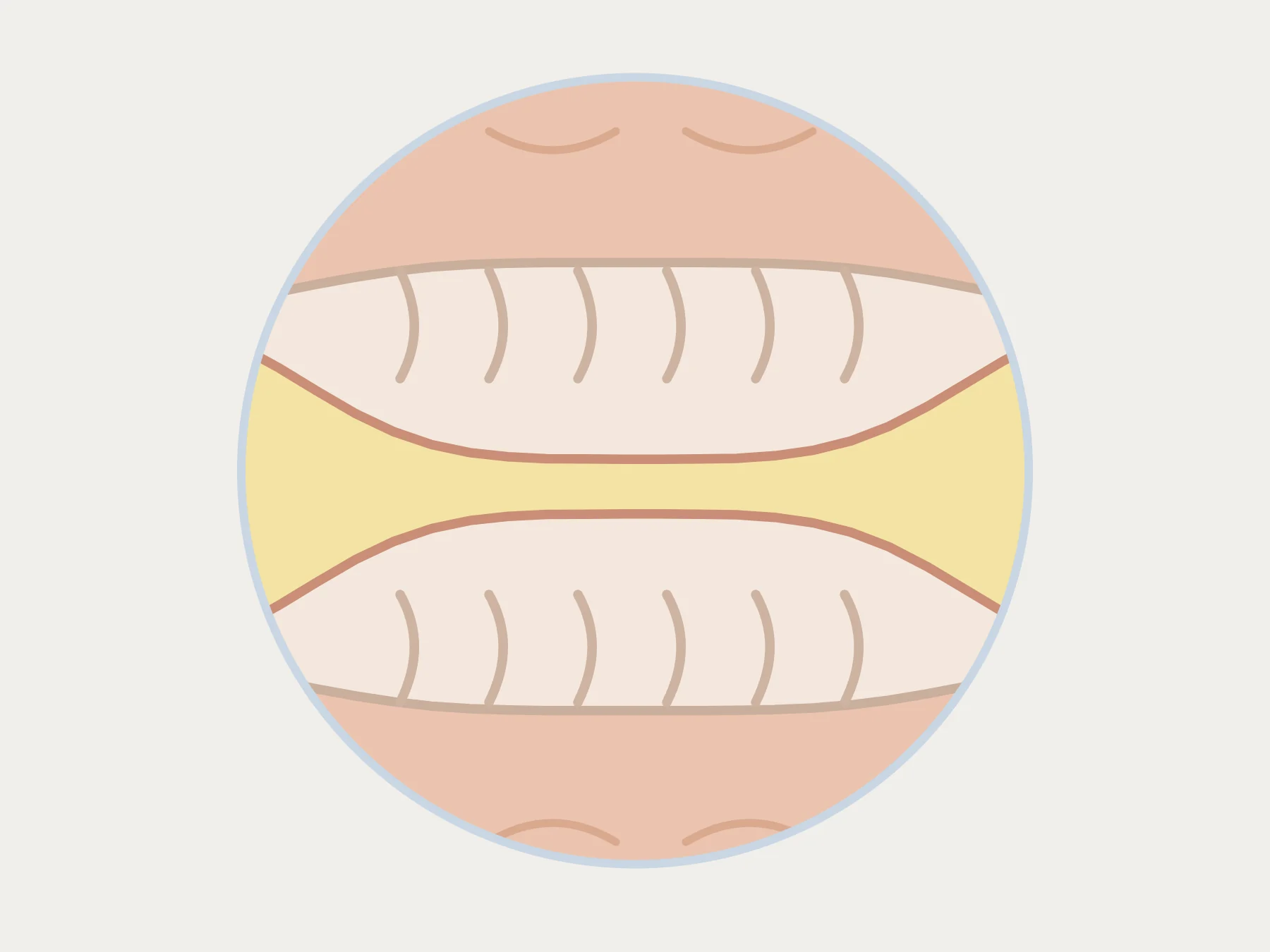
A urethral stricture is a narrowing of the urethra, usually caused by scar tissue, and it tends to cause a weak stream and incomplete emptying.2 The test that shows its location and length is urethrography.2 Treatment depends on the length and location: dilation or urethrotomy are options for short bulbar strictures, and urethroplasty comes in when the stricture comes back, is long or is in the penis.3,4 The drug-coated balloon (Optilume) is an option for short strictures that have come back.3
What it is
The urethra carries urine from the bladder to the outside. When scar tissue closes part of the channel, urine passes with more difficulty. Most strictures are in the front part of the urethra, and the bulbar region is the most affected.1
Symptoms
- a weak stream2
- a feeling that the bladder does not empty2
- dribbling after urinating2
- frequent trips to the toilet2
- pain when urinating or in the genital area2
- urinary tract infection2
- difficulty passing a catheter2
In a series of 611 patients, 54.3% had urinary symptoms, 22.3% arrived with urinary retention and 6.1% with infection.2
What causes it
- Catheters and operations through the urethra. These are frequent causes in high-resource countries, between 32% and 79% of cases.1 A stricture appears in 4.5% to 13% of men after TURP.1
- Trauma. It is the second most common cause in adults.1
- No cause found. This is the case in 34% of penile strictures and 63% of bulbar ones.1
- Lichen sclerosus. It is the most common cause of strictures that involve almost the whole urethra.1
- Infections. Gonorrhea used to be an important cause, and today accounts for 0.9% to 4.6% in series from high-resource countries.1
How it is diagnosed
Evaluation starts with the symptoms, a measurement of the urine stream and the urine left in the bladder.2
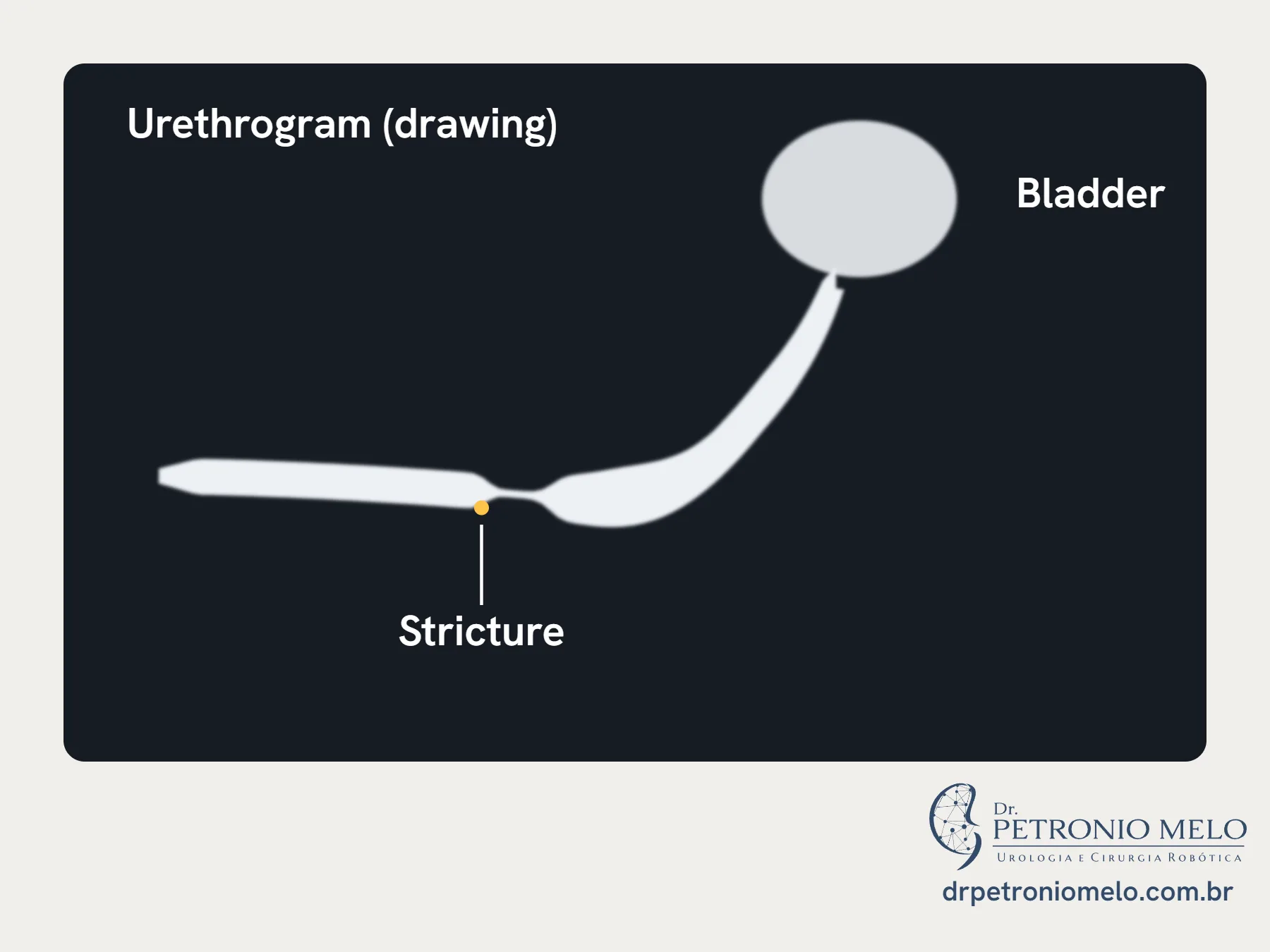
Urethrography shows the location and length of the stricture, using contrast, and is usually done before planning an operation.2 When the channel is almost closed, it is combined with voiding cystourethrography.2 Cystoscopy comes in when more information is needed, and ultrasound can change the plan in some cases.2
How it is treated
After diagnosis, the length and location of the stricture guide treatment.4 The options are procedures, and the choice is made together. I do dilation, internal urethrotomy and urethroplasty with oral mucosa.
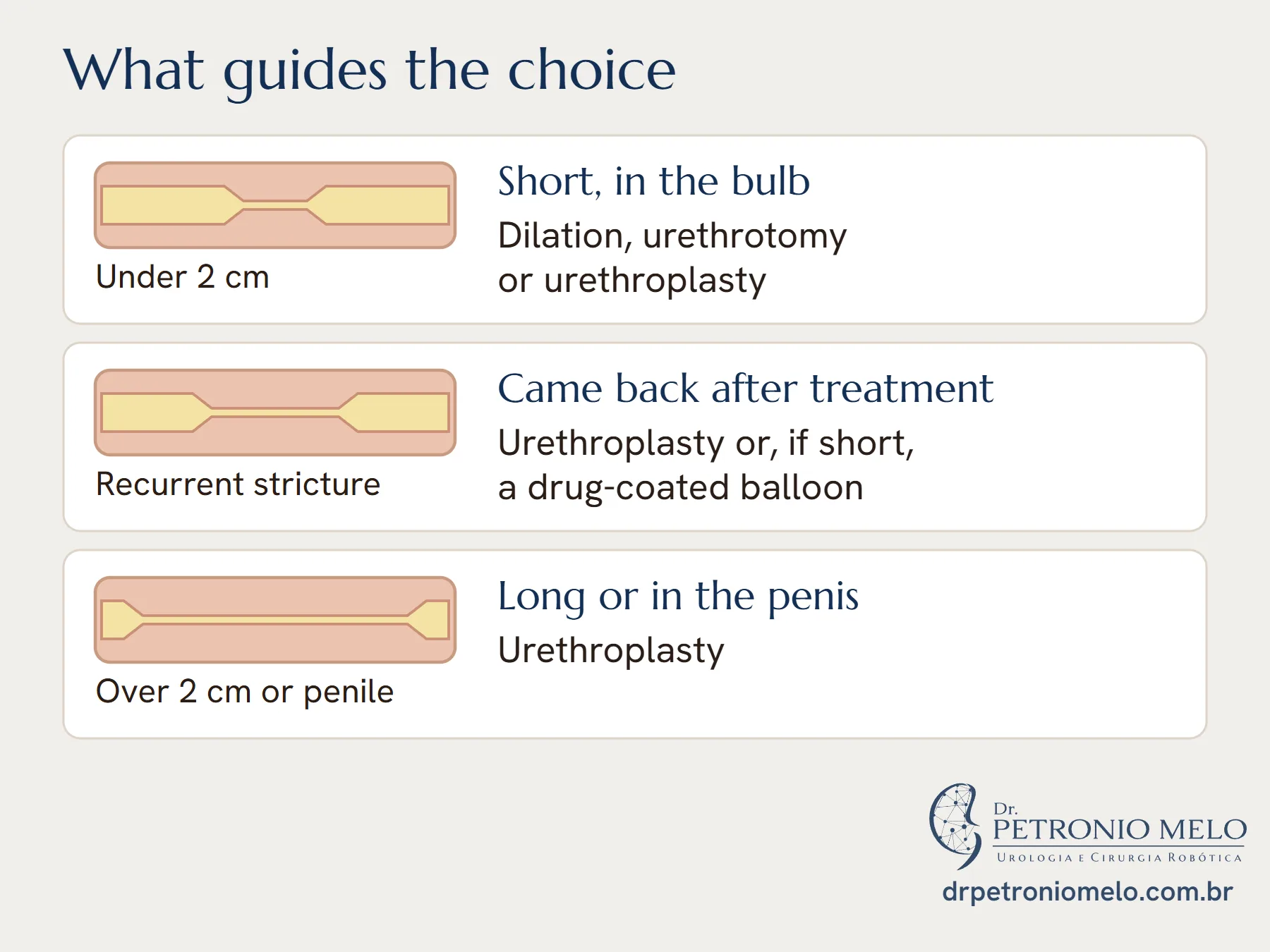
Dilation and urethrotomy. These are procedures done through the urethra. The European guideline accepts them for a first, single, short stricture, under 2 cm, in the bulb, and does not recommend urethrotomy in the penis or these treatments alone for long strictures.3 Results get worse with length: in one study, the channel stayed open at 5 years in 71% of strictures of 1 to 2 cm, 51% of those of 2 to 3 cm and 39% of those of 3 to 4 cm.3 After internal urethrotomy, the catheter usually stays in for 5 days.
Repeating the procedure. The European guideline recommends no more than two urethrotomies or dilations when urethroplasty is possible. Repeating them does not give lasting control and makes the stricture more complex.3
Urethroplasty. This is open surgery to rebuild the urethra. In men with a stricture that had come back, a randomized study showed a new intervention in 13.8% after urethroplasty and in 25.9% after urethrotomy. Adverse events were more common with urethroplasty: 61% and 26.1%.3 I do urethroplasty with oral mucosa, and the catheter usually stays in for 21 days.
Drug-coated balloon (Optilume). The balloon widens the stricture and leaves paclitaxel in place, to reduce scar formation.3
The European guideline recommends offering the balloon for a short bulbar stricture, under 3 cm, that has come back after at least two endoscopic treatments, in people who cannot or do not want to have urethroplasty.3
| Study | Participants | Result |
|---|---|---|
| ROBUST III, 2022 | 127 men with an anterior stricture of up to 3 cm and at least 2 previous treatments | Channel open at 6 months: 75% with the balloon and 27% with standard treatment |
| ROBUST I, 2025 | 53 men with a bulbar stricture of up to 2 cm that had come back | An estimated 71.7% without a new procedure at 5 years. Functional success in 58% |
Sources for the table: the studies cited.5,6 These figures are not a promise of results.
Blood in the urine and burning were more common with the balloon: 11.4% against 2.1%. Because the drug was found in semen for up to 6 months, contraception is needed during that period if the partner could become pregnant.3 Outside these indications, the evidence is still limited.3
Self-dilation. After treatment, passing a catheter at home on a schedule may reduce the chance of the stricture coming back: 43% against 62%, with low-quality evidence.3
When to see a urologist
- If your stream becomes weak, especially after a catheter, surgery or trauma
- If you feel that your bladder does not empty
- If the stricture comes back after dilation or urethrotomy
- If you have repeated urinary tract infections
- If you cannot urinate, for immediate evaluation
Frequently asked questions
What is a urethral stricture?+
It is a narrowing of the urethra, the channel that carries urine from the bladder to the outside, usually caused by scar tissue.1,2
What are the symptoms of a urethral stricture?+
A weak stream, a feeling of incomplete emptying, frequent trips to the toilet and dribbling after urinating. Some people have urinary retention or infection.2
Is a urethral stricture serious?+
It is not usually an emergency, but it can lead to urinary retention, seen in 22.3% of 611 patients in one series.2 That is why a weak stream is worth investigating.
What causes a urethral stricture?+
Causes include catheters and operations through the urethra, trauma, lichen sclerosus and infections. Often, no cause is found.1
Is there a medicine for urethral stricture?+
The options described in the guidelines are procedures, such as dilation, urethrotomy, the drug-coated balloon and urethroplasty.3,4
Can a urethral stricture be cured?+
It depends on the length, the location and what has already been done. Urethroplasty gives longer-lasting results than repeating dilation or urethrotomy.3
How long does the catheter stay in?+
It depends on the technique. Usually 5 days after internal urethrotomy and 21 days after urethroplasty with oral mucosa.
What is Optilume?+
It is a balloon coated with paclitaxel that widens the urethra and leaves the drug in place. The European guideline recommends it for a short bulbar stricture, under 3 cm, that has come back after at least two endoscopic treatments, in people who cannot or do not want to have urethroplasty.3
Can women have a urethral stricture?+
Yes, although it is less common. In women, the American guideline prefers urethroplasty, with oral mucosa or a vaginal flap.4
References
- European Association of Urology. EAU Guidelines on Urethral Strictures. Definition, epidemiology, aetiology and prevention chapter. EAU
- European Association of Urology. EAU Guidelines on Urethral Strictures. Diagnostic evaluation chapter. EAU
- European Association of Urology. EAU Guidelines on Urethral Strictures. Disease management in males chapter. EAU
- Wessells H, Morey A, Souter L, Rahimi L, Vanni A. Urethral Stricture Disease Guideline Amendment (2023). J Urol. 2023;210(1):64-71. AUA
- Elliott SP, Coutinho K, Robertson KJ, et al. One-Year Results for the ROBUST III Randomized Controlled Trial Evaluating the Optilume Drug-Coated Balloon for Anterior Urethral Strictures. J Urol. 2022;207(4):866-875. PubMed
- DeLong J, Virasoro R, Pichardo M, et al. Long-Term Outcomes of Recurrent Bulbar Urethral Stricture Treatment With the Optilume Drug-Coated Balloon: Five-Year Results From the ROBUST I Study. J Urol. 2025;213(1):90-98. PubMed
Would you like to talk about your case?
In the consultation, I go over your tests and your priorities.
Book a consultation